
Loading...
Loading...
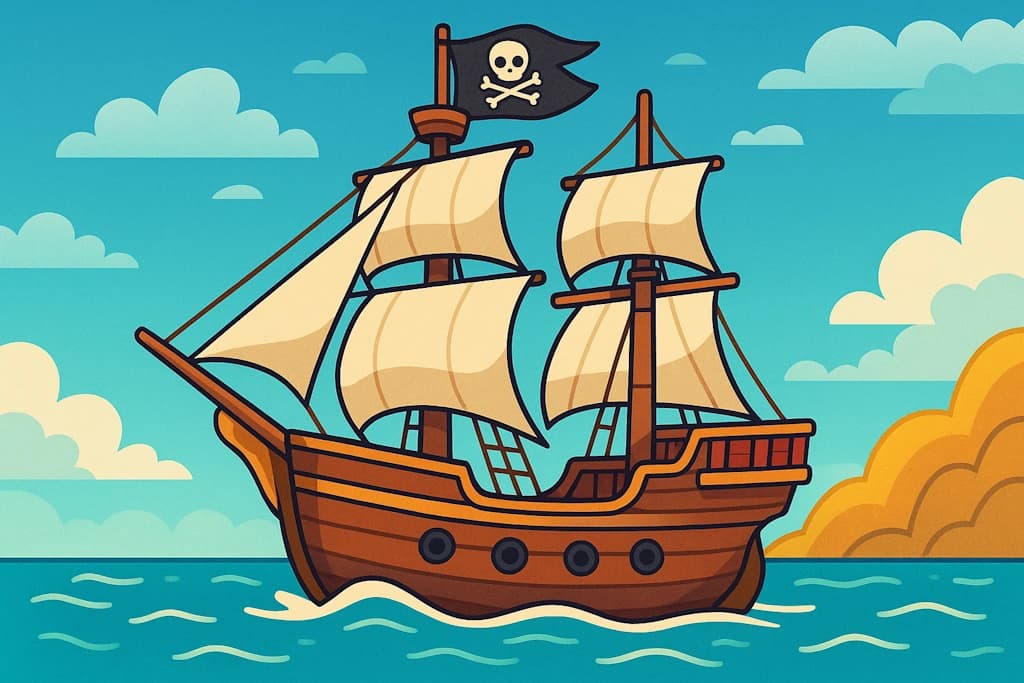
A comprehensive collection of 300+ legendary pirate ship names, from fearsome vessels of the Golden Age to mythical ships inspired by sea monsters and maritime legends.
Good pirate ship names sound like warnings: Queen Anne’s Revenge, Royal Fortune, The Crimson Terror, The Kraken’s Wrath, The Black Horizon, Storm Reaper, and The Pearl Wraith. The strongest pirate ship names usually combine a ship identity with fear, treasure, weather, sea monsters, or a captain’s legend. Use the pirate ship name generator for fresh vessel ideas, then pair the ship with pirate names or female pirate names for the crew.
Use the matching Pirate Ship Names without leaving the article. Pick a style, generate fresh names, and copy the good ones.
Style
This generator uses one broad style.
6 names ready to copy.
Starter names from the generator
Picture a black sail cresting the horizon. Merchant crews would drop their telescopes and scramble for the white flag—because pirate ships weren't just transportation. They were floating nightmares with names to match. Queen Anne's Revenge. The Flying Dutchman. These vessels carried reputations that arrived before they did, and smart captains knew when to surrender rather than fight. Of course, every great ship needs a great pirate captain name to match. A pirate ship's name could be as deadly as its cannons—the right one convinced victims that resistance meant certain death.
Between 1650 and 1730, the Caribbean became a hunting ground. European powers were shipping ridiculous amounts of gold and silver from the New World, and pirates realized they didn't need to mine it themselves—just intercept the ships carrying it home. Most pirates started by stealing their first ship. Blackbeard captured a French slave vessel and added 40 cannons. Black Bart Roberts grabbed a Portuguese ship and turned it into Royal Fortune. Within weeks, a merchant crew could transform into pirates commanding a warship. The best captains built entire fleets, and their flagship names became warnings painted on wanted posters from Jamaica to Madagascar.
Pirates weren't picky about their rides, but they knew what worked:
Some pirate-ship combinations became legendary enough that people still argue about them in comments sections:
Nobody built pirate ships—you stole one and made it yours:
Pirate ship names served multiple purposes beyond mere identification. These names were carefully chosen to achieve specific psychological and practical effects:
Pirate ships operated under unique social and organizational systems that differed dramatically from naval or merchant vessels:
Pirate ships employed sophisticated naval tactics developed through experience and necessity:
Here’s something most people don’t realize: pirates actually pushed maritime technology forward. Nassau wasn’t just a hideout—it was an engineering hub where crews shared tricks they’d learned from captured ships, drawing on the same medieval traditions that shaped European shipbuilding. Better cannon mounts, faster sail configurations, improved ventilation that kept crews healthier on long voyages. Pirates combined knowledge from Spanish, French, English, and Dutch naval traditions because they didn’t care about national secrets—whatever worked best won. Legitimate navies eventually adopted several pirate innovations, though they’d never admit where they came from.
The party couldn’t last forever. By 1730, European nations had finally gotten serious about the pirate problem. They offered pardons with one hand while building permanent naval stations with the other. Nassau got cleaned out. Port Royal had already been destroyed by an earthquake (which some saw as divine judgment). Better ships, better coordination, fewer safe harbors—pirates lost their advantages one by one. Many took the pardons. The rest ended up decorating gallows from Jamaica to London, their fearsome reputations reduced to cautionary tales worthy of any villain name collection. But the names—Queen Anne’s Revenge, The Flying Dutchman, Royal Fortune—those stuck around. We’re still telling their stories 300 years later.
Creating authentic pirate ship names requires understanding the historical patterns and psychological purposes behind these maritime monikers. Here are guidelines for crafting compelling pirate vessel names:
Different types of pirate ship names serve various narrative and thematic purposes in stories, games, and adventures:
Names designed to intimidate enemies and strike terror into merchant hearts. Perfect for aggressive pirate crews and antagonist vessels in stories.
Ships named after precious materials and wealth, suitable for treasure-hunting expeditions and crews focused on acquiring riches.
Ships drawing power from legendary sea creatures and mythological beings, perfect for fantasy settings and supernatural adventures.
Names based on real Golden Age vessels and authentic maritime traditions, ideal for historically accurate campaigns and realistic adventures.
Some ship names transcend history. Blackbeard’s Queen Anne’s Revenge is as recognizable as the man himself. Captain Kidd’s Adventure Galley still sparks treasure hunter fantasies. Even fictional ships like the Black Pearl carry that authentic pirate energy—because the writers understood what made the real names legendary. These vessels became more than transportation; they became symbols. Their names alone could fill entire books with the adventures, battles, and fortunes they witnessed.
Want to make merchant crews wet themselves? Name your ship The Crimson Terror or Bloodthirsty Vengeance. These names were psychological weapons designed to end fights before they started. And it worked—merchants would see "The Black Death" through their telescope and immediately start discussing surrender terms. Every word chosen to maximize fear, minimize resistance, and preserve that valuable cargo pirates were after. The most successful pirates understood that terror saved time, ammunition, and lives—even if those lives belonged to their enemies.
These names pull from real Golden Age vessels—Royal Fortune, Adventure Galley, names that made colonial governors sweat. Some reflect actual historical ships that captured hundreds of prizes. Others embody the grand aspirations of pirates who styled themselves as maritime nobility: Crown Jewel, Sovereign Seas, Imperial Crown. Pirates might have been criminals, but they understood branding. Names that suggested power, success, and inevitability made recruiting easier and enemies more cautious.
Let’s be honest—pirates were in it for the money. Golden Galleon, Silver Serpent, Diamond Duchess—these names didn’t hide the goal. They advertised it. Successful pirates used treasure-themed names to recruit ambitious sailors: "Join my crew on The Pearl Princess and retire rich." It worked, too. Some of these ships specialized in specific loot—one would target silver fleets, another went after gem shipments. The name became the promise: sail with us, and you’ll get your share of that precious metal or jewel.
The Kraken’s Wrath. Leviathan’s Revenge. When your crew is superstitious (and all sailors were), naming your ship after a sea monster made sense. It suggested you had supernatural backing or were crazy enough not to fear divine punishment. Either way, enemies thought twice. These names span cultures—Greek gods, Norse creatures, Caribbean spirits. Pirate crews came from everywhere and brought their myths with them. The ship that combined all those legends? That was something to fear.
Pure Golden Age authenticity. Names referencing Blackbeard, Calico Jack, Anne Bonny—the real deal. These reflect actual naming patterns from the 1650-1730 era: weapons (The Cutlass Carrier), locations (Nassau Queen), and the flags they flew (Jolly Roger). If you’re writing historical fiction or running a period-accurate D&D campaign, these names won’t break immersion. They sound like they belong in the same Caribbean waters where real pirates fought, plundered, and occasionally got themselves hanged.
What if pirates had lasers? The Cyber Corsair. The Quantum Queen. These names take that rebellious pirate spirit and launch it into space, cyberpunk dystopias, or steampunk alternate histories. Modern materials (Titanium Terror, Carbon Cutlass) meet traditional pirate swagger. Perfect for your sci-fi RPG or that story where space merchants get raided by ships named The Plasma Pirate. Because let’s face it—no matter the era or technology, pirates are still pirates.
Creating an authentic pirate ship name requires understanding naval history, pirate culture, and reputation-building. Follow these steps to craft the perfect name for your vessel:
Choose a naming style that matches your vessel: Golden Age ships favor fearsome names like "Queen Anne's Revenge"; Modern ships use edgier titles; Mythical ships draw from sea legends. Consider whether your ship is a sloop (swift raider), brigantine (balanced vessel), frigate (warship), or galleon (treasure hauler).
Draw inspiration from famous pirate ships and captains. Study names like "Black Pearl", "Flying Dutchman", or "The Wicked Wench". Incorporate elements that reference actual pirate history, naval terminology, or maritime folklore to add authenticity.
Use words that evoke terror and power: references to death, revenge, darkness, storms, or predators. Pirate ships were floating nightmares designed to make merchants surrender before battle. Names like "Revenge", "Terror", "Dread", or "Kraken" instantly communicate danger.
A great pirate ship name builds reputation before the ship arrives. It should be memorable, easy to spread by word of mouth, and strike fear into enemies. Consider how the name will sound in legends and wanted posters across Caribbean ports.
Use the pirate ship name generator tool to create authentic-sounding names that capture the fearsome reputation and legendary status of these vessels of terror and adventure.
Ready to command your own legendary vessel? Try our pirate ship name generator to create fearsome names inspired by the Golden Age of Piracy, complete with historical context and maritime authenticity. Need a captain and crew to match? Browse our pirate names guide or generate female pirate names for a ship commanded by a legendary woman buccaneer. For crews in orbit instead of on the sea, the spaceship names guide gives you sci-fi vessel ideas with a different kind of legend.
Some of the most famous pirate ships include Blackbeard's Queen Anne's Revenge, Captain Kidd's Adventure Galley, Bartholomew Roberts' Royal Fortune, and Black Sam Bellamy's Whydah Gally.
Good pirate ship names include The Crimson Terror, Queen Anne's Revenge, Royal Fortune, The Kraken's Wrath, The Black Horizon, Storm Reaper, and The Pearl Wraith. The best names suggest danger, speed, treasure, or a captain's reputation.
Use a pirate ship name generator when you need many vessel ideas quickly, then choose the one that matches your crew. A raider, ghost ship, treasure galleon, and comedy campaign ship should each sound different.
A good pirate ship name often combines fierce or ominous imagery with nautical themes. Common elements include references to death, storms, revenge, treasure, sea monsters, speed, or the captain who commands the vessel.
Well-known fictional pirate ships include the Black Pearl from Pirates of the Caribbean, the Jolly Roger from Peter Pan, and the Going Merry from One Piece.