
Loading...
Loading...
Generate authentic school names for all educational levels. From elementary schools to universities, military academies to magical institutions - perfect for creative writing and world-building.
Every great story needs memorable institutions, and school names carry the weight of tradition, aspiration, and community identity. Whether you're crafting a heartwarming elementary school for a children's novel, designing a prestigious academy for your fantasy epic, or building a cutting-edge technical institute for your sci-fi world, the right educational institution name instantly conveys character, culture, and purpose. From "Sunshine Elementary" that radiates warmth and safety to "Astral Academy of Mystical Arts" that promises otherworldly adventure, school names serve as gateways into the communities they represent. This comprehensive guide explores over 500 carefully crafted school names across all educational levels, complete with the cultural insights and naming wisdom you need to choose the perfect institution for your creative projects. If you're also developing the people who inhabit these institutions, explore our book character name ideas for inspiration.
Use the matching School Names without leaving the article. Pick a style, generate fresh names, and copy the good ones.
Style
Choose a style before generating.
6 names ready to copy.
Starter names from the generator
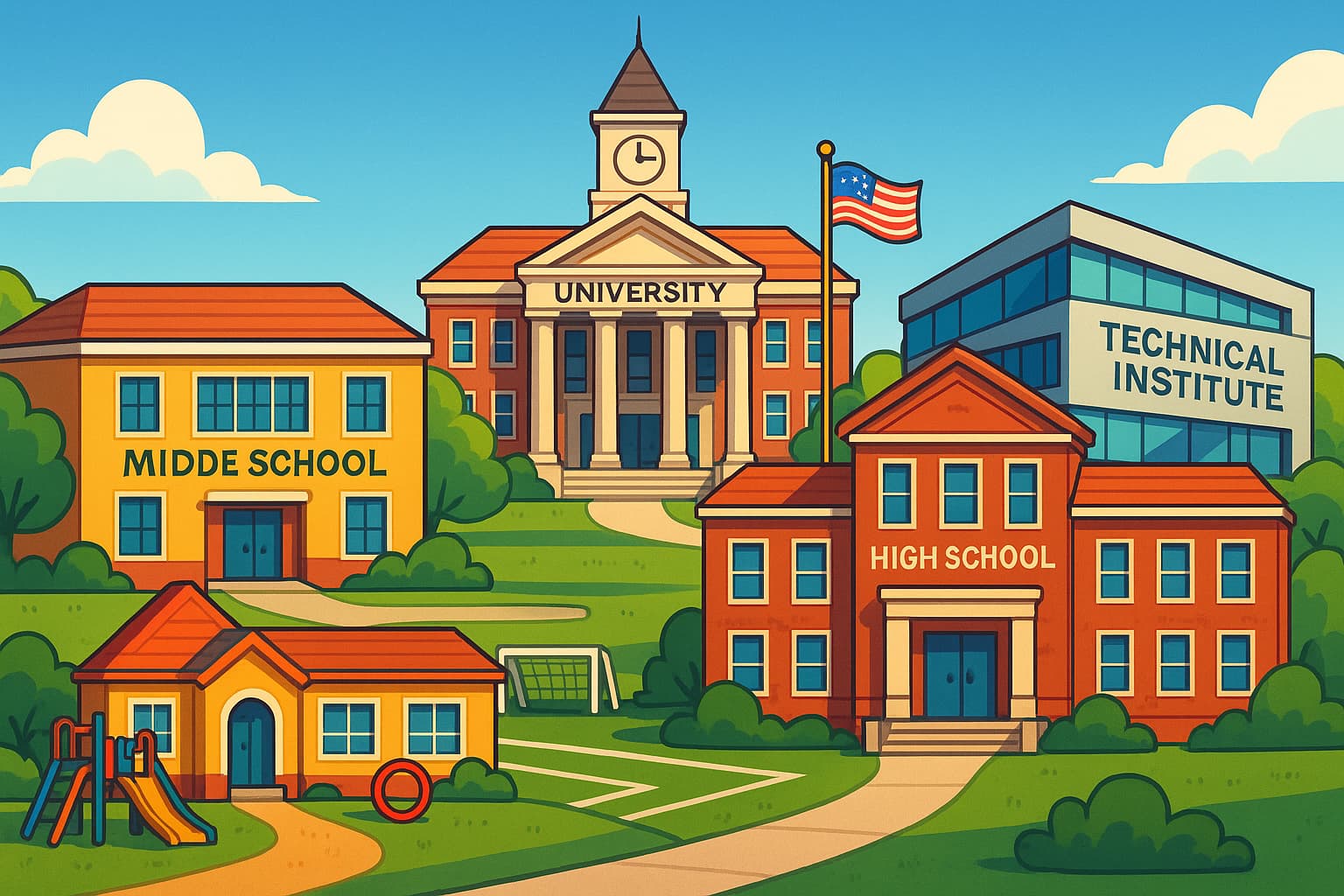
School naming traditions reveal fascinating glimpses into changing social values and educational philosophies. In colonial America, educational institutions bore deeply religious names like "Providence Academy" or "Trinity School," reflecting the theological foundations of early education. The founding of the republic brought patriotic naming, with many communities choosing "Washington Elementary" or "Jefferson High School" and turning presidents into educational patron saints. The industrial age introduced geographic precision with names like "North Central High School" and "East Valley Elementary," organizing growing urban school systems with bureaucratic efficiency. Today's naming trends embrace global perspectives and specialized missions: "International Academy of Innovation" and "STEM Excellence Institute" signal educational institutions adapting to an interconnected, technology-driven world. For writers and world-builders, that history gives school names a clear time period and cultural context.
Compare "Excellence Academy" with "Community Elementary" in your opening scene. One emphasizes achievement; the other names a community. Decide whether the institution lives up to that name. "Shadowmere Academy for Dark Arts" gives a fantasy school an explicit subject, but it does not tell us how its students behave. These are editorial interpretations, not findings about psychological triggers or educational outcomes.
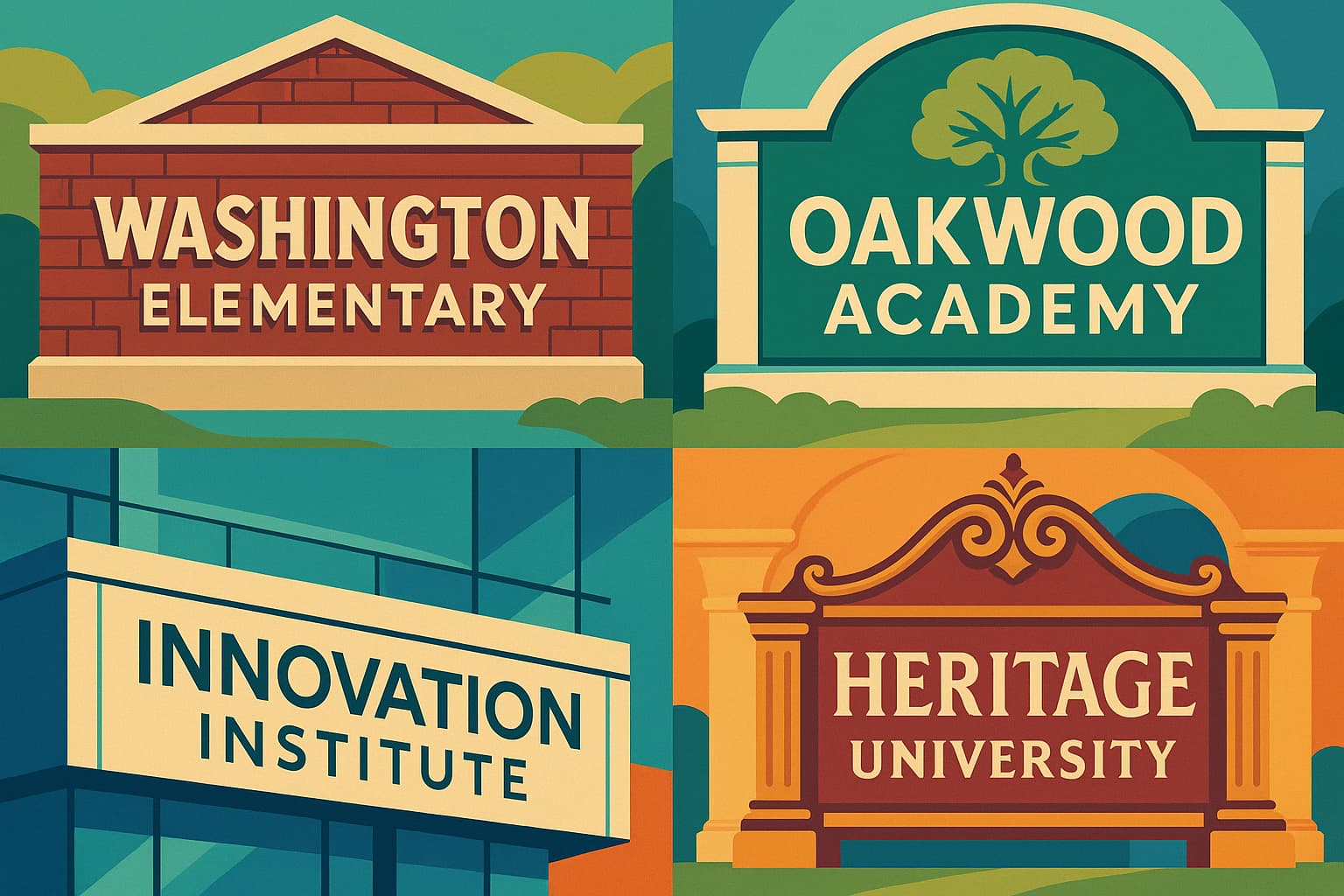
Educational naming conventions reveal deep cultural values that vary dramatically across regions and communities. Southern American schools often honor Confederate generals or local historical figures, while Western schools embrace frontier themes with names like "Pioneer High School" or "Frontier Academy." New England institutions maintain colonial formality with names like "Phillips Exeter Academy" and "Groton School," emphasizing centuries-old educational traditions. Urban schools frequently adopt forward-looking names that emphasize diversity and innovation, such as "Global Learning Institute" or "Metropolitan Academy of Arts," while rural schools celebrate agricultural heritage with names like "Valley View Elementary" or "Country Day School." International naming patterns are useful too: exploring German city naming conventions reveals how European institutions embed geographic and cultural heritage into their identities. These regional patterns extend beyond geography into socioeconomic aspirations: wealthy communities often choose prestigious-sounding names with words like "Preparatory," "Academy," or "Institute," while working-class areas prefer straightforward "High School" or "Elementary" designations that emphasize accessibility over exclusivity.
Different educational specializations demand distinct naming approaches that immediately communicate their unique missions and cultures. Military academies require names that convey discipline, honor, and strategic thinking, as in "Command Staff College" or "Naval War Academy," while technical institutes emphasize innovation and practical application with names like "Digital Innovation Center" or "Applied Engineering Institute." Magical academies in fantasy settings combine mystical gravitas with educational structure, especially when paired with convincing wizard names: "Starlight Academy of Mystical Arts" promises both rigorous training and otherworldly wonder. If you're developing characters to populate these institutions, our guide on how to come up with character names offers complementary naming strategies. These specialized naming conventions help establish institutional culture and student expectations before the scene begins. A character attending "Shadowmere Academy for Dark Arts" enters a very different narrative environment than one enrolled at "Bright Futures Elementary," and readers instinctively understand these differences through the power of carefully chosen institutional names.
School names follow distinct patterns that reflect both their educational mission and community values. Elementary schools often embrace welcoming, nurturing names like "Sunshine Academy" or "Meadowbrook Elementary," creating an environment that feels safe and encouraging to young learners. Middle schools frequently honor historical figures, especially presidents like "Washington Middle School" or "Lincoln Academy," recognizing this transitional period where students begin to understand their place in larger historical and civic contexts. High schools typically emphasize achievement and geographic identity with names like "Central High" or "Excellence Academy," preparing students for future success. Universities and colleges often combine location with academic focus, such as "Northern State University" or "Metropolitan Institute of Technology," conveying both accessibility and scholarly prestige that attracts students and faculty from diverse backgrounds.
Creating authentic school names requires understanding the institution's educational level, community role, and academic mission. Here's a comprehensive guide to naming schools based on their characteristics and functions:
Military:
Command, Strategic, Defense, Leadership
Technical:
Innovation, Digital, Applied, Advanced
Magical:
Arcane, Mystical, Celestial, Elemental
Educational institution names carry symbolic weight within their communities. They anchor local identity and shared aspirations. When a town names its high school "Eagle Heights Academy," it is choosing words that declare a belief in achievement and elevated perspectives. "Heritage Elementary" tells newcomers that this community honors its past while nurturing its future. Military academies with names like "Honor Guard Institute" can suggest an official ideal of integrity and service. Whether students share that ideal is a separate story choice. Names can become part of local folklore, referenced in homecoming celebrations, alumni gatherings, and family stories passed down through generations. For storytellers and world-builders, that symbolic power makes a school name a clue to the community that supports it.
When crafting educational institutions for your stories, the school's name should reflect its academic focus as well as the relationships, traditions, and expectations that define student life. Consider how "Starlight Academy of Mystical Arts" immediately suggests a place where wonder and learning intertwine, where students might study ancient spellbooks by candlelight and practice magic under starlit courtyards.
Names like "Heritage Academy" or "Classical Preparatory School" signal institutions that value time-honored traditions, formal ceremonies, and established protocols. Students expect rigorous academic standards, honor codes, and connection to alumni networks that span generations.
Schools named "Innovation Institute" or "Future Leaders Academy" communicate forward-thinking approaches, technology integration, and collaborative learning environments. Students anticipate modern facilities, diverse perspectives, and curricula that adapt to changing world needs.
Names incorporating specific fields like "Maritime Academy" or "Performing Arts Institute" immediately establish the institution's primary mission and attract students with matching interests and career aspirations.
Schools like "Valley Community College" or "Neighborhood Elementary" emphasize accessibility, local identity, and inclusive environments where every student belongs regardless of background or economic status.
Contemporary educational naming reflects our rapidly changing world and evolving understanding of effective learning environments. The rise of STEM-focused institutions has produced names like "Innovation Academy" and "Digital Arts Institute," while growing environmental consciousness has sparked "Green Technology Center" and "Sustainable Studies School." Globalization influences appear in names like "International Baccalaureate Academy" and "World Languages Institute," reflecting education's increasingly interconnected nature. Perhaps most significantly, modern schools increasingly emphasize student agency and personalized learning with names like "Student-Centered Learning Institute" or "Individualized Education Academy." These trends extend into fictional naming as well. Futuristic stories often feature "Neural Interface Academy" or "Quantum Learning Center," while fantasy settings might blend traditional and modern elements with "Ancient Arts Technology Institute" or "Mystical Engineering Academy."

Elementary schools have the job of making education feel welcoming for children taking their first formal learning steps. These names often evoke nature, growth, and community warmth. "Sunshine Elementary" sounds cheerful and promises an environment where children feel safe to explore, make mistakes, and discover their potential. The prevalence of nature-based names like "Oakwood" and "Maple Leaf" reflects a belief that young learners need a connection to the natural world as they build their first academic habits. Perfect for heartwarming children's stories, coming-of-age narratives, or any setting where you want to emphasize innocence, growth, and community support.
Middle school naming traditions show how American culture views this awkward transitional period. The preference for presidential names like Washington, Lincoln, and Jefferson turns these institutions into civic classrooms where students begin understanding their place in larger historical narratives. This isn't coincidental; middle school years coincide with developing abstract thinking about democracy, citizenship, and national identity. These names carry weight and expectation, suggesting that students should aspire to leadership and civic engagement. Ideal for young adult fiction exploring themes of identity, social pressure, and the awkward journey between childhood innocence and teenage complexity.
High school names serve as aspirational bridges between adolescence and adulthood, deliberately emphasizing achievement, direction, and institutional prestige. The geographic precision of names like "North Valley" and "Central Academic" reflects the bureaucratic organization of modern educational systems, while achievement-focused names like "Excellence" and "Merit Academy" communicate clear performance expectations. These institutions prepare students for college and career choices, so their names often emphasize forward momentum and success. Essential for contemporary young adult fiction, coming-of-age stories, and any narrative exploring themes of academic pressure, social hierarchy, and the transition to adult responsibility.
University names balance regional accessibility with global ambition, reflecting higher education's dual role as community anchor and international research hub. Names like "Metropolitan Institute of Technology" communicate urban connectivity and cutting-edge innovation, while "Heritage University College" suggests timeless academic traditions and scholarly continuity. The strategic use of words like "Institute," "Center," and "University" signals specific institutional missions, from research focus to specialized training or comprehensive education. These names work well for academic fiction, intellectual thrillers, campus-based romances, or any story exploring themes of scholarly pursuit, research ethics, or the collision between ivory tower idealism and real-world complexity.
These military academy name ideas use words associated with command, training, and service. Treat those words as possible story themes, not promises about student behavior. Names like "Strategic Defense Institute" and "Command Staff College" communicate intellectual rigor alongside physical training. These are centers of military scholarship and leadership development, not simple boot camps. The deliberate emphasis on "Command," "Leadership," and "Excellence" reflects the military's understanding that modern warfare requires strategic thinking and ethical decision-making under extreme pressure. Perfect for military fiction, political thrillers, alternate history scenarios, or any narrative exploring themes of duty, sacrifice, and the moral complexities of organized conflict.
Technical institute names sit between practical skill-building and the technology careers they prepare students for. Names like "Digital Innovation Academy" and "Advanced Technology Institute" promise hands-on learning experiences that prepare students for rapidly evolving technology careers. The emphasis on "Applied," "Innovation," and "Development" reflects technical education's focus on real-world problem-solving rather than purely theoretical knowledge. These institutions bridge the gap between traditional academic learning and industry needs, making their names essential for contemporary fiction exploring themes of technological change, career transformation, or the social impact of automation and digital advancement.
Magical academy names need to make mystical education feel wondrous and academically rigorous. Names like "Starlight Academy of Mystical Arts" and "Crystal Tower Academy" combine celestial beauty with institutional structure, suggesting places where ancient wisdom meets scholarly discipline. The prevalence of elemental and cosmic references, such as "Celestial," "Ethereal," and "Dragonfire," reflects fantasy literature's connection between magical power and natural forces. These names help with world-building by establishing the scope and nature of magical education while promising readers environments where wonder and learning intertwine. Essential for fantasy epics, magical realism, urban fantasy, or any narrative where education transcends mundane reality.
Ready to design your perfect educational institution? Try our school name generator to create authentic names for elementary schools, middle schools, high schools, universities, military academies, technical institutes, and magical academies, complete with institutional character and educational authenticity perfect for creative writing and world-building projects.
Schools are commonly named after notable historical figures, geographic landmarks, or community values. Some are named after founders, donors, or local cultural icons.
Common conventions include using directional indicators (e.g., Westside Elementary), surnames of prominent individuals, or descriptive terms that reflect the school's mission or location.
A good fictional school name feels authentic, suits the story's setting and tone, and is memorable. Combining a proper noun with a school type (e.g., Thornfield Academy) often works well.
Well-known examples include Hogwarts School of Witchcraft and Wizardry from Harry Potter, Xavier's School for Gifted Youngsters from X-Men, and Rydell High from Grease.