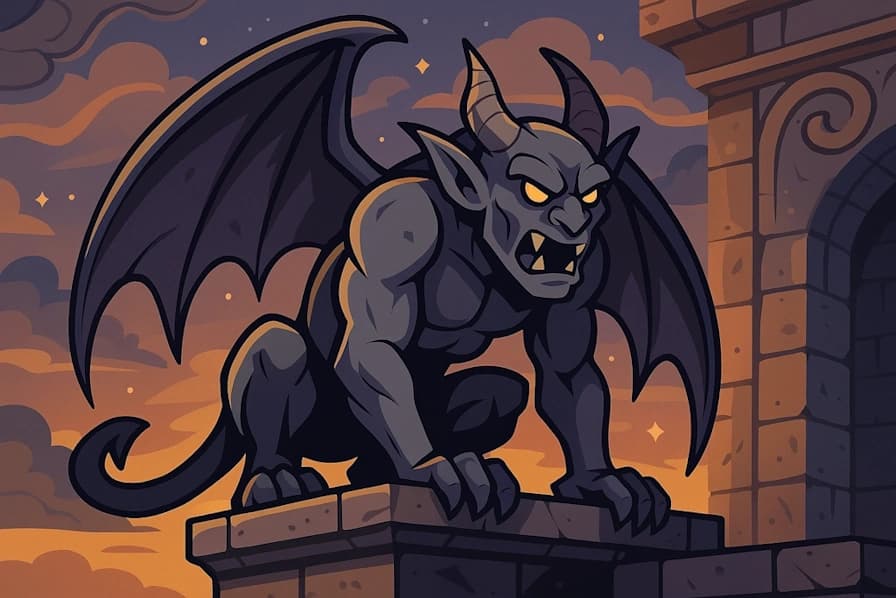
Gargoyle Names: 350+ Mythical, Male, Female & Stone Guardian Ideas
A curated collection of 350+ gargoyle names, including famous, male, female, mythical, stone guardian, Gothic urban, and meaning-rich ideas for fantasy characters.
The best gargoyle names do two jobs at once: they sound carved from old stone, and they tell you what the guardian protects. This refreshed list starts with usable names first: famous gargoyle names, male and female gargoyle names, mythical cathedral names, stone guardian names, and quick meanings you can adapt for D&D, dark fantasy, Gothic fiction, or worldbuilding.
Inline generator
Generate female names here
Use the matching Gargoyles Names without leaving the article. Pick a style, generate fresh names, and copy the good ones.
These famous gargoyle names come from animation, Gothic fiction, and landmark architecture. Use them as direct inspiration or as a reference point for the tone your own stone guardian should carry.
1
Goliath
The noble leader of the Manhattan Clan from Disney's Gargoyles, known for his wisdom and strength
2
Hudson
The elderly mentor figure from Gargoyles, named after the Hudson River
3
Broadway
The jovial, food-loving member of the Manhattan Clan from Gargoyles
4
Brooklyn
The second-in-command of the Manhattan Clan, known for his tactical mind
5
Lexington
The smallest and most technically inclined member of the Manhattan Clan
6
Demona
The complex antagonist from Gargoyles, a powerful warrior with a deep hatred for humans
7
Angela
Goliath's daughter and a fierce warrior in her own right
8
Bronx
The gargoyle beast and loyal companion to the Manhattan Clan
9
Victor
The gentle giant gargoyle from The Hunchback of Notre Dame
10
Hugo
The comical gargoyle known for his wit from The Hunchback of Notre Dame
11
Laverne
The wise and sarcastic female gargoyle from The Hunchback of Notre Dame
12
Griff
The noble London Clan gargoyle with a griffin-like appearance
13
Una
The unicorn-like female gargoyle of the London Clan
14
Leo
The lion-like member of the London Clan
15
Coldstone
The cyborg gargoyle, brought back to life through technology and magic
16
Katana
Brooklyn's mate from feudal Japan, skilled with the sword
17
Fu-Dog
A gargoyle beast from the Xanadu Clan, resembling a Chinese guardian lion
18
Ophelia
A female warrior of the Avalon Clan, known for her grace in battle
19
Gabriel
The leader of the Avalon Clan, raised alongside Angela
20
Desdemona
One of the souls within Coldstone, known for her wisdom and compassion
Male Gargoyle Names
Male gargoyle names often sound heavy, martial, and ancient. Hard consonants, storm words, stone roots, and guardian titles help these names feel ready for towers, battlements, cathedrals, and midnight patrols.
1
Korgath the Stonebearer
2
Zephyrus the Darkbearer
3
Thrakos the Nightbearer
4
Malakai the Stormbearer
5
Grimlock the Shadowbearer
6
Draxus the Windbearer
7
Vorgath the Lightbearer
8
Syrus the Dawnbearer
9
Malark the Duskbearer
10
Thane the Flamebearer
11
Karnath the Skybearer
12
Drogath the Mistbearer
13
Vex the Thunderbearer
14
Darius the Moonbearer
15
Thrax the Starbearer
16
Kain the Cloudbearer
17
Magnus the Rainbearer
18
Drakon the Frostbearer
19
Zorn the Sunbearer
20
Thorax the Timebearer
21
Garth the Eternitybearer
22
Golem the Spellbearer
23
Granite the Runebearer
24
Slate the Battlebearer
25
Basalt the Agebearer
26
Obsidian the Ironbearer
27
Karnak the Fatebearer
28
Zephon the Wraithbearer
29
Atlas the Titanbearer
30
Ragnar the Stormbearer
31
Xanth the Soulbearer
32
Vulcan the Firebearer
33
Pyrox the Ashbearer
34
Grendel the Chaosbearer
35
Theron the Justicebearer
36
Orion the Starforgebearer
37
Kratos the Warbearer
38
Chronos the Hourbearer
39
Helios the Sunrisebearer
40
Typhon the Tempestbearer
41
Cerberus the Guardbearer
42
Ajax the Shieldbearer
43
Hades the Darkflamebearer
44
Thanatos the Deathbearer
45
Morpheus the Dreambearer
46
Aegis the Protectorbearer
47
Titan the Mountainbearer
48
Fenris the Wolfbearer
49
Odin the Wisdombearer
50
Thor the Thunderstridebearer
51
Loki the Trickbearer
52
Heimdall the Watchbearer
53
Baldur the Lightbringer
54
Tyr the Honorbearer
55
Freyr the Harvestbearer
56
Bragi the Songbearer
57
Vidar the Silencebearer
58
Forseti the Justicebearer
59
Njord the Seabearer
60
Aegir the Oceanbearer
61
Mimir the Knowledgebearer
62
Thorn the Thornbearer
63
Raven the Shadowwingbearer
64
Storm the Tempestbearer
65
Blade the Steelbearer
66
Forge the Flameheartbearer
67
Claw the Beastbearer
68
Fang the Huntbearer
69
Rock the Earthbearer
70
Steel the Ironheartbearer
71
Frost the Winterbearer
72
Blaze the Infernobearer
73
Shadow the Nightshadebearer
74
Thunder the Stormcloudbearer
75
Lightning the Sparkbearer
76
Wind the Hurricanebearer
77
Earth the Quakebearer
78
Fire the Volcanobearer
79
Ice the Glacierbearer
80
Stone the Mountainpeakbearer
81
Metal the Forgeworkbearer
82
Crystal the Gemstonebearer
83
Dawn the Sunrisebearer
84
Dusk the Sunsetbearer
85
Night the Starshinebearer
86
Day the Sunlightbearer
87
Twilight the Gloamingbearer
88
Storm the Lightningbearer
89
Rain the Stormcloudbearer
90
Cloud the Skybearer
91
Star the Constellationbearer
92
Moon the Lunarbearer
93
Sun the Solarbearer
94
Sky the Celestialbearer
95
Space the Voidbearer
96
Time the Eternitybearer
97
Void the Darknessbearer
98
Light the Luminancebearer
99
Dark the Umbralbearer
100
Ash the Cinderbearer
101
Flame the Embersbearer
102
Smoke the Mistbearer
103
Steam the Vaporbearer
104
Mist the Fogbearer
105
Fog the Hazebearer
106
Haze the Cloudbearer
107
Cloud the Stormbearer
108
Storm the Thunderbearer
109
Thunder the Lightningbearer
110
Lightning the Stormbearer
111
Rain the Downpourbearer
112
Snow the Blizzardbearer
113
Hail the Stormbearer
114
Sleet the Icebearer
115
Frost the Freezebearer
116
Ice the Glacialbearer
117
Glacier the Frostbearer
118
Winter the Snowbearer
119
Summer the Heatbearer
120
Spring the Renewalbearer
121
Autumn the Harvestbearer
122
Season the Changebearer
123
Cycle the Timebearer
124
Age the Wisdombearer
125
Era the Epochbearer
126
Epoch the Eternalbearer
127
Eon the Infinitybearer
128
Infinity the Endlessbearer
129
Eternity the Foreverbearer
130
Forever the Timelessbearer
131
Timeless the Immortalbearer
132
Immortal the Deathlessbearer
133
Deathless the Eternalbearer
Female Gargoyle Names
Female gargoyle names can be elegant, severe, mythic, or terrifying. Names connected to moonlight, prophecy, stone, wisdom, and vengeance work especially well for sentinels who are both protectors and omens.
1
Luna the Shadowbearer
2
Sylph the Lightbearer
3
Myst the Nightbearer
4
Astra the Stormbearer
5
Nova the Moonbearer
6
Celeste the Starbearer
7
Tempest the Windbearer
8
Shade the Duskbearer
9
Aurora the Dawnbearer
10
Zephyra the Timebearer
11
Vesper the Mistbearer
12
Nyx the Darkbearer
13
Lyra the Flamebearer
14
Selene the Cloudbearer
15
Vega the Rainbearer
16
Echo the Thunderbearer
17
Terra the Stonebearer
18
Onyx the Spellbearer
19
Iris the Runebearer
20
Aura the Battlebearer
21
Crystal the Agebearer
22
Slate the Eternitybearer
23
Mist the Sunbearer
24
Dawn the Frostbearer
25
Twilight the Skybearer
26
Artemis the Moonhunterbearer
27
Athena the Wisdombearer
28
Persephone the Springbearer
29
Hecate the Magicbearer
30
Isis the Mysterybearer
31
Freya the Lovebearer
32
Hestia the Hearthbearer
33
Gaia the Earthmotherbearer
34
Calypso the Seabearer
35
Circe the Sorcerybearer
36
Thalia the Joybearer
37
Clio the Historybearer
38
Urania the Stargazebearer
39
Nemesis the Justicebearer
40
Nike the Victorybearer
41
Asteria the Starfallbearer
42
Eos the Dawnbringerbearer
43
Hemera the Daylightbearer
44
Nyx the Nightshadebearer
45
Iris the Rainbowbearer
46
Thetis the Seawavebearer
47
Aether the Lightbearer
48
Eris the Chaosbearer
49
Dione the Oraclebearer
50
Rhea the Timeflowbearer
51
Metis the Cunningbearer
52
Phoebe the Moonlightbearer
53
Theia the Sightbearer
54
Maia the Springbearer
55
Io the Wanderbearer
56
Electra the Stormcloudbearer
57
Calliope the Songbearer
58
Cassandra the Prophecybearer
59
Andromeda the Starchildbearer
60
Helena the Moonflowerbearer
61
Ariadne the Mazebearer
62
Medea the Enchantmentbearer
63
Harmonia the Peacebearer
64
Galatea the Stoneflowerbearer
65
Pandora the Mysterybearer
66
Psyche the Soulbearer
67
Callisto the Starbearer
68
Amalthea the Nurturerbearer
69
Daphne the Laurelbearer
70
Europa the Moonriderbearer
71
Leto the Nightqueenbearer
72
Merope the Stargazebearer
73
Naiad the Waterflowbearer
74
Orchid the Flowerbearer
75
Sage the Wisdombearer
76
Rose the Thornbearer
77
Willow the Gracebearer
78
Raven the Mysterybearer
79
Phoenix the Rebirthbearer
80
Dragon the Powerbearer
81
Swan the Gracebearer
82
Dove the Peacebearer
83
Falcon the Swiftnessbearer
84
Wolf the Moonhowlbearer
85
Leopard the Nighthunterbearer
86
Tiger the Fiercebearer
87
Lion the Pridebearer
88
Bear the Strengthbearer
89
Deer the Swiftnessbearer
90
Fox the Cunningbearer
91
Owl the Wisdombearer
92
Eagle the Visionbearer
93
Hawk the Keensightbearer
94
Serpent the Cunningbearer
95
Viper the Strikebearer
96
Cobra the Deadlybearer
97
Python the Powerbearer
98
Hydra the Manyheadbearer
99
Medusa the Stonegazebearer
100
Sphinx the Riddlebearer
101
Siren the Songbearer
102
Harpy the Stormwindbearer
103
Valkyrie the Chooserbearer
104
Norn the Fatebearer
105
Muse the Inspirationbearer
106
Grace the Beautybearer
107
Fury the Vengeancebearer
108
Fate the Destinybearer
109
Fortune the Luckbearer
110
Victory the Triumphbearer
111
Glory the Honorbearer
112
Faith the Truthbearer
113
Hope the Lightbearer
114
Joy the Blissbearer
115
Peace the Serenitybearer
116
Love the Heartbearer
117
Dream the Visionbearer
118
Wish the Desirebearer
119
Star the Celestialbearer
120
Moon the Lunarqueenbearer
121
Sun the Solarqueenbearer
122
Sky the Heavenbearer
123
Storm the Tempestqueenbearer
124
Wind the Zephyrbearer
125
Rain the Stormqueenbearer
126
Snow the Winterqueenbearer
127
Ice the Frostqueenbearer
128
Fire the Flamequeenbearer
129
Earth the Terraqueenbearer
130
Water the Aquaqueenbearer
131
Air the Skyqueenbearer
Mythical Gargoyle Names
Mythical gargoyle names borrow from sacred architecture, Latin-sounding saints, vaulted ceilings, spires, bells, and holy stone. They suit cathedral guardians and ancient protectors bound to sacred ground.
1
Sanctus Stonewatch
2
Aurelius Stoneguard
3
Benedict Holywing
4
Cassius Vaultheart
5
Dominic Spireguard
6
Francis Stoneholy
7
Gabriel Cathedralwing
8
Jerome Bellkeeper
9
Magnus Archguard
10
Nicholas Stonefaith
11
Raphael Vaultwatch
12
Sebastian Holyheart
13
Theodore Spirewatch
14
Valentine Stoneblessed
15
Victor Sacredwing
16
Adrian Stonecross
17
Bartholomew Cathedralguard
18
Constantine Holyvault
19
Erasmus Spirekeeper
20
Felix Stonechant
21
Gregory Cathedralwarden
22
Ignatius Holyshard
23
Lawrence Spireward
24
Matthias Stonehymn
25
Oswald Vaultguard
26
Paschal Holycrown
27
Quentin Spiresong
28
Reginald Stoneprayer
29
Sylvester Cathedralstone
30
Timothy Holyarch
Stone Guardian Names
Stone guardian names emphasize defense and endurance. They are ideal for gargoyles fixed to fortress walls, castle gates, watchtowers, bridges, and other hard places where the name should feel like a warning.
1
Aegon Battleward
2
Bane Ironwing
3
Castor Warheart
4
Drake Siegeguard
5
Erik Steelwatch
6
Falkor Ironstone
7
Gareth Battleclaw
8
Hadron Wartower
9
Ivan Siegewing
10
Jareth Ironfang
11
Kael Battlestone
12
Lance Warguard
13
Magnus Siegeheart
14
Nolan Ironward
15
Orion Battlewatch
16
Pike Warcrown
17
Quinn Siegeclaw
18
Rex Ironguard
19
Stone Battlefang
20
Tor Warstone
21
Ulric Siegewatch
22
Vex Ironcrown
23
Wade Battleward
24
Xander Warwing
25
York Siegeguard
26
Zane Ironwatch
27
Axel Battleheart
28
Bastion Warclaw
29
Crag Siegestone
30
Dorn Ironward
Gothic Urban Gargoyle Names
Urban gargoyle names move the old Gothic silhouette onto skyscrapers, bridges, rooftops, and neon-lit city blocks. They are useful for modern fantasy, superhero settings, and stories where ancient stone guardians adapt to steel and glass.
1
Atlas Skywatch
2
Blaze Neonwing
3
Chrome Steelguard
4
Dash Urbanwing
5
Echo Cityheart
6
Flux Neonwatch
7
Grid Cyberwing
8
Halo Skyguard
9
Ion Steelwatch
10
Jet Urbanward
11
Knox Neonclaw
12
Link Cityguard
13
Max Steelheart
14
Neo Skyward
15
Onyx Urbanwatch
16
Pulse Neonguard
17
Quest Citywing
18
Rex Steelcrown
19
Storm Skywatch
20
Tex Urbanstone
21
Ultra Neonward
22
Volt Cityguard
23
Wire Steelwing
24
Xero Skyheart
25
Zap Urbanclaw
26
Ace Neonstone
27
Bolt Citywatch
28
Core Steelward
29
Dash Skywing
30
Edge Urbanwatch
Gargoyle Names With Meanings
Gargoyle name meanings usually come from material, position, duty, or threat. These examples show how a short meaning can make a name feel intentional instead of randomly Gothic.
Sanctus Stonewatch: holy watcher carved for a cathedral or abbey.
Granite Runebearer: an old stone guardian marked with protective symbols.
Aegon Battleward: fortress defender whose name suggests shields and siege walls.
Terra Stonebearer: earth-bound sentinel with a grounded, protective nature.
Vesper Mistbearer: twilight gargoyle tied to fog, roofs, and evening watch.
Obsidian Ironbearer: dark volcanic stone mixed with unbreakable resolve.
Gabriel Cathedralwing: sacred winged guardian with angelic overtones.
Atlas Skywatch: rooftop guardian who watches over a city skyline.
The Mystical World of Gargoyles: Ancient Guardians in Stone
Gargoyles are extraordinary architectural elements that transcend mere decoration, embodying centuries of mythology, architectural innovation, and spiritual beliefs. Like other stone and supernatural guardians such as demons and angels, these magnificent stone sentinels have guarded sacred spaces and secular buildings alike, their origins dating back to ancient civilizations and continuing to capture imaginations today.
Ancient Origins and Medieval Evolution
The history of gargoyles stretches back to ancient civilizations:
Ancient Greece: The Temple of Zeus at Olympia pioneered the use of lion-headed water spouts called "simae", which became the standard for Hellenic temple architecture and influenced Roman building practices for centuries. The unprecedented installation of 102 lion-headed gargoyles at the Temple of Zeus revolutionized ancient water management, creating a sophisticated drainage system that preserved the temple's massive limestone structure for generations.
Medieval Europe:The Legend of La Gargouille tells of a fearsome dragon-serpent that terrorized Rouen, causing floods from the Seine River and devouring ships and men until it was confronted by St. Romanus in the 7th century. According to the legend, St. Romanus subdued the beast with a crucifix and the help of a condemned prisoner, then burned its body and mounted its head on the cathedral walls, establishing the tradition of using grotesque creatures as architectural elements. For more on names from this era, see our best medieval names for characters.
Key Fact:Gargoyles originated as functional waterspouts on Gothic cathedrals, with the term from French "gargouille" (throat/gullet) describing both water-channeling function and gurgling sounds. The Legend of La Gargouille tells of a dragon terrorizing Rouen until St. Romanus subdued it.
Legendary Gargoyles and Their Stories
Throughout history, certain gargoyles have become legendary:
Notre-Dame de Paris:Le Stryge ("The Vampire") is the cathedral's most famous chimera, added during Viollet-le-Duc's 19th-century restoration and immortalized in Charles Nègre's 1853 photograph, becoming a symbol of Gothic Revival architecture. The iconic Spitting Gargoyle of Notre-Dame pioneered medieval rainwater management, featuring an innovative double-channel system that protected both the walls and foundations, inspiring similar designs across Europe.
Chrysler Building:The building's Art Deco eagles, designed by William Van Alen in 1929, brought gargoyle-like ornament into a modern skyscraper. Automotive grotesques based on Chrysler radiator caps and hood ornaments gave the building a sharper, machine-age version of an old Gothic idea.
Eastern State Penitentiary:John Haviland's 1829 Gothic Revival design incorporated fierce gargoyles that served both as watchmen and psychological deterrents, their menacing presence reinforcing the prison's reputation for strict surveillance. The penitentiary's gargoyles were believed to possess supernatural powers that prevented prisoner escapes, with several unexplained incidents attributed to their otherworldly intervention.
Properties and Supernatural Powers
Gargoyles possess various mystical attributes according to folklore:
Protective Powers:Medieval folklore describes gargoyles as powerful wardens against supernatural threats, with the ability to detect and repel evil spirits through their fierce appearances and sacred positioning on church buildings. Gargoyles were believed to create invisible barriers of protective energy around religious buildings, their positions carefully calculated to form geometric patterns of mystical significance. According to ancient texts, gargoyles could absorb negative spiritual energy and transform it into protective force, acting as spiritual filters for the sacred spaces they guarded.
Magical Abilities:Medieval legends tell of gargoyles awakening at midnight to patrol their territories, with numerous accounts of mysterious stone wings casting shadows on moonlit nights. Gargoyles were said to possess a secret language of stone, allowing them to communicate across vast distances and coordinate their protective efforts throughout entire cities. Their stone bodies were believed to retain memories spanning centuries, accumulating wisdom from observing countless human generations pass beneath their watchful gaze.
Physical Characteristics and Behavior
Traditional gargoyles exhibit distinct features and behaviors:
Physical Features:Gothic craftsmen carved hybrid forms with parts of lions, eagles, dogs, dragons, and human faces. The practical details mattered as much as the monster shape: long necks and channels through open mouths carried rainwater away from the walls, protecting the masonry from damage.
Behavioral Traits:In fantasy, gargoyles often stay frozen through daylight and wake after sunset. Their loyalty is usually tied to a place: a church, bridge, tower, prison, or old family house. Removing one can become a curse, a broken oath, or the start of a very bad night.
Architectural History and Cathedral Significance
Gargoyles had a practical job in Gothic cathedrals: move rainwater away from the walls. The monster shape gave that job a spiritual edge.
Notre-Dame de Paris: Features some of the world's most famous gargoyles, including the contemplative "Stryga" chimera overlooking Paris. Medieval craftsmen carved these between 1163-1345, each designed to channel rainwater away from mortar joints while serving as warnings against evil spirits.
Reims Cathedral: Master masons developed sophisticated naming systems for their gargoyles, recording specifications in guild manuscripts. Each gargoyle received workshop designations like "North Tower Dragon, Position Seven" for maintenance records spanning centuries.
Westminster Abbey: English Gothic gargoyles blend practical hydraulics with apocalyptic imagery. Craftsmen named them after biblical beasts: "The Leviathan Spout," "Behemoth Corner," connecting architectural function with theological symbolism.
Gargoyle vs Grotesque: Technical Distinctions
Architectural terminology distinguishes functional water spouts from purely decorative sculptures:
True Gargoyles: Functional water spouts with internal channels directing rainwater away from walls. Etymology from French "gargouille" (throat), referring to the gurgling sound water makes flowing through. Naming emphasizes hydraulic function: "Spout Guardian," "Rain Channeler," "Water Sentinel."
Grotesques (Chimeras): Decorative sculptures without water channels, purely ornamental guardians. Names focus on appearance rather than function: "The Demon Watcher," "Beast Observer," "Stone Sentinel." These include Notre-Dame's famous thinking chimeras.
Bosses and Corbels: Interior architectural supports carved with protective faces. Medieval guilds called them "Green Men," "Roof Guardians," or "Ceiling Watchers," believing they protected against structural collapse and evil spirits simultaneously.
Regional Variations in European Gargoyle Design
Different European regions developed distinct gargoyle styles and naming conventions reflecting local mythology and aesthetics:
French Gothic: Emphasized graceful flowing forms with elegant curves. Parisian workshops created sophisticated hybrid creatures combining multiple animals. Names like "La Chimère du Nord" (The Northern Chimera) reflected royal patronage and courtly aesthetics.
English Gothic: Favored naturalistic animals—lions, eagles, dogs—alongside grotesque demons. English masons used practical workshop names: "South Tower Hound," "West Wing Drake," prioritizing identification over poetry.
German/Central European: Incorporated local folklore monsters like kobolds and lindworms. Germanic naming emphasized protective function: "Der Wächter" (The Guardian), "Der Beschützer" (The Protector), reflecting regional emphasis on tangible security over abstract symbolism.
Italian/Mediterranean: Combined classical Roman lions with Christian iconography. Renaissance influence brought more humanistic forms. Names often referenced saints or classical heroes: "San Michele's Lion," "Hercules Guardian."
Stone Guardian Mythology Across World Cultures
Protective stone beings appear in architectural traditions worldwide, though each culture gives them its own shape and purpose:
Chinese Shishi (Guardian Lions): Imperial palaces feature paired stone lions, male (paw on sphere) and female (paw on cub), named for their locations: "Gate Guardian East," "Gate Guardian West." Represent power and protection, prevent evil spirits from entering through main entrances.
Japanese Komainu: Shrine guardians depicting lion-dogs in complementary pairs—one with open mouth (saying "ah"), one closed (saying "un"), representing beginning and end of all things. Named for positions: "Agyō" (open) and "Ungyō" (closed).
Mesopotamian Lamassu: Ancient Assyrian winged bulls with human heads guarded palace gates. Names like "The Bull of Nineveh" or "Sargon's Guardian" connected them to rulers they protected, embodying royal power and divine authority.
Egyptian Sphinxes: Lion bodies with pharaoh heads lined temple approaches. Named after the rulers they depicted: "Ramesses Guardian," "Sphinx of Giza," serving as eternal protectors of sacred spaces and royal tombs.
Cultural Impact and Modern Interpretations
Gargoyles continue to influence culture and art:
Architectural Revival:The 19th-century Gothic Revival brought gargoyles back onto churches, universities, and civic buildings. Modern architects still borrow the idea, sometimes as drainage, sometimes as a sly decorative joke tucked high above the street.
Popular Culture:Disney's animated series "Gargoyles" (1994-1997) gave many viewers their first version of gargoyles as characters rather than carvings. Urban fantasy often uses them as roofline guardians, old monsters with inconvenient loyalties, or boundary-keepers for magical places. For more fantastic creatures to populate your worlds, explore our ultimate guide to fantasy creature names.
Sacred Duties and Guardian Roles
The spiritual responsibilities of gargoyles include:
Spiritual Functions:Folklore treats gargoyles as watchers on sacred ground. Their ugly faces scare away demons, their high perches let them see trouble coming, and their names often sound like warnings: Spirewatch, Vaultclaw, Bellwarden, Stone-Eye.
Architectural Duties:Gargoyles were also drainage systems. Each sculpture was angled so rainwater ran through its mouth and fell away from the wall instead of soaking into mortar. That practical job is why so many gargoyle names work best when they include rain, gutter, spout, vault, or roof imagery.
Gargoyles work because they are useful and strange at the same time. They are drains, monsters, jokes, warnings, and guardians carved into one shape. Their hybrid forms combine elements of dragons, lions, and eagles with whatever fear or joke the mason wanted to leave behind in stone.
Gargoyle Types & Functional Roles
Different types of gargoyles serve various protective functions. Choose names that match your gargoyle’s architectural setting and purpose:
The Cathedral Guardian
Sacred protectors of holy places, blessed with divine purpose and unwavering faith
Examples: Sanctus Stonewatch, Benedict Holywing, Gabriel Cathedralwing
The Fortress Sentinel
Battle-hardened defenders of castles and strongholds, skilled in warfare and strategy
Examples: Aegon Battleward, Drake Siegeguard, Magnus Siegeheart
The Urban Watcher
Modern protectors of cities and skyscrapers, adapting ancient duty to contemporary threats
Gargoyles attuned to natural forces, channeling wind, rain, and stone in their protection
Examples: Storm Skywatch, Stone Battlefang, Echo Cityheart
How to Choose a Gargoyle Name
Choose a name that fits the gargoyle's building, material, and job as a watcher or waterspout.
1
Consider the Architectural Setting
Choose names based on where the gargoyle stands guard: Cathedral gargoyles need sacred, Latin-inspired names; Fortress gargoyles require military, defensive names; Urban gargoyles suit modern, industrial names reflecting their city environment.
2
Reflect Guardian Nature
Incorporate protective and watchful elements into the name. Gargoyles are eternal sentinels, so names should convey strength, vigilance, and unwavering duty spanning centuries of guardianship.
3
Use Stone and Material Themes
Include references to stone, granite, marble, or other materials in the naming. The gargoyle's composition as a living stone creature should be reflected in solid, enduring name elements.
4
Add Mythological Elements
Draw from mythology and ancient guardian spirits. Gargoyles connect to grotesques, chimeras, and other protective beings from various cultural traditions.
5
Use a Gargoyle Name Generator
Generate gargoyle names that mix Gothic architecture, guardian mythology, and stone-based elements.gargoyle name generator
Good gargoyle names sound old, watchful, and stone-carved. Goliath, Demona, Sanctus Stonewatch, Granite Runebearer, Aegon Battleward, Terra Stonebearer, and Obsidian Ironbearer all suggest Gothic architecture, protection, and supernatural strength.
What are good male gargoyle names?
Strong male gargoyle names often use hard consonants, stone imagery, and guardian titles. Korgath the Stonebearer, Malakai the Stormbearer, Drakon the Frostbearer, Atlas the Titanbearer, and Cerberus the Guardbearer are useful examples.
What are good female gargoyle names?
Female gargoyle names can be fierce, Gothic, or mythic. Demona, Angela, Luna the Shadowbearer, Nyx the Darkbearer, Athena the Wisdombearer, Terra the Stonebearer, and Medusa the Stonegazebearer all fit female stone guardians.
What do gargoyle name meanings usually reference?
Gargoyle name meanings usually reference stone, rainwater, watchfulness, churches, towers, wings, claws, night, and protection. Names built from roots like granite, slate, spire, ward, watch, claw, and vault immediately signal a guardian role.