
Loading...
Loading...
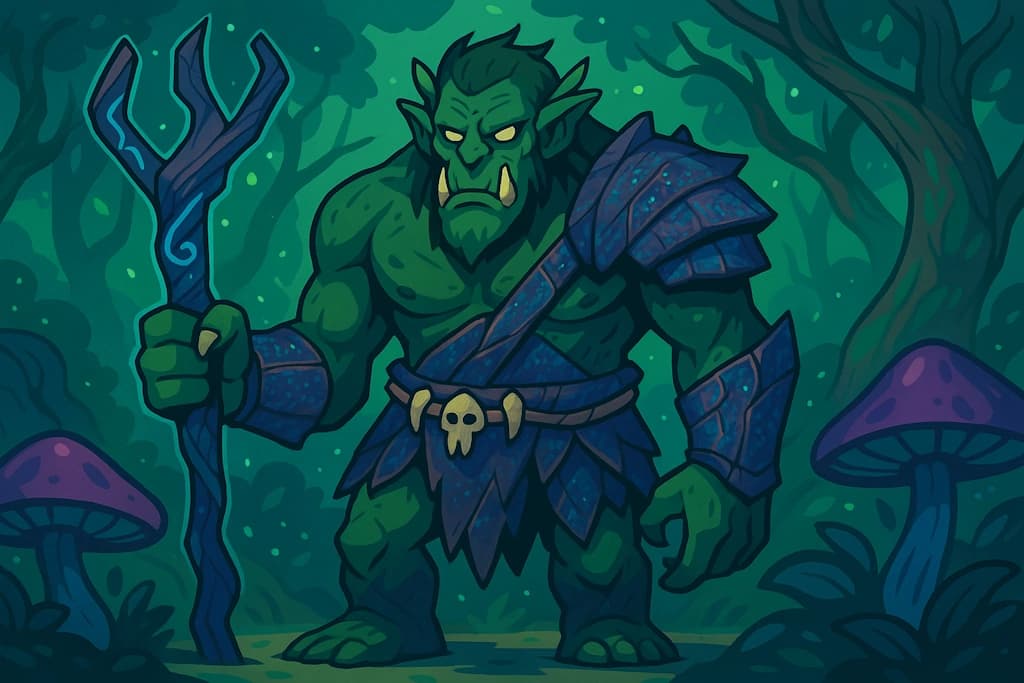
Browse 300+ troll names for D&D characters, fantasy stories, WoW-inspired heroes, female and male trolls, troll hunters, famous folklore trolls, and funny monsters.
Need a troll name fast? Start with the lists below. You'll find 300+ troll names grouped for fantasy campaigns, female and male trolls, troll hunters, WoW-style characters, Norse and mountain trolls, bridge guardians, swamp creatures, frost trolls, and gross-out comedy monsters. Pick one as written or use it as a rough shape for your own creature.
Use the matching Trolls Names without leaving the article. Pick a style, generate fresh names, and copy the good ones.
Style
Choose a style before generating.
6 names ready to copy.
Starter names from the generator
Generator hubs
Need names around the troll too? These hubs help with nearby creatures, D&D characters, villains, and the places they guard.
Short version: good troll names sound heavy, old, and a little ugly. Use hard consonants like gr, kr, th, br, and zog; add stone, moss, bog, cave, bridge, frost, or hunger words when you want the creature's role to be obvious. Grimfang fits a dungeon brute. Mossbeard fits a forest elder. Bridgebane fits a hunter who knows exactly what they're hunting.
Grimfang, Thorkarl, Skogvarg, Bjorngar, Grommash, Huldran, Trollvald, Stonefist
Venmara, Ziataara, Meenah, Shakra, Sulynn, Yishijo, Ziajdnaya, Damari
Darkdelver, Stalactite, Tunnelgnash, Cavemaw, Echovoice, Crystaleye, Shaftguard, Pitdweller
Stoneward Karra, Brindle Hexmark, Ashen Pike, Vela Netcaster, Brok Suntrap, Mira Bridgebane
Zul'kora, Jin'vash, Rok'tala, Sen'kiri, Vol'rahn, Zan'toba
The Bridge Troll, Dovregubben, Thrymr, Grendel, Tom, Bert
Wartbelch, Bogsnort, Fungusgut, Toadmuzzle, Slimeknuckle, Grubnose
"Thokk." Say it out loud. The name hits like a club to the skull, suggesting exactly the kind of troll who solves problems by smashing them. "Fimbulvetr" carries the weight of Norse apocalypse in its syllables, evoking frost trolls of mythic proportions. "Gruffguard" connects immediately to that fairy tale bridge troll from childhood. These names work because they instantly convey personality and purpose. Hear the name, picture the creature: regenerating cave dweller obsessed with riddles, frost-covered mountain king who commands avalanches, wise old swamp guardian who's seen empires rise and fall.
Scandinavian trolls emerged from the harsh reality of life in northern Europe. When winter darkness stretched for months, when mountains swallowed travelers without trace, when forests seemed infinite and hostile, people needed explanations. The Norse created trolls to explain disappearances, avalanches that destroyed settlements, the bone-deep fear that gripped anyone traveling alone through wild country. Trolls became the personification of nature's hostility, creatures that represented everything dangerous and unknown about the wilderness. They weren't evil in any moral sense; they simply existed outside human concerns, defending their territories with the same instinct that drives bears to protect their cubs.
The oldest Norse sources describe trolls as massive, dimwitted creatures easily tricked by clever humans despite their immense strength. They feared church bells, Christian symbols, and especially sunlight. The touch of dawn's rays would petrify them instantly, turning living flesh to stone. This sunlight weakness created natural drama in countless folk tales: heroes racing to delay trolls until sunrise, entire troll families frozen mid-step as monuments to their nocturnal hunting. But trolls weren't uniformly monstrous. Some tales speak of troll women who married human men, of troll craftsmen whose work rivaled dwarven smithing, of troll kings who ruled underground kingdoms with surprising sophistication.
As Christianity spread through Scandinavia, troll legends evolved. Earlier pagan spirits and nature deities got reclassified as trolls: creatures of the old world that hadn't accepted the new religion. This transformation enriched troll mythology, adding layers of tragedy to their stories. They became symbols of a fading past, creatures forced further into the wilderness as human civilization expanded. The famous bridge trolls emerged from this period, territorial guardians demanding payment or tribute, representing the conflict between expanding human trade routes and the wild lands they crossed. These trolls weren't necessarily violent; many would let travelers pass for a reasonable toll, a clever riddle's answer, or simply a good story to break their eternal monotony.
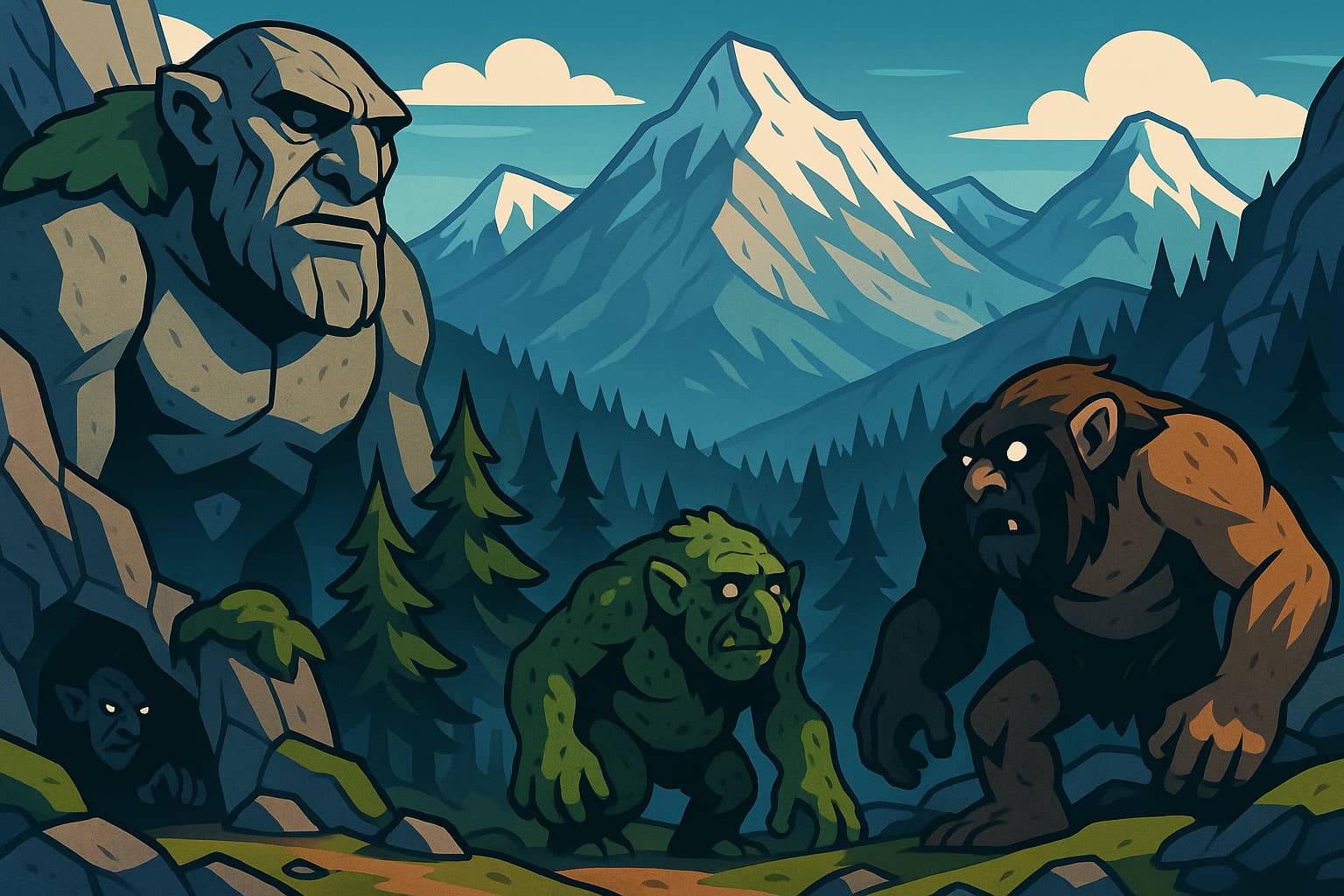
Troll physicality varies wildly depending on their environment and the traditions describing them. Mountain trolls tower three to four times human height, with rocky skin that provides natural armor and makes them nearly indistinguishable from cliff faces when motionless. Their strength lets them hurl boulders like humans throw stones, reshape landscapes through brute force, and survive cave-ins that would pulverize lesser creatures. They share this raw physical power with ogres, though trolls are generally more cunning. Cave trolls adapted to darkness developed extraordinary senses: hearing that detects heartbeats through stone walls, smell so acute they can track prey across miles, touch-sensitive skin reading vibrations in the earth itself.
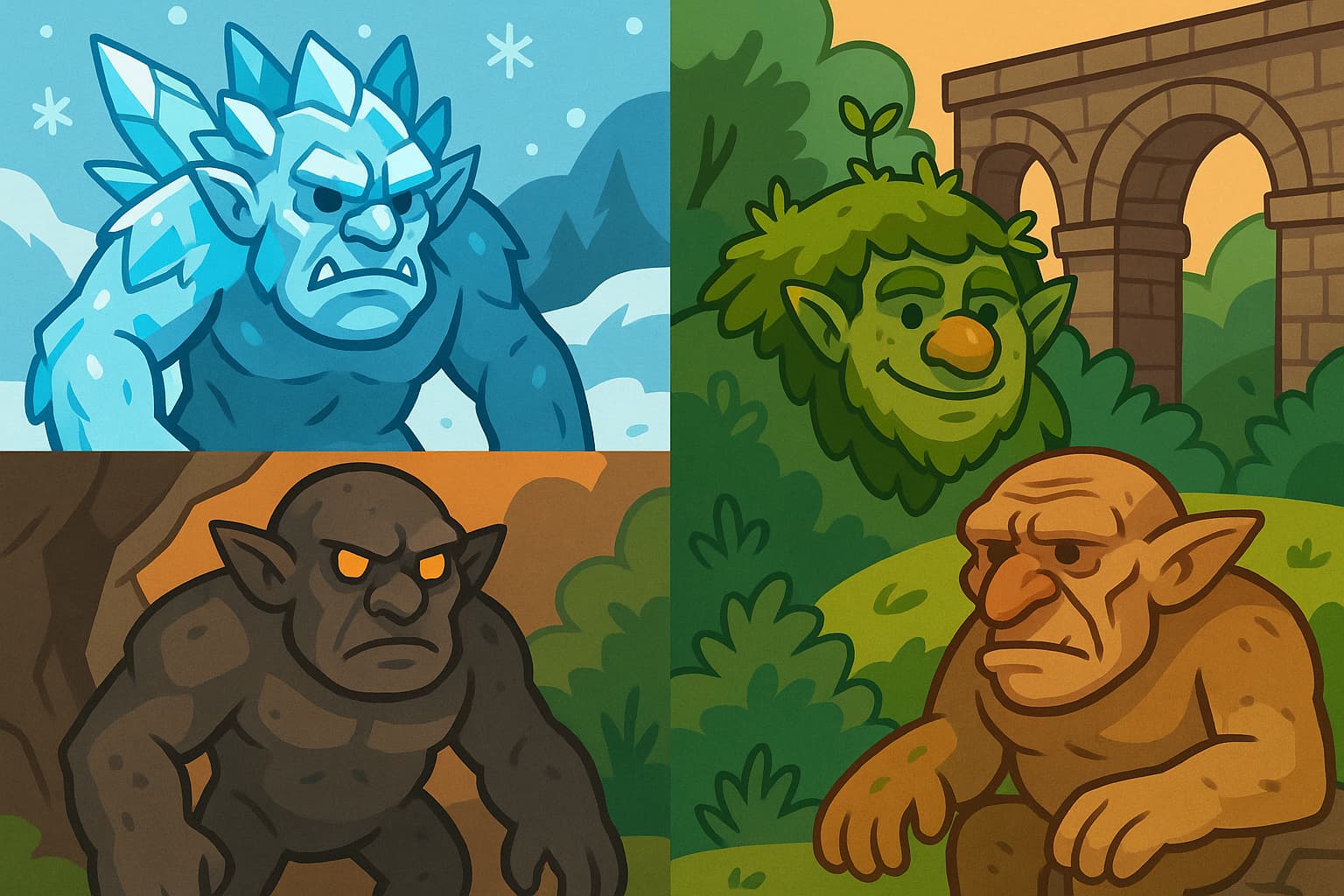
Forest and swamp trolls present entirely different adaptations. They're typically smaller (merely twice human size) but far more dangerous for their environment. Moss, lichen, and even small plants grow directly on their skin, making them vanish into woodland backgrounds. Some trolls stand so still for so long that birds nest in their hair and squirrels store nuts in their crevices, giving them camouflage until they explode into violence. Swamp trolls can breathe underwater through gill-like slits, walk across quicksand that would swallow horses, and emit toxic gases that render their territories nearly impenetrable to outsiders.
The most remarkable troll trait (one that appears across nearly every tradition) is their regeneration. Trolls heal from wounds that would be instantly fatal to other creatures. Severed limbs regrow, crushed bones knit back together, even decapitation might not kill them permanently. This regeneration makes them extraordinarily difficult to defeat through conventional combat. Fire and acid prevent regeneration, which is why D&D trolls fear flames above all else. In World of Warcraft, Darkspear trolls can regenerate health rapidly, paying homage to this ancient trait. This biological gift explains why trolls survive in the harshest environments and why they've persisted through ages when other magical races declined.
Troll names follow distinct patterns that immediately communicate their nature and origin. Norse-inspired trolls favor harsh consonant clusters like "Grommash," "Throkk," "Kveldulf" that sound like rocks grinding together or avalanches rumbling down mountainsides. These names resist being whispered; they demand to be growled or roared, much like the guttural sounds found in orc names and goblin names. Multiple syllables add weight and antiquity: "Fimbulvetr" carries the weight of endless winter in its very pronunciation, while "Trollvald" suggests ancient royalty through its construction.
Modern fantasy gaming introduced new naming conventions that have become equally iconic. Warcraft trolls feature apostrophes in unusual places like "Zul'jin," "Vol'jin," "Sen'jin," creating a distinctive linguistic signature that immediately identifies them. These names blend exotic sounds with familiar structures, making them memorable and pronounceable despite their foreign feel. The pattern has become so established that any fantasy troll with an apostrophe-divided name immediately evokes Warcraft's rich troll culture, with its voodoo magic, tribal structure, and complex spiritual traditions.
Whether you're naming a boss encounter, creating a memorable NPC, or developing an entire troll civilization for your world, certain principles create names that feel genuine and memorable.
Norse Trolls: Draw from Old Norse language and mythology. Consider reading gargoyle names for stone creature inspiration, or villain names for antagonistic character development.
Gaming Trolls: Modern fantasy games like D&D and Warcraft have established their own troll naming conventions. Study these patterns if your trolls exist in similar settings.
Fairy Tale Trolls: Often have simpler, more descriptive names like "Gruff" or "Old Bridge-guard" that emphasize their role rather than elaborate background.
The bridge troll from "Three Billy Goats Gruff" might be the most famous troll in Western culture: a creature so iconic that "troll under the bridge" has become shorthand for territorial threats and unreasonable demands. This Norwegian fairy tale presents trolls in their simplest form: brutish, greedy, and ultimately outwitted by cleverness. The troll's famous threat ("Who's that tramping over my bridge?") has echoed through children's literature for generations, establishing the core archetype of trolls as obstacles to be overcome rather than understood.
Tolkien transformed trolls from folklore creatures into epic fantasy monsters. In "The Hobbit," the three trolls Tom, Bert, and William provide comic relief through their bickering and eventual petrification by sunlight. But Tolkien's later trolls grew more dangerous: the cave troll in Moria, the massive siege trolls of Mordor, and the mysterious Olog-hai bred by Sauron to resist sunlight. Tolkien's innovation was treating trolls as a species with variations and history, not a handful of scattered monsters. This approach influenced every fantasy work that followed.
World of Warcraft turned trolls into a playable culture rather than just another monster group. The Darkspear tribe, Vol'jin, loa worship, witch doctors, headhunters, batriders, and apostrophe-heavy names gave players a specific naming style to borrow from. Use that style as inspiration, not as a requirement: a troll name can sound game-ready without copying one franchise.
Norwegian mountain trolls (jotnar) represented the massive, primordial forces of nature itself. These weren't mere large humanoids but geological phenomena given malicious intent. Standing hundreds of feet tall, they reshaped valleys through their movements and hurled boulders that became hills when they landed. Some Norse scholars argue these trolls embodied ice age memories: the grinding glaciers, the mountain-cracking freezes, the avalanches that destroyed entire settlements. Their names reflected this: Skrymir (The Vast), Hrungnir (Noisy), Thrymr (Crash).
Swedish forest trolls took a different form: smaller, more numerous, intensely territorial but occasionally willing to trade with humans who showed proper respect. These skogsrå protected woodland animals, punished hunters who killed wastefully, and could be bargained with for safe passage or forest knowledge. Female forest trolls sometimes took human lovers, producing half-troll children who inherited unusual strength and long lives. That tradition gives writers another option: trolls who bargain, marry, trade, remember debts, and occasionally get along with humans.
Iceland's trolls became literally part of the landscape. The island's dramatic geology (towering sea stacks, oddly shaped rock formations, precariously balanced stones) all received explanations as petrified trolls caught by sunrise. Tour guides still point to these formations: "There's the troll woman carrying her cow to market," "That's the troll fisherman who stayed out too late." This tradition made every unusual landscape feature a story, weaving trolls so thoroughly into cultural identity that geology and mythology became inseparable.
Creating a memorable troll character requires more than just picking a fierce name. Consider these aspects to develop three-dimensional troll personalities that players or readers will remember.
Trolls range from barely sentient brutes to cunning strategists. Decide where your troll falls on this spectrum. A simple-minded cave troll makes a straightforward combat encounter, while an ancient bridge troll who speaks in riddles creates complex social challenges. Intelligence affects naming. Smarter trolls might have elaborate titles and epithets, while primitive trolls might go by simple descriptive names like "Rockfist" or "Bigjaw."
Why does your troll guard that bridge, haunt that cave, or rule that mountain? Territory defense explains much troll behavior, but better motivations make better characters. Perhaps the bridge troll is actually protecting a sacred site downstream. Maybe the cave troll lost his family to adventurers and now hates all surface-dwellers. The mountain king might be preserving ancient knowledge in his stone halls, making him a potential ally rather than inevitable enemy.
Is your troll solitary or part of a tribe? Warcraft's complex troll societies with chieftains, witch doctors, and spiritual leaders provide models for sophisticated troll cultures. Norse mythology suggests troll families living in mountain halls with surprising domestic arrangements. Even solitary trolls have backstories. Were they exiled, the last survivor of their clan, or simply antisocial? These details inform behavior and create roleplaying opportunities.
Traditional sunlight vulnerability creates natural dramatic tension: heroes race to delay trolls until dawn. But consider other weaknesses: fear of bells (Norse tradition), inability to count past twelve (fairy tale logic), or compulsive need to answer riddles truthfully. Fire might prevent regeneration but not kill instantly. These vulnerabilities shouldn't make trolls pushovers but should reward clever players who research folklore or experiment tactically.
Dungeons & Dragons codified many troll traits that became standard across fantasy gaming. D&D trolls stand eight to nine feet tall with rubbery, moss-green skin that regenerates all damage except fire and acid. They're savage hunters with incredible strength but limited intelligence, making them dangerous but manipulable. The D&D troll's signature weakness (fire disrupts regeneration) creates tactical gameplay where smart parties carry torches and alchemist's fire specifically for troll encounters. This design choice transformed trolls from unstoppable threats into interesting tactical challenges.
Warcraft's reimagining gave trolls unprecedented depth and variety. The game features multiple troll subspecies adapted to different environments: jungle trolls of the Gurubashi empire, forest trolls of the Amani nation, ice trolls of the Drakkari kingdom, and island trolls of the Darkspear tribe. Each culture developed distinct traditions, architecture, and spiritual practices. Zandalari trolls (the ancient, sophisticated troll civilization) demonstrate that trolls can build pyramid cities, develop complex theology, and create art as refined as any human culture. This multifaceted portrayal influenced how other games and stories approach troll civilizations.
League of Legends' Trundle represents another approach: the troll as anti-hero protagonist. Rather than a monster to defeat, Trundle is a playable champion with complex motivations. He united his people by taking their diseases and curses upon himself, becoming a walking embodiment of troll suffering to save his tribe. This tragic-heroic characterization shows how trolls can carry stories as complex as any fantasy protagonist, moving beyond their origins as simple obstacles or antagonists.
The following collections present over 300 troll names organized by their traditional habitats and roles. Each category reflects different aspects of troll mythology and culture, from the towering mountain-dwellers of Norse legend to the sophisticated voodoo practitioners of modern gaming. For a broader look at how different races approach naming, see our guide to fantasy name types by race. Use these names directly for quick character creation, or let them inspire variations that fit your specific setting and needs.
These names draw from the oldest Scandinavian traditions and classic fantasy instincts: massive trolls who carve valleys with their footsteps, guard ancient passes, and carry the sound of stone in their syllables. Use them for primordial mountain kings, old cave warlords, D&D encounters, or any fantasy troll who should feel like a force of nature made flesh.
Female trolls appear less frequently in folklore but no less powerfully. They range from the deceptive huldra of Scandinavian legend to fierce warrior women, wise matriarchs, healers, spirit-speakers, and tribal leaders. These names break the stereotype of trolls as universally male brutes, offering opportunities to create complex female characters who are warriors, mystics, outcasts, or rulers.
These male troll names lean into the heavy, blunt, and subterranean side of troll fantasy. They fit cave chieftains, dungeon brutes, tunnel guards, under-mountain raiders, and scarred veterans who have spent centuries away from the sun. Use them when you want names that can be growled across a cavern and still sound believable.
Troll hunter names work best when they imply practical monster-slaying knowledge: dawn watches, fire hooks, bridge traps, root snares, and hard experience. These names are for rangers, village champions, dungeon specialists, or anti-troll factions in your world. They satisfy the troll hunter idea without depending on any one franchise's official canon.
These WoW-inspired troll names use clipped syllables, apostrophes, tribal rhythms, witch-doctor energy, loa-flavored spirituality, and warrior titles without pretending to be official canon. Use the sound as inspiration for original characters, especially if your setting includes troll clans, shamans, hunters, or playable monster peoples.
Modern fantasy games made trolls feel like full cultures rather than simple bridge monsters. These names represent trolls as warriors, shamans, spirit-speakers, tricksters, and political figures with complex traditions. Use them as a reference point for tone, then adapt the rhythm into names that belong fully to your own campaign or story world.
Famous troll names are useful shortcuts. A bridge troll immediately signals tolls, riddles, and dangerous crossings; Dovregubben suggests mountain royalty; Grendel evokes night-stalking horror. Treat these as reference points rather than a final list of canon to copy. A small change can turn a familiar archetype into an original troll for your campaign or story.
Not every troll needs to be a grim mountain king. Funny and grotesque troll names work well for gross-out comedy, tavern rumors, goblin-adjacent dungeon encounters, and low-level monsters players will remember after one scene. Names like Wartbelch and Fungusgut use body humor, swamp imagery, and ugly textures without losing their fantasy flavor.
Adapted to dense woodland and treacherous wetlands, these trolls represent nature's cunning side rather than brute strength. They are masters of camouflage and ambush, patient hunters who wait days for the right opening, and guardians of places where civilization fears to tread. Use these names for rangers' sworn enemies, druids' complicated allies, or old forest powers.
Arctic and alpine trolls adapted to the coldest environments, where their regeneration combines with elemental ice powers to create nearly unstoppable predators. These names evoke endless winter, killing cold, and the crack of splitting glaciers. Use them for winter campaigns, arctic ruins, ice-aligned warbands, or frozen mountain bosses.
The iconic bridge troll represents one of fantasy's most enduring archetypes: the territorial guardian demanding payment, a riddle, or a fight before allowing passage. These names emphasize the connection between troll and structure, guardian and duty. Use them for fairy-tale crossings, toll roads, dungeon gates, or recurring NPCs who make travel more complicated.
Start with the troll's habitat and temperament, then decide whether the name should sound folkloric, funny, brutal, or game-inspired.
Choose a naming style that matches your troll type: Norse mountain trolls use Old Norse-inspired names; Cave trolls favor harsh, guttural sounds; Forest/swamp trolls incorporate nature elements; Frost trolls use icy, cold-themed names; Bridge guardians have territorial names.
Reference distinctive troll characteristics in the name: massive size (Bonecrusher, Rockeater), ugly features (Wartface, Tuskmaw), strength (Ironfist, Stoneback), or regenerative abilities. Trolls are often named for their most prominent physical trait.
Create names with rough phonetics using hard consonants like K, G, R, T, and B. Troll names should sound blunt and intimidating. Avoid soft or melodic sounds; trolls aren't known for grace.
Incorporate elements from the troll's environment: mountain names for highland trolls, water/moss references for swamp dwellers, ice/snow for frost trolls. Many trolls are defined by the specific bridge, cave, or territory they guard or inhabit.
Use the troll name generator tool to create fierce names that capture the brutish strength, territorial nature, and primal power of these legendary creatures.
Need a troll name for your character, campaign, or story? Our troll name generator creates names inspired by Norse mythology, folklore, and modern fantasy gaming. Whether you need a fearsome mountain king, a cunning bridge guardian, or a mystical swamp shaman, the generator gives you more options quickly. For more naming inspiration, explore our dragon names, gargoyle names, or ultimate guide to fantasy creature names for creating entire fantasy worlds populated with memorable beings.
Good troll names sound heavy, earthy, and a little dangerous. Grimfang, Throkk, Stonefist, Mossbeard, Bogsnort, Venmara, and Zul-style fantasy names work because they suggest stone, hunger, bridges, old forests, or tribal power.
Good female troll names include Venmara, Ziataara, Meenah, Shakra, Sulynn, Yishijo, Damari, Huldra, and Sharimara. They can fit matriarchs, warriors, shamans, healers, hunters, and forest spirits rather than only brute monsters.
Troll hunter names can belong to characters who track, trap, or fight trolls. Names like Stoneward Karra, Ashen Pike, Brok Suntrap, Mira Bridgebane, and Calder Firehook emphasize fire, sunlight, bridges, traps, and hard-earned monster-slayer experience.
WoW-inspired troll names often use clipped syllables, apostrophes, tribal titles, and spiritual overtones, such as Zul'jin, Vol'jin, Rokhan, Sen'jin, and Zen'tabra. For original characters, borrow the rhythm without copying official canon too closely.
Folklore trolls are often wild beings from mountains, bridges, and old Scandinavian stories. RPG trolls usually emphasize combat traits like regeneration, fire weakness, and cave lairs. Game-inspired trolls may become full cultures with hunters, priests, rulers, and playable heroes.
Famous troll names and archetypes include the Bridge Troll, Dovregubben, Thrymr, Grendel-like night monsters, and storybook names such as Tom, Bert, and William. Use famous names as references, then alter them if you need an original fantasy character.