
Loading...
Loading...
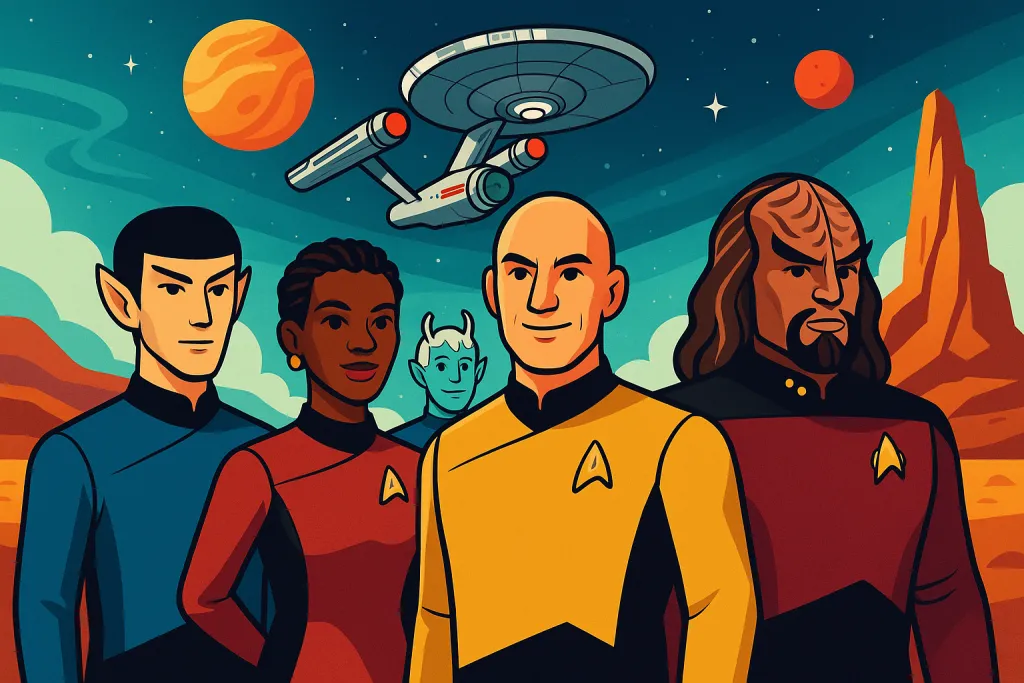
Create authentic Star Trek character names from Federation, Vulcan, Klingon, Romulan, Cardassian, Bajoran, Ferengi, and Andorian cultures with our comprehensive generator.
Ever wondered why Vulcan names like T'Pol and Spock sound so different from Klingon warriors like Martok and Worf? Or why Ferengi entrepreneurs seem to have names perfectly suited for closing deals? Trek's creators did more than assign random alien-sounding names. They built linguistic systems that reveal cultural traits for each species.
Use the matching Star Trek Character Names without leaving the article. Pick a style, generate fresh names, and copy the good ones.
Style
Choose a style before generating.
6 names ready to copy.
Starter names from the generator
Take Cardassian names, for instance. Characters like Gul Dukat and Elim Garak carry appellations that practically whisper of military hierarchy and bureaucratic precision. Meanwhile, Bajoran names like Kira Nerys place family identity before individual achievement, a naming convention that says a lot about their collective values. The names do real story work, not cosmetic decoration.
What strikes me most about Federation naming is how it evolved from Kirk's era to Picard's. James Tiberius Kirk sounds decidedly American: bold, straightforward, with that classical Roman middle name suggesting imperial ambition. Fast-forward a century to Jean-Luc Picard, and you get French sophistication mixed with archaeological passion. The Federation didn't homogenize human culture; it celebrated its diversity while reaching for the stars and exploring new worlds. Use our planet name generator to name those distant destinations.
Consider how perfectly some Federation names match their bearers' destinies. Hikaru Sulu, whose given name can suggest "light" in Japanese, pilots the Enterprise through uncharted space. If naming iconic vessels interests you, explore our guide to spaceship names. Montgomery Scott, with that sturdy Scottish surname, keeping the engines running against impossible odds. These weren't accidents. Gene Roddenberry and his writers understood that names carry weight, especially in a future where humanity had learned to honor every culture while building something entirely new.
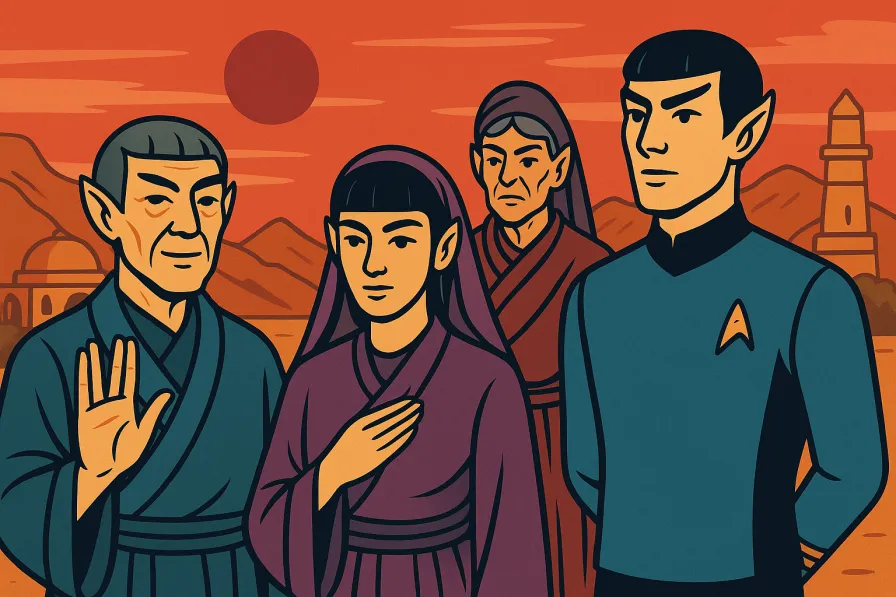
Here's something fascinating about Vulcan names that most fans miss: they're actually echoes of a violent past. That harsh consonant structure in names like "Sarek" and "Spock"? Those sounds harken back to pre-reform Vulcan, when emotion ruled and warfare consumed their world. The frequent T' prefix for female names, including T'Pol, T'Pau, and T'Pring, comes from an ancient honorific meaning "daughter of logic," a linguistic fossil from their philosophical revolution.
What I find remarkable is how Vulcan names changed after Surak's teachings took hold. Ancient Vulcan names were guttural, emotional, almost Klingon-like in their intensity. Modern Vulcan appellations flow with measured cadence, each syllable placed like spoken mathematics. Listen to how Leonard Nimoy pronounced "T'Plana-hath" (the Vulcan matriarch who made first contact with humans). Every sound deliberate, logical, controlled. The name itself became a meditation on emotional discipline.
You can practically hear the clash of bat'leths in Klingon names. When Marc Okrand developed the Klingon language, he made sure names like "Gowron" and "Martok" rolled off the tongue like battle cries. The heavy consonants do more than sound tough. They mirror the guttural nature of Klingon speech, where every syllable sounds forged in combat.
Traditional Klingon names carry genealogical weight that would make a medieval herald jealous. "Worf, son of Mogh" is a declaration of house loyalty, ancestral honor, and inherited obligation. When Klingons say "Kahless the Unforgettable," they invoke a name so powerful it shapes their entire civilization's destiny. Lose your family name in Klingon society, and you become "ghojmeH" (learner), essentially nameless until you earn honor again.
Romulan names are linguistic puzzles wrapped in political intrigue. Take "Shinzon": notice how it sounds almost human? That's deliberate. Romulans share Vulcan ancestry but chose passion over logic, and their names reflect this fascinating divergence. Where Vulcan names achieve mathematical precision, Romulan appellations dance with hidden meanings and emotional undertones.
What makes Romulan names particularly cunning is their multi-layered nature. "Sela" sounds deceptively simple until you realize it means "star" in an ancient Vulcan dialect. But which star? The one that guides, or the one that burns? Romulan parents often choose names with multiple interpretations, reflecting their culture's love of strategic ambiguity. In a society built on intelligence gathering and political maneuvering, even personal names become tools of misdirection.
Creating authentic Star Trek characters requires understanding how names reflect cultural values, social structure, and individual roles within each species' society.
Study canonical examples to understand naming patterns, phonetic preferences, and cultural significance. Each species has distinct linguistic rules that reflect their philosophy and social structure.
Match names to character functions. Vulcan scientists often have analytical-sounding names, while Klingon warriors carry names that suggest strength and combat prowess.
Respect each species' sound patterns: harsh consonants for Klingons, flowing vowels for Betazoids, precise articulation for Vulcans, and complex structures for Cardassians.
Consider the time period and political situation when creating names. Wartime characters might have more aggressive names, while peacetime diplomats often carry names suggesting wisdom or negotiation skills.
Cardassian names reflect their militaristic society's emphasis on order, hierarchy, and institutional loyalty. These names often indicate rank, family status, and professional specialization within the Union's complex bureaucratic structure. The formal complexity of Cardassian appellations mirrors their love of procedure, protocol, and systematic organization.
Many Cardassian names feature multiple syllables that suggest education and sophistication, qualities highly valued in their meritocratic society. Names like Tekeny suggest scholarly pursuits, while names ending in '-ak' or '-et' often indicate military service or intelligence operations, a tech-driven naming style reminiscent of cyberpunk character names. The subtle differences in Cardassian names can reveal entire family histories and political affiliations.
Bajoran names carry the weight of spiritual tradition and the strength forged through decades of resistance against Cardassian occupation. These names often reflect religious concepts, natural phenomena, and the deep connection Bajorans maintain with their prophetic faith and ancestral wisdom.
The unique Bajoran tradition of placing family names first demonstrates their collective values and respect for ancestral lineage. Names like Kira Nerys and Ro Laren follow this pattern, emphasizing family identity before individual achievement. This naming convention reflects the Bajoran understanding that personal accomplishments build upon the foundation laid by previous generations.
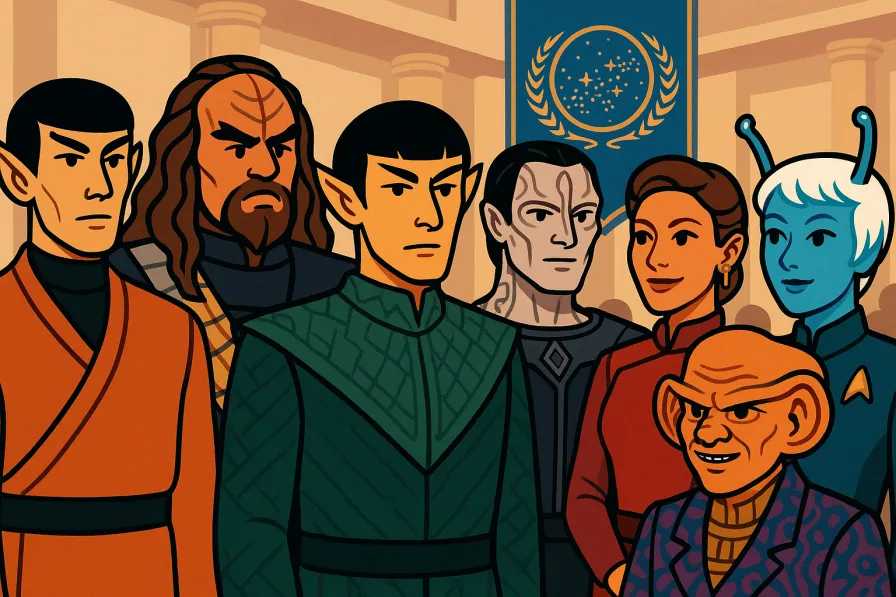
Ferengi names often sound like they were designed for business negotiations: quick, memorable, and slightly exotic to non-Ferengi ears. These names frequently incorporate sounds that suggest sharpness, cunning, and commercial acumen. The evolution of Ferengi naming reflects their transformation from pirates and traders to legitimate businesspeople and, eventually, social reformers.
Traditional Ferengi names like Quark and Rom demonstrate the species' practical approach to identity. Names should be easy to remember for potential business partners while maintaining enough uniqueness to establish personal brand recognition. The recent inclusion of female names in Ferengi society represents one of the most significant cultural changes in their recorded history.
Andorian names balance the competing demands of their warrior heritage and their role as founding members of the Federation. These names often suggest both combat readiness and diplomatic skill, which suits a species that understands that sometimes peace must be defended with strength.
Star Trek naming conventions reveal each species' culture, values, and social evolution across the series.
Star Trek names have evolved throughout the franchise, reflecting changing social attitudes and expanding galactic perspectives. Compare early series names with recent additions to see how each species' naming has adapted while maintaining core cultural identity. For more exploration of science fiction naming, check out our guide to fantasy creature names.
Federation names represent humanity's evolution into a spacefaring civilization that values exploration, diplomacy, and scientific advancement. These names blend Earth's diverse cultural heritage with the cosmopolitan influences of a galactic society. Federation officers often carry names that suggest leadership qualities, intellectual curiosity, and the pioneering spirit that drives humanity to seek out new life and new civilizations across the galaxy.
Vulcan names follow precise phonetic patterns that reflect their culture's commitment to logic and emotional control. The frequent T' prefix in female names and the flowing consonant combinations in male names demonstrate Vulcan linguistic evolution from their emotional past to their logical present. These names often incorporate concepts of wisdom, knowledge, and mental discipline that are fundamental to Vulcan philosophy and their role as one of the Federation's founding members.
Klingon names embody the warrior spirit that defines their civilization: strong consonants, rolling syllables, and sounds forged in the heat of battle. These names reference honor, strength, victory, and the great houses that shape Klingon politics. Traditional Klingon naming conventions include references to legendary battles, heroic ancestors, and the complex feudal relationships that govern their warrior society. Each name carries the weight of family honor and personal achievement in combat.
Romulan names blend the logical precision of their Vulcan ancestry with the cunning complexity of their secretive culture. These appellations often feature subtle variations that hide deeper meanings, fitting for a civilization built on intelligence gathering and strategic thinking. Romulan names possess a musical quality that masks the calculating minds of their bearers, reflecting a society where appearance and reality often diverge according to carefully planned deceptions.
Cardassian names reflect their militaristic society's emphasis on order, hierarchy, and institutional loyalty. These formal, multi-syllabic names often indicate rank, family status, and professional specialization within the Union's complex bureaucratic structure. The sophisticated complexity of Cardassian appellations mirrors their love of procedure, protocol, and systematic organization, while subtle phonetic differences can reveal entire family histories and political affiliations within their merit-based society.
Bajoran names carry the spiritual weight of ancient traditions and the strength forged through decades of resistance against occupation. These names reflect religious concepts, natural phenomena, and the deep connection Bajorans maintain with their prophetic faith. The unique Bajoran tradition of placing family names first emphasizes collective values and ancestral respect, demonstrating how personal accomplishments build upon foundations laid by previous generations of faithful believers.
Ferengi names sound perfectly designed for business negotiations: quick, memorable, and slightly exotic to non-Ferengi ears. These names incorporate sounds suggesting sharpness, cunning, and commercial acumen, reflecting a culture where profit and personal advancement drive social interaction. The evolution of Ferengi naming from their piratical origins to legitimate business practices mirrors their species' transformation from raiders to entrepreneurs to social reformers challenging traditional gender restrictions.
Andorian names balance the competing demands of their warrior heritage and their role as founding Federation members. These appellations suggest both combat readiness and diplomatic skill, fitting for a species that understands peace must sometimes be defended with strength. Andorian naming conventions reflect their evolution from isolated warriors to galactic diplomats, while maintaining the honor-based traditions that define their cultural identity and military service to interstellar cooperation.
Creating an authentic Star Trek character name requires understanding species conventions, cultural traditions, and Federation naming patterns. Follow these steps to craft the perfect name for your Trek character:
Choose a species and understand their naming conventions: Vulcans use logical, consonant-heavy names (Spock, T'Pol); Klingons favor harsh, warrior names (Worf, K'Ehleyr); Romulans use dignified names with Roman influences; Federation humans follow Earth cultural patterns; Bajorans place family name first; Ferengi prefer commercial-sounding names.
Match the name to social standing: Starfleet officers often have professional-sounding names; Klingon warriors need names suggesting honor and combat; Vulcan scientists suit intellectual, measured names; Romulan commanders require authoritative names; Ferengi entrepreneurs favor acquisitive-themed names.
Use species-specific sounds and structures: Vulcan names often have T', S', or K' prefixes; Klingon names use guttural sounds with Q, K, apostrophes; Andorian names include clan suffixes (th', ch'); Bajoran names have spiritual elements; Cardassian names sound militaristic and formal.
Reflect cultural values in the name: Vulcan logic and philosophy; Klingon honor and warfare; Bajoran spirituality and prophecy; Ferengi commerce and profit; Romulan secrecy and nobility; Federation diversity and cooperation. The name should embody these cultural touchstones.
Generate authentic Star Trek character names using our specialized generator that combines species conventions, cultural patterns, and canonical naming styles from across the Trek universe.Star Trek character name generator
Ready to create your own authentic Star Trek character? Our comprehensive Star Trek Character Name Generator offers unlimited name combinations from all major species, useful for fan fiction, RPG campaigns, or exploring the range of Trek's galactic civilization. Each generated name respects the cultural traditions and linguistic patterns that make Star Trek naming so authentic and memorable.
For more sci-fi naming resources, explore our alien race name guide for creating unique species, or check out our robot name generator for AI and android characters.
Star Trek character names are typically crafted to reflect the character's species and culture. Writers use distinct phonetic patterns for each alien race, such as guttural sounds for Klingons and flowing vowels for Vulcans, to make names feel linguistically consistent.
Vulcan names often begin with S or T and have a structured feel (Spock, Sarek, T'Pol). Klingon names use hard consonants and short syllables (Worf, Martok, Gowron). Bajoran names place the family name first, followed by the given name (Kira Nerys).
Spock's name was chosen by Gene Roddenberry for its alien yet memorable sound. Uhura comes from the Swahili word "uhuru" meaning freedom. Jean-Luc Picard was named to reflect a French heritage, honoring twin brothers Auguste and Jean Picard who were Swiss explorers.
To create authentic-sounding Star Trek names, choose a phonetic pattern for your species and apply it consistently. Use hard consonants for warrior cultures, softer sounds for scholarly ones, and consider adding apostrophes or unique letter combinations to suggest alien linguistics.