
Loading...
Loading...
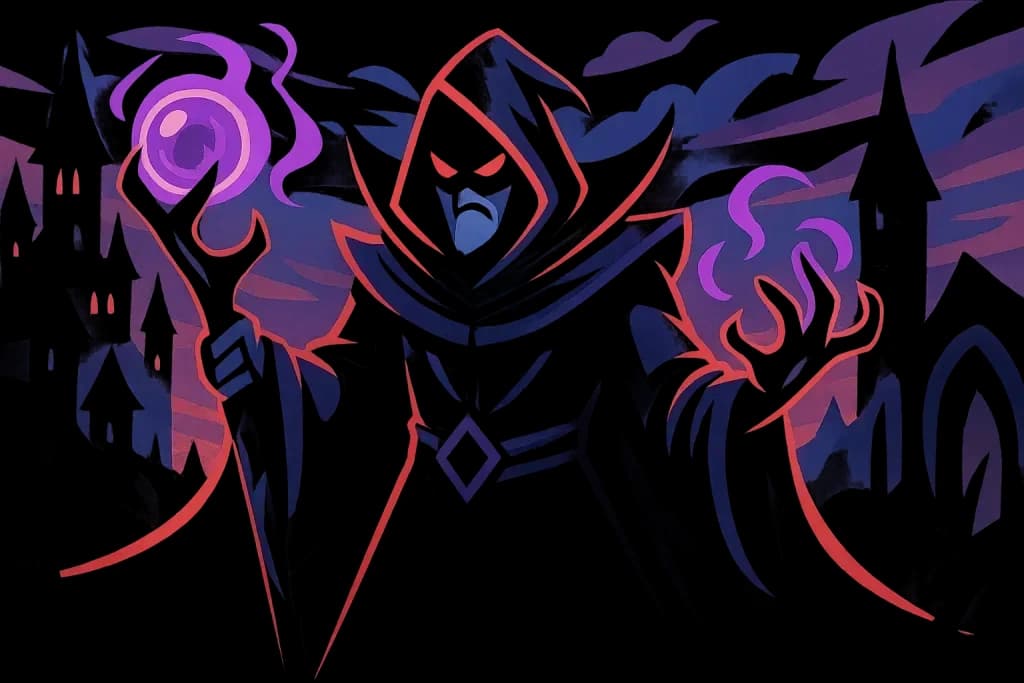
An analytical guide to crafting memorable villain names, covering phonetics, symbolism, titles, subtlety, and mythology with 90+ curated examples across genres.
Voldemort, Darth Vader, and Hannibal Lecter may bring scenes to mind if you know their stories. A new name has not earned those associations yet. Decide whether your antagonist needs a public title, a dramatic alias, or an ordinary name, then try it in a scene. This guide offers writing exercises, not psychological predictions.
Use the matching Villain Names without leaving the article. Pick a style, generate fresh names, and copy the good ones.
Style
Choose a style before generating.
6 names ready to copy.
Starter names from the generator
For an overt fantasy villain, try K or D stops, or S and Z sibilants, and listen to the rhythm. Compare "Kravoss" with "Lily" in the same threatening line. Either can belong to a villain. A language's sounds do not carry an inherent moral character, and unfamiliar pronunciation is not a sign of danger.
The most sophisticated villain names layer multiple phonetic strategies. "Szareth" opens with a buzzing sibilant cluster, moves through a dark vowel, and ends with a whispered fricative; it slithers, strikes, and fades. "Mordrek" hammers with nasal M, bites with the plosive D, and snaps shut with K. Each name creates a micro-narrative in sound: the way you say it mirrors how the villain operates. When crafting your own villain names, start by deciding on a phonetic personality. Is your villain a blunt instrument or a subtle poison? A roaring beast or a whispering shadow? The sounds should tell the story. For broader creative approaches, see our guide on how to come up with character names.
These examples use stops, sibilants, and compact endings. Try them for an overt fantasy antagonist, then decide whether the sound fits your scene. The category describes an editorial style, not a measured threat response.
Beyond sound, the most resonant villain names carry symbolic weight. They encode meaning through imagery, etymology, and cultural association. A name like "Nighthollow" sounds dark and means dark. It combines two concepts (night and hollow) that each carry their own web of associations: darkness, emptiness, concealment, loss. The compound effect is greater than either word alone. Symbolic villain names work on two levels simultaneously. On the surface, they signal threat through recognizable dark imagery: ash, thorn, raven, blight, void. Below that, they tell a story about the villain's nature, origin, or purpose. "Ashenthorn" does more than sound dark; it implies someone forged in destruction (ash) who now inflicts pain (thorn). The name carries a backstory in two syllables.
The trick to effective symbolic naming is restraint. One or two symbolic elements per name creates depth; more than that becomes heavy-handed. "Dreadmire" works because it combines exactly two ideas (fear + entrapment) into a single, speakable word. "DarkDreadShadowDoom" collapses under its own weight. The best symbolic names also leave room for interpretation. "Cinderveil" could suggest hidden fire, concealed destruction, or the aftermath of catastrophe masked by beauty. That ambiguity is a strength, not a weakness. It invites the audience to project their own fears onto the name.
Each of these names encodes dark meaning through imagery and compound symbolism. They work best for villains whose identities are inseparable from what they represent: corruption, decay, entrapment, or existential dread. Use these when your villain is as much a thematic force as a character.
"Kael" is a name. "Warden Kael of the Black Spire" is a threat wrapped in institutional authority. Titles transform villain names by adding layers of context: rank, domain, legitimacy, and scope of power. A title tells the audience that this villain doesn't operate alone. They command systems, organizations, or territories. They have infrastructure. They have minions who call them by that title with genuine deference. The choice of title also communicates genre and setting. "Lord" and "Empress" signal fantasy or historical fiction. "Director" and "Commander" suggest military, corporate, or sci-fi contexts. "Inquisitor" and "Warden" imply religious or carceral authority. Each title comes with its own set of genre expectations that shape how the audience receives the villain.
Epithets add another dimension entirely. "Empress Vaelis" is powerful. "Empress Vaelis the Undying" is mythic. The epithet tells us that this villain has done something so extraordinary or horrifying that it has become permanently attached to their identity. Epithets also have a practical storytelling function: they create instant intrigue. When a character is introduced as "The Pale Magistrate," the audience immediately wants to know why "Pale"? What happened? What does it mean? The name generates questions, and questions generate engagement.
These names demonstrate how titles, ranks, and epithets elevate a villain from an individual threat to an institutional one. Each title carries implications about the villain's power structure, domain of authority, and the kind of story they inhabit. Use titles when your villain leads, commands, or rules.
Not every villain needs a name that screams evil. Some of the most effective antagonist names are deliberately, unsettlingly ordinary. "Edward Crane." "Clara Whitfield." "Simon Glass." These names could belong to your accountant, your neighbor, your child's teacher. And that's exactly why they're terrifying. The gap between the mundane name and the character's actions can supply a contrast you want to explore. You do not have to make the name announce the character's role, and ordinary names are not proven to be more frightening.
The craft of subtle villain naming lies in choosing names that are normal on the surface but carry faint, almost subliminal, dark undertones. "Crane" sounds respectable, but cranes are patient, striking predators. "Glass" implies transparency, but also fragility weaponized and the ability to cut. "Frost" is a common surname, but it also encodes emotional coldness. The reader may not consciously register these undertones, but they create a subtle wrongness that pays off when the villain's true nature is revealed. This approach works best in thrillers, psychological horror, and literary fiction where realism is valued. For more overtly fantastical settings, see our 500+ Best Villain Names collection for names that lean into genre conventions.
Try these everyday names for an antagonist whose public life conceals their actions. Let the scenes establish the threat rather than expecting the name to do it.
Mythology is the oldest villain name generator in existence. Every culture has named its monsters, demon names, and cosmic adversaries, and those names carry thousands of years of accumulated dread. Drawing from mythology gives a villain name instant gravity, even if the reader doesn't know the specific reference, the linguistic DNA of myth feels ancient and significant. Adaptation matters more than direct copying. Using "Fenrir" directly ties your character to a specific Norse myth, limiting your creative freedom. But "Fenriskar," which echoes Fenrir while adding a suffix that implies agency, creates something new that inherits mythological weight without being bound by it. Similarly, "Typhonex" draws from Typhon (father of monsters in Greek myth) while the regal suffix elevates it into something original.
The richest mythological name sources for villains include Norse mythology (world-ending wolves and serpents), Greek mythology (titans and primordial monsters), Hindu mythology (cosmic cycles of destruction and rebirth), Egyptian mythology (chaos serpents and death gods), and Celtic mythology (shape-shifting war goddesses and otherworld entities). For creatures of ancient power, our dragon names collection draws from these same mythological traditions. Each tradition offers different flavors of villainy: Norse names tend toward apocalyptic scale, Greek names toward monstrous hybridism, Hindu names toward cosmic philosophy, Egyptian names toward eternal recurrence, and Celtic names toward fate and transformation.
These names draw from the world's mythological traditions, adapting ancient names of monsters, chaos entities, and cosmic destroyers into original villain identities. Each carries the weight of cultural memory while remaining distinct enough for original storytelling. Use these for villains of epic scope and cosmic significance.
Every genre has its own villain naming grammar. Sci-fi villains favor clinical designations, alphanumeric codes, and corporate titles that reduce human identity to function: "Director Null," "Protocol Thirteen," "Executor 7." The horror is in the dehumanization: these names suggest a world where individual identity has been subsumed by systems. Horror villains work through uncanny contrast: "The Smiling Man," "Sister Hemlock," "Mama Grave." Each name takes something benign, such as a smile, a nun, or a mother, and corrupts it. Urban fantasy villains blend the mythological with the modern: "Madame Nyx" puts a French salon title on a Greek primordial deity, creating a character who belongs to both worlds. Dark fantasy settings often draw on sinister racial naming conventions. Our guide to dark elf and drow names explores how these traditions shape villain identities.
The most effective genre villain names work because they conform to genre expectations just enough to feel authentic while subverting them just enough to feel fresh. A fantasy villain named "Director Null" would feel wrong. That name belongs in a chrome corridor, not a stone castle. Conversely, "Lord Ravenmoor" in a cyberpunk setting would feel like a genre-anachronism unless the story deliberately plays with that tension. Matching your naming conventions to your genre signals to the audience that you understand the world you're building, which builds trust. You need that trust before you can truly frighten them.
These names demonstrate how villain naming conventions shift across genres. From the clinical menace of sci-fi designations to the corrupted comfort of horror names to the mythic-modern fusion of urban fantasy, each name is tuned to its genre frequency. Use these as templates for matching your villain's name to your setting's tone.
Put your villain's name beside the rest of the cast. Is it similar to another name that appears in the same scenes? A different opening, rhythm, or form of address is one way to distinguish them. This is a revision exercise, not a claim about memory performance.
Write two introductions for "The Pale Magistrate": one during a routine hearing and another as a city burns. Which suits the story you are telling? A quiet introduction can leave room for a later reveal; a dramatic one can make the threat explicit from the start.
You've chosen your phonetic profile, layered in symbolism, considered a title, and checked genre fit. Now stress-test the name. Say it aloud. Write it in dialogue. Imagine a hero shouting it in defiance and a victim whispering it in terror. Does it work in both contexts? A name that only sounds good when growled limits your storytelling; the best villain names adapt to every emotional register. Check for unintended associations: search the name online, say it to someone unfamiliar with your project, and ask what it makes them think of. An accidentally funny or trademarked name can undermine months of character development. Our tips for naming fictional characters covers these pitfalls in depth. Finally, consider how the name abbreviates. Characters in your story will inevitably shorten it. Does "Empress Vaelis the Undying" still work as "Vaelis" or "the Empress"? A great villain name works at every length.
Try these editorial exercises in sound, symbolism, and titles to develop a villain name for your story:
Compare a dramatic name such as Mordrek with an ordinary name such as Edward Crane in the same scene. Try stops or sibilants if you like their rhythm, but do not treat sounds as indicators of aggression, cunning, or morality.
Embed dark imagery through compound words (Nighthollow, Ashenthorn) or through subtle etymological roots. Names that carry hidden meanings reward attentive readers and add depth. Consider what your villain represents thematically, such as decay, betrayal, or hunger for power, and encode it into the name.
Adding a title (Lord, Empress, Warden, Director) instantly communicates your villain's place in a power structure. Titles create context: a "Countess" implies old-world aristocracy, while a "Director" suggests corporate or bureaucratic evil. Choose titles that match your genre and setting.
A villain name must work when spoken. Read it aloud in dialogue: "You'll never defeat [name]!" and "My name is [name]." If it feels awkward, clunky, or unintentionally funny, revise. Great villain names have rhythm and weight; they should feel inevitable when spoken by heroes and frightening when spoken by the villain themselves.
Use a villain name generator to produce dozens of starting points, then refine your favorites by adjusting phonetics, adding titles, or blending with symbolic elements. Generators excel at combinations you wouldn't think of, giving you raw material to sculpt into the perfect antagonist name.
Generate menacing antagonist names
Dark and powerful demon names
Gothic vampire character names
Sinister drow names
Dark pact warlock names
Fearsome dragon names
Ready to craft the perfect antagonist? Try our villain name generator to create menacing names using the phonetic, symbolic, and genre-specific techniques covered in this guide. For a curated collection of ready-to-use names, explore our 500+ Best Villain Names. Also check out our demon names for infernal antagonist inspiration.
No sound is inherently evil. A name such as Mordrek or Kravoss may suit the tone of your fantasy story, but a reader brings their own associations. Establish danger through what the character does, not an assumed reaction to their name.
Choose a pronunciation that works for your intended audience and story. Read the name in dialogue; if a reader needs help, consider a cue or nickname. An unfamiliar name is not inherently worse, funnier, or less memorable.
Yes. Edward Crane, Simon Glass, or Charlotte Webb could belong to a villain with an ordinary public life. Try that contrast if it suits the story. An ordinary name is not inherently more frightening than an elaborate one.
Each genre has distinct naming conventions. Fantasy villains suit compound symbolic names (Nighthollow, Dreadmire) or titles (Lord Ravenmoor). Sci-fi villains work with clinical designations (Director Null, Protocol Thirteen). Horror villains thrive with uncanny normalcy (The Smiling Man) or corrupted familiarity (Sister Hemlock). Match your naming style to your genre's tone and audience expectations.
It depends on the villain's role. Titles like "Lord," "Empress," or "Grand Inquisitor" immediately communicate rank, authority, and the villain's place in a power structure. They work best for villains who lead organizations or rule territories. Untitled names feel more personal and intimate, which is better for lone antagonists, hidden threats, or villains who operate outside traditional hierarchies.