
Loading...
Loading...
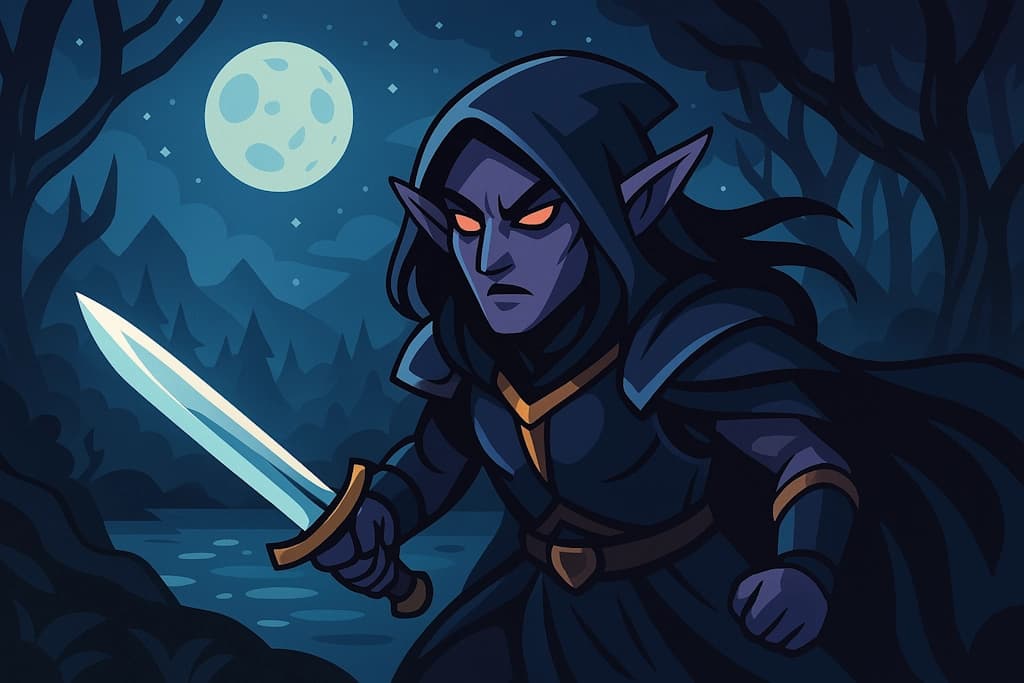
A list-first collection of 330+ dark elf names for drow characters, male and female heroes, noble houses, evil drow villains, and D&D-style campaigns.
Use the curated lists below for campaign-ready ideas, or open the dark elf name generator for instant drow-style combinations. If you want a brighter surface-elven contrast, try the elf name generator too.
Use the matching Dark Elves Names without leaving the article. Pick a style, generate fresh names, and copy the good ones.
Style
Choose a style before generating.
6 names ready to copy.
Starter names from the generator
Viconia, Quenthel, Liriel, Halisstra, Shyntlara, Triel, Zesstra, Malice, Xullrae, and Yasraena.
Drizzt, Jarlaxle, Zaknafein, Ryld, Pharaun, Sorn, Valas, Kimmuriel, Solaufein, and Vhaeraun.
Zhaunil, Xunrae, Veszra, Malaggar, Sszindar, Noquar, Velkyn, and Xorlarrin all lean into poison, shadow, and spider-court menace without turning every villain into a caricature.
For D&D-style play, pair a personal name with a house, rank, or exile title: Ryld Baenre, Shyntlara Do'Urden, or Velkyn the Surface-Walker. Treat these as inspiration, not official canon.
Dark elves, particularly the drow of the Forgotten Realms, are among fantasy's most complicated people. You can compare high elf and dark elf naming conventions in our dedicated guide. These ebony-skinned denizens of the Underdark carry a sharp contradiction: beauty and refined culture set beside treachery, cruelty, and survival through ruthless cunning. Their society, dominated by female priestesses devoted to the Spider Queen Lolth, operates on principles of ambition, betrayal, and the constant struggle for power. Unlike their surface-dwelling elven cousins who revere nature and harmony, drow have created a civilization where paranoia is wisdom and trust is a fatal weakness.
The history of the drow begins with the Crown Wars, a series of devastating conflicts that tore apart ancient elven civilization. When the dark elves followed the goddess Araushnee (who would become Lolth) in her rebellion against Corellon Larethian, they were cursed and cast out. Their transformation echoes the dark origins of demon naming traditions in fantasy, where fallen beings forge new identities in exile. Their skin darkened to ebony, their eyes became sensitive to sunlight, and they were driven into the depths of the earth. This exile changed them. Where once they had been proud surface elves, they became something new, shaped by centuries in the hostile environment of the Underdark. The constant threats from mind flayers, beholders, and countless other terrors forged them into pragmatic survivors who value power above all else. This origin story explains their obsession with regaining lost glory and their contempt for surface elves who, in their view, abandoned them to darkness.
Drow society operates under a strict matriarchal hierarchy that inverts typical patriarchal fantasy structures. At the apex stand the Matron Mothers, high priestesses of Lolth who rule their noble houses with absolute authority. Their alluring yet dangerous nature draws comparisons to vampire naming traditions and the succubus name generator for similarly seductive dark fantasy characters. These women wield both divine magic granted by the Spider Queen and political power accumulated through centuries of scheming. Males in drow society occupy subordinate positions, no matter their talents. Even the strongest male wizards must defer to female priestesses, and those who show too much independence risk being transformed into driders, horrible drow-spider hybrids. This gender dynamic creates tension and story opportunities. The system persists because Lolth herself enforces it, occasionally withdrawing her magic from the drow entirely when she feels they've grown complacent or wishes to test their faith. Within this framework, houses constantly vie for position, with lower houses seeking to destroy and replace higher ones through assassination, warfare, or political maneuvering.
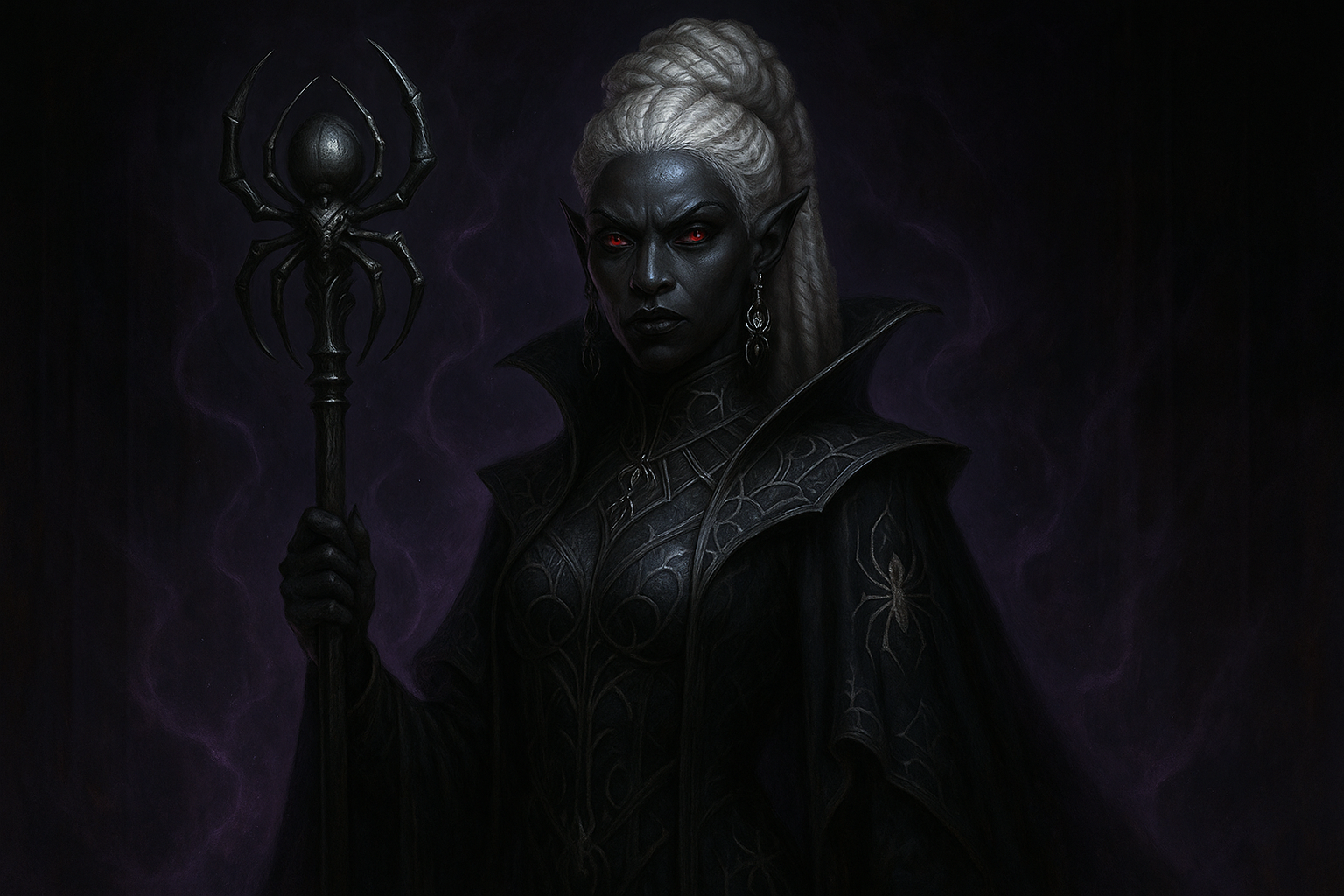
Throughout fantasy literature, particularly in R.A. Salvatore's Forgotten Realms novels, certain drow have become well known beyond their shadowed origins:
These drow shaped the perception of dark elves in fantasy literature and gaming
The Underdark is more than a backdrop for the drow. It has shaped every part of their culture. In this lightless realm of vast caverns, underground seas, and labyrinthine passages, drow cities shine with faerie fire and magical illumination. Architecture in places like Menzoberranzan defies surface logic, with buildings carved from stalagmites, structures suspended from cavern ceilings, and entire districts accessible only through levitation or spider climbing. The economy revolves around fungi farming, slave trading, and the export of Underdark goods like drow adamantine weapons and piwafwi (magical cloaks of elvenkind). Artistry survives in the harsh environment. Drow create hauntingly beautiful sculptures, weaponry of unmatched quality, and spider silk garments that shimmer with enchantments. However, their art often carries sinister themes: suffering, domination, and the glory of Lolth. Entertainment includes gladiatorial combat featuring enslaved surface dwellers, complex dances that tell stories of house victories, and theatrical productions depicting the triumphs of female power over male weakness.
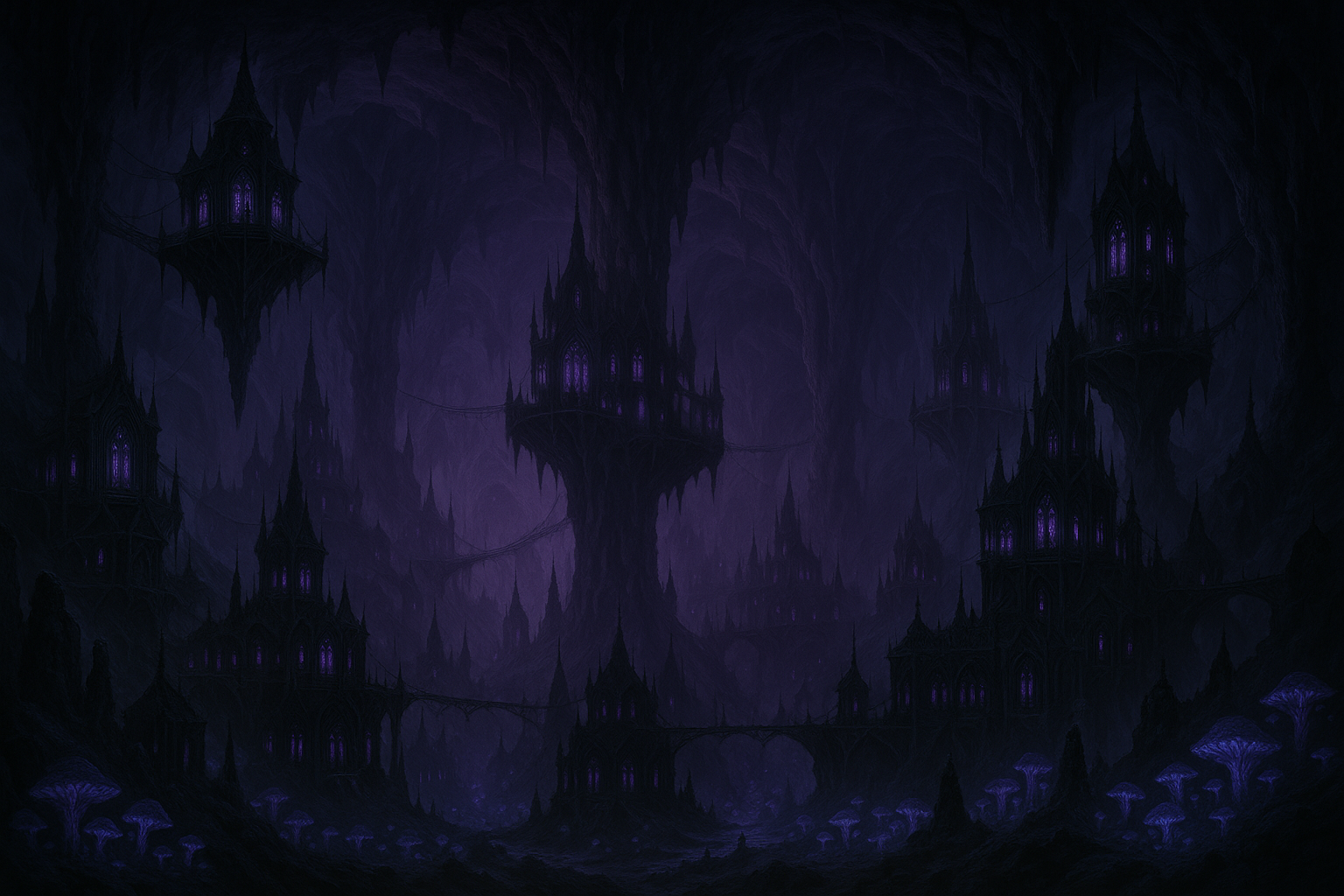
The drow have established magnificent cities throughout the Underdark, each with its own character and culture:
The great city-states of the Underdark where drow civilization thrives
Understanding drow naming conventions helps create characters that feel at home in the Underdark. For a broader look at how different D&D races approach naming, see our D&D naming conventions by race reference guide. Their names reflect both their elven heritage and their descent into darkness.
Drizzt: DRIST (one syllable, emphasis on the "ist" sound)
Jarlaxle: JAR-lax-ul (three syllables, emphasis on first)
Quenthel: KWEN-thel (two syllables, soft "th")
Zaknafein: ZAK-nah-fane (three syllables, equal emphasis)
Menzoberranzan: MEN-zo-buh-RAN-zan (five syllables, emphasis on "RAN")
Male drow names often carry an edge of danger and rebellion, matching their subordinate but not powerless position in society. Many famous male drow have earned their names through exceptional skill in warfare, magic, or survival:
Names for male drow characters, combining elven grace with Underdark menace
Additional male drow names for warriors, wizards, rogues, and outcasts navigating the treacherous politics of Underdark society. These names reflect the diversity of male roles in drow culture, from loyal house servants to rebellious exiles.
Female drow names command authority and respect, as befitting the rulers of their society. These names often reference spiders, darkness, or divine power, signs of Lolth's influence and the matriarchal structure:
Commanding names for female drow characters, tied to the power of the matriarchy
More female drow names for priestesses, matrons, warriors, and sorceresses. These names embody the deadly elegance and ruthless ambition that define female leadership in drow society, from aspiring house daughters to ancient matriarchs.
House affiliation defines a drow's place in society. Noble houses control vast resources, maintain private armies, and engage in endless political machinations. The ranking of houses constantly shifts through warfare, assassination, and Lolth's favor:
The great houses that rule drow cities and command armies in the Underdark
Drow wield both divine and arcane magic with terrifying effectiveness, though the sources and applications differ between genders. Female drow, particularly priestesses of Lolth, channel divine magic that manifests in darkness, poison, and spider-based abilities. They can summon swarms of spiders, create webs of shadow, and call upon Lolth's direct intervention in times of need. The goddess grants her priestesses power in proportion to their devotion and success in advancing her chaos. Male drow, denied access to Lolth's divine power, have developed exceptional arcane abilities to compensate. The academies of Sorcere produce wizards whose mastery of destructive magic, enchantment, and dimensional manipulation rivals any surface mage. Some male drow turn to psionics, developing mental powers that bypass both divine and arcane traditions. This creates an interesting dynamic where males may possess greater raw magical power, but females control the society's most important resource: Lolth's favor. The rivalry between Sorcere (the wizard academy) and Arach-Tinilith (the priestess academy) reflects this tension, with each institution claiming superiority while grudgingly acknowledging the other's value.
When creating a drow character, consider these elements to make them feel grounded in the setting:
While Drizzt Do'Urden popularized the "good drow fighting against their evil heritage" trope, there are many other compelling directions for drow characters. Consider creating drow who embrace their culture without being cartoonishly evil, who navigate the complex politics of their society with nuance, or who show different aspects of drow culture beyond combat prowess. A drow merchant, artist, or scholar can be just as interesting as a warrior or wizard, and their perspectives on drow society might reveal unexpected depths.
Drow martial traditions emphasize speed, precision, and lethality over brute force. Their signature weapons, twin scimitars, hand crossbows, and poisoned blades, reflect their philosophy of warfare. Every young drow attends Melee-Magthere, the warrior academy, where they learn combat techniques alongside the art of reading opponents, exploiting weaknesses, and striking from surprise. The weapons master of each house is its top martial specialist, capable of facing multiple opponents simultaneously and teaching the next generation of killers. Drow favor hit-and-run tactics, ambushes, and assassination over pitched battles. Their guerrilla warfare in the Underdark's three-dimensional environment makes them formidable opponents even for numerically superior forces. Poison matters: drow toxins can kill instantly, paralyze, or induce madness, depending on the assassin's goals. The most infamous poison is the sleep poison they coat their crossbow bolts with, allowing them to capture slaves alive. Beyond physical combat, drow excel at magical warfare, combining arcane and divine magic in devastating coordinated strikes. A typical drow raid might feature priestesses summoning darkness while wizards teleport strike teams into enemy territory, and warriors emerge from invisibility to eliminate targets before vanishing back into the shadows.
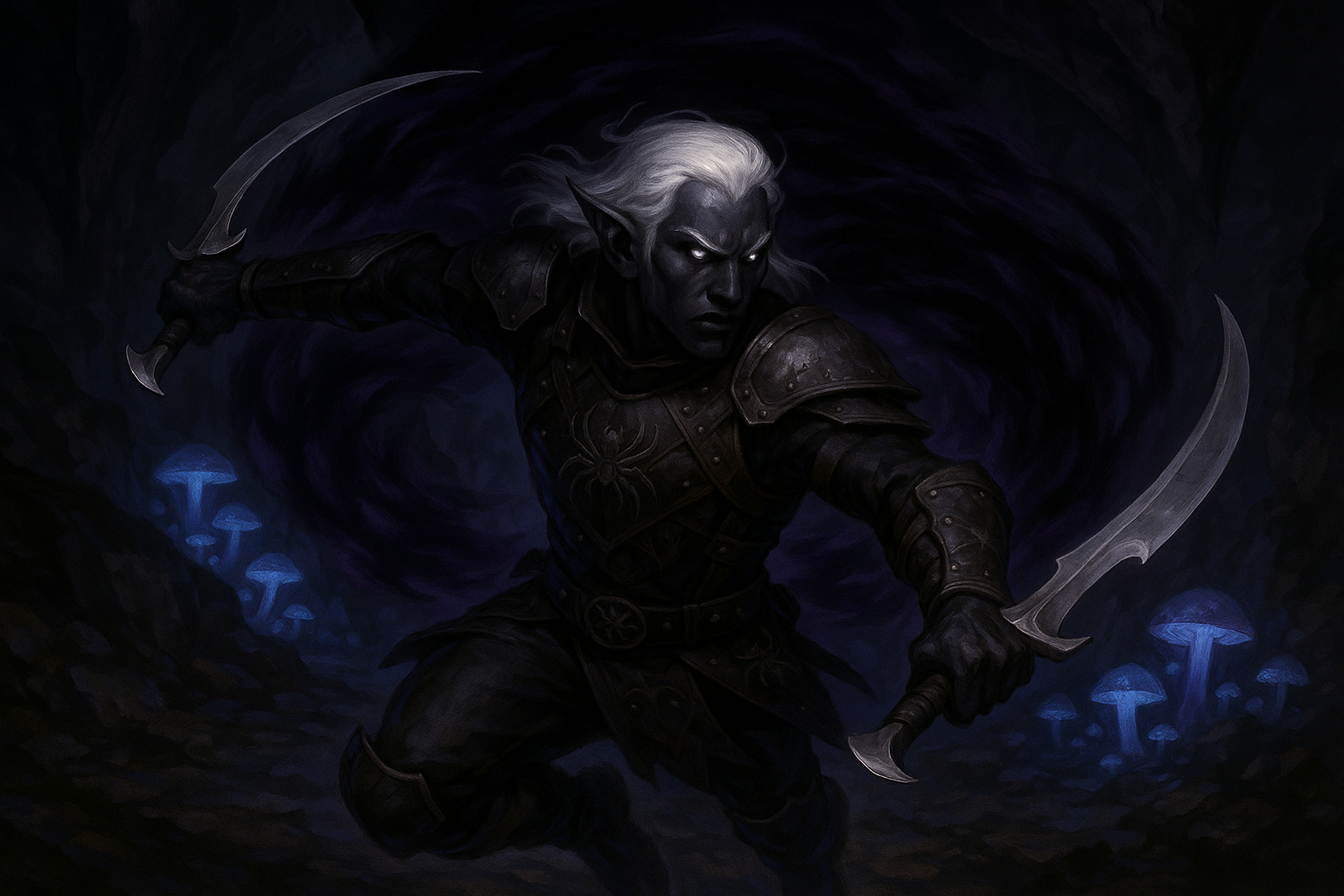
Not all drow remain in the Underdark. Some emerge onto the surface as exiles, fleeing destruction or rejection from their societies. Others serve as scouts, raiders, or ambassadors for their houses, maintaining contacts with surface powers. Life on the surface presents specific challenges for drow. Sunlight causes genuine physical discomfort and reduces their abilities, while surface dwellers almost universally fear or hate them on sight. A drow on the surface must overcome centuries of justified fear and prejudice, knowing that their own people would kill them as traitors while surface folk see them as monsters. This creates natural dramatic tension and opportunities for character development. Some drow adapt by working at night, dwelling in caves, or using magic to protect themselves from sunlight. Others embrace the discomfort as penance for their people's evil, or as a small price to pay for freedom from the constant backstabbing of drow society. A few exceptional individuals manage to build reputations that transcend their heritage, proving through actions that they reject the evil of their culture. These surface drow often become bridges between worlds, with a perspective useful to both surface and Underdark powers.
Understanding the hierarchy and titles within drow society helps create characters with clear social positions:
Important positions and titles within drow society and culture
Dark elves have changed across fantasy settings. While D&D's drow remain the most iconic version, other interpretations take different approaches. Our guide to fantasy names by race compares these approaches across multiple settings. In Elder Scrolls, the Dunmer (dark elves) are complex people with their own culture and history, neither wholly good nor evil. Warhammer's Druchii are sadistic raiders who embrace slavery and torture. Each interpretation provides different tools for storytelling. Modern fantasy increasingly explores the complexity of "evil" races, questioning whether entire species can be inherently wicked or if nurture shapes nature. This has led to more nuanced portrayals where individual drow choose their paths rather than being bound by racial alignment. In tabletop gaming, drow remain popular player character choices, with many campaigns featuring characters who struggle with their heritage, embrace it, or forge new paths entirely. Video games like Baldur's Gate have brought drow characters to wider audiences, with characters like Viconia DeVir becoming fan favorites because of their complex backgrounds. These newer portrayals keep returning to questions of nature versus nurture, redemption, and moral choice.
A good dark elf name starts with Underdark culture, drow society, and the naming habits of shadow-dwelling elves. Use these steps to shape a name for your drow character:
Choose based on social status: Noble houses have prestigious, multi-part names with house affiliations; Commoners use simpler personal names; Priestesses of Lolth incorporate spider or darkness themes; Male names often reflect their lower social status.
Use Underdark elements: darkness, shadows, spiders, poison, night. Drow names should feel sinister yet elegant, with a trace of the cruel culture beneath the surface world.
Blend harsh sounds (z, x, k) with elven melodic qualities. Drow names are darker than high elf names, but they still need an elven rhythm.
Drow of noble birth carry house names (Do'Urden, Baenre, Oblodra) that denote lineage and political power. Add titles for rank, priesthood, or military position when you need a formal name.
Use the dark elf name generator tool for drow names with Underdark roots, shadow motifs, and spider imagery.
Ready to create a dark elf or drow name? Try our dark elf name generator to create drow names drawing from Underdark lore, combining melodic elven elements with the sinister edge of shadow and spider motifs. Use it for D&D campaigns, fantasy stories, or any setting where the elegant menace of dark elves prowls the shadows. If the same campaign needs grim Underdark dwarves, our duergar names guide pairs naturally with drow factions.
Dark elf names are the broader category for shadowy elves across fantasy settings. Drow names usually refer to the D&D-inspired Underdark tradition, with harsher consonants, noble house names, spider imagery, and a more sinister social tone.
Good female dark elf names include Viconia, Quenthel, Liriel, Shyntlara, Triel, Halisstra, Zesstra, Malice, Xullrae, and Yasraena. Female drow names often sound elegant but dangerous, reflecting priestesses, matrons, assassins, or noble house heirs.
Good male dark elf names include Drizzt, Jarlaxle, Zaknafein, Ryld, Pharaun, Vhaeraun, Sorn, Valas, Kimmuriel, and Solaufein. Male dark elf names work well with sharp sounds, clipped endings, and a mix of elven grace and Underdark menace.
Yes. These names are built for tabletop characters, including D&D-style drow, but they are not official Dungeons & Dragons canon. Use them as campaign-friendly inspiration and adjust spelling, house names, or titles to fit your DM's setting.
Dark elf house names usually signal lineage, political rank, and faction loyalty. A noble drow might use a personal name plus a house name, while exiles, mercenaries, or surface dark elves may replace the house with an earned title or descriptive surname.
An evil drow name usually combines beauty with threat: sibilant sounds, x/z/v consonants, spider or poison imagery, and a title that hints at rank. Avoid making every name cartoonishly wicked; a restrained name often feels more dangerous.