
Loading...
Loading...
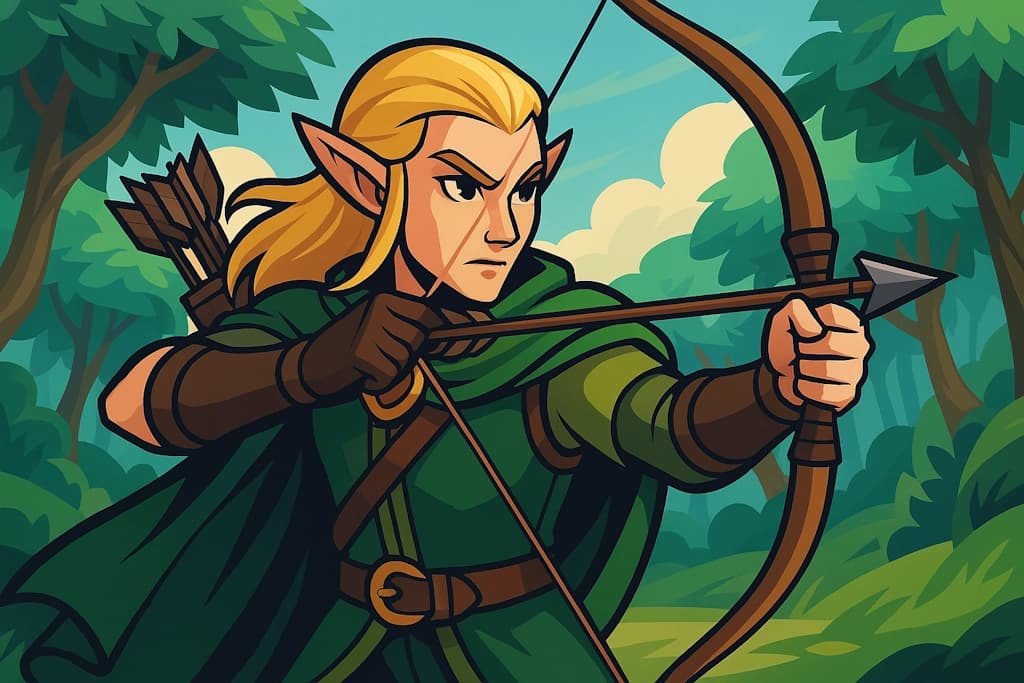
High elf, dark elf, and crossover name ideas with optional sound and surname exercises.
A flowing given name and a clipped house name give you two different styles to try for an elf. This guide uses that contrast without treating either style as a biological or cultural rule. Whether you're building a character for D&D, Elder Scrolls, or your own fiction, choose the setting first. Similar labels do not make their languages or lore interchangeable.
Use the matching Elf Names without leaving the article. Pick a style, generate fresh names, and copy the good ones.
Style
Choose a style before generating.
6 names ready to copy.
Starter names from the generator
This guide offers sound palettes, surname ideas, and naming structures for high elf and dark elf characters. We'll compare them side by side, show you how crossover names work for characters who straddle both worlds, and provide name examples for a draft. For a closer look at one tradition at a time, see our best elven names and dark elf drow names guides.
For a high elf character, you might choose a flowing name with a celestial surname. That is one fantasy style, not a requirement for every elf. For ways to compare your own associations, see our sound and readability exercises. No sound establishes a character's grace, status, or morality.
For this exercise, try vowel sequences like ae, ei, and ou, combined with liquid consonants (l, r) or nasals (n, m). Compare a two-syllable option with a longer name. Galadriel, Elrond, and Arannis are familiar examples from different settings, not interchangeable language samples. Endings need not be assigned by gender.
An invented surname can follow a compound pattern drawn from nature and celestial imagery: [Light/Nature word] + [Action/Object]. Examples like “Starweaver,” “Moonwhisper,” and “Silverleaf” offer story hooks about the sky or forest. Decide whether the name is inherited, chosen, or a translation used by outsiders.
These examples pair given names with nature or celestial surnames. Use them as fantasy drafts, not verified Quenya, Sindarin, or Altmer names. Notes attached to the list are story suggestions rather than validated translations.
For a contrasting dark elf style, try Z or SH sounds and a surname tied to a fictional house. A name does not need to sound hostile, and a drow character need not have an apostrophe.
Spellings such as zr, tl, or kh need a pronunciation decision in an invented language. An apostrophe might separate syllables in your own system, but it does not automatically represent a glottal stop. Follow a setting's pronunciation guide when one is available.
House names such as Baenre or Do'Urden can be reference points for a Forgotten Realms character. For an original house, decide its history before assigning meaning to a prefix. Compare other fantasy naming styles.
These fantasy drafts explore sibilants, apostrophes, and house surnames. Their accompanying notes are creative prompts, not verified etymologies or evidence about Underdark acoustics.
The table contrasts optional styles used in this guide. Our D&D table checklist offers ways to try a name in play, not data confirming these styles.
| Feature | High Elf | Dark Elf (Drow) |
|---|---|---|
| Sound Pattern | Flowing vowels, soft consonants (l, r, n, th) | Harsh consonants, sibilants (z, x, kh, tl) |
| Endings to Try | -iel, -wen, -ari, -ion, -ë | -rin, -rax, -zress, -ra, -duis |
| Cultural Themes | Stars, moon, nature, light, music | Spiders, shadows, venom, house politics |
| Name Length | 2–4 syllables (given); compound surnames | 1–3 syllables (given); house prefix + root |
| Apostrophe Use | Rare to none | Optional; define pronunciation, not social rank |
| More Ending Options (Any Gender) | -a, -e, -ia, -on, -el, -ion | -ra, -rae, -ne, -kh, -rn, -ax |
Not every elf fits neatly into the high-or-dark binary. Wood elves, half-drow, surface-dwelling drow exiles, and characters with mixed heritage may keep, change, or combine naming styles. For a dedicated mixed-heritage list, use our half-elf names guide. A crossover name is an option, not a requirement imposed by ancestry.
A convincing crossover name uses selective blending. A drow exile might keep their house surname but adopt a surface-style given name. A half-drow might have a high elf given name paired with a subtly apostrophe-inflected surname. For a wood elf, you could use forest imagery without making the name a midpoint between other elves.
These names blend elements of high elf and dark elf naming traditions, perfect for wood elves, half-drow, or characters who straddle both elven cultures. Notice how each name selectively borrows phonetic features from both traditions.
The terms high elf and dark elf do not describe the same groups in every setting. Do not use Tolkien's language names as labels for a D&D sound palette or assume “dark” means a name is less refined.
For an established setting, use its own sourcebooks or in-game examples. For homebrew fiction, decide who named the character and whether the name is inherited or chosen. For more drafting options, see our guide to types of fantasy names by race.
Start with an open vowel (A, E, I). Use l, r, n as your primary consonants. Build surnames from celestial or nature imagery. Aim for 3 syllables in the given name.
Try Z, D, or V at the start. Compare the name with and without an apostrophe, then add a house surname if the story needs one.
Mix elements from both traditions. Use moderate consonant density. Build surnames from forest/earth imagery. An optional apostrophe can hint at drow ancestry.
A drow with a flowing high elf name or a high elf with a harsh drow name instantly signals an unusual backstory: exile, adoption, or rebellion against their culture.
Deciding whether your character carries a high elf or dark elf name shapes their identity, backstory, and how other characters perceive them. Follow these steps to pick the right naming tradition:
Choose the setting and the community that named your character. A high elf court and a drow house can suggest different story hooks, but consult the relevant setting source if you need a canonical name.
For the contrast used in this guide, try vowel sequences and L or R for one name, then Z or SH sounds for another. These are optional style choices, not linguistic rules shared by every elven setting.
Try an English compound such as Starweaver for a celestial theme, or invent a family name and decide what that house means to your character. Do not assume a prefix or apostrophe proves noble rank.
An exile or adopted character might keep a family name, choose a new name, or combine styles. Wood elves need not sit between high elves and dark elves; choose a separate forest theme if it fits your setting.
Use the elf or dark elf generator for draft names. Review pronunciation and setting fit yourself; generated results are not verified translations or canonical names.elf name generator
Read more about elven naming traditions with our specialized guides and generators:
This guide contrasts a flowing, celestial style with a more clipped, house-oriented style. That is an editorial choice for the examples, not a rule for all high elves or dark elves. Follow your specific setting when canonical naming matters.
Some fictional drow names include apostrophes, but spelling alone does not establish their pronunciation or social meaning. Use a pronunciation supplied by the setting, or agree on one for an invented name. Apostrophes are optional here, not rank markers.
Tolkien provides recognizable examples of invented elven languages, but names from D&D or Elder Scrolls should not be treated as Quenya or Sindarin. The examples here are inspiration, not translations validated against those languages.
Yes, if it fits your campaign. Try a house surname with a newly chosen given name, or keep a birth name unchanged. Mixed heritage does not require a blended name, and wood elf naming is not inherently a midpoint.
They belong to different fictional settings. Use Altmer and Dunmer examples for an Elder Scrolls character, and the appropriate campaign source for a D&D elf or drow. Do not transfer an invented translation or naming rule between them.