
Loading...
Loading...
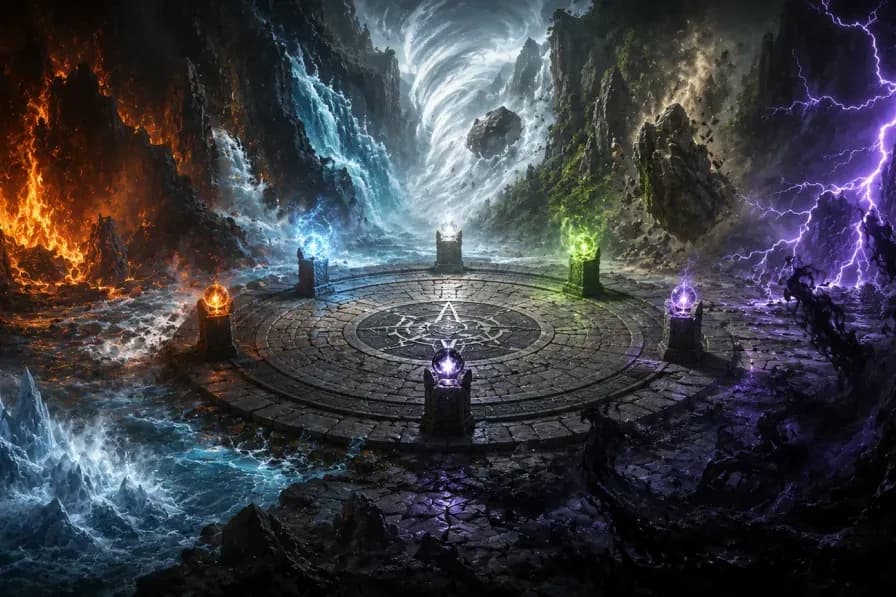
A practical collection of elemental names for fire, water, air, earth, ice, lightning, shadow, and blood spirits, with worldbuilding notes for stories, RPGs, and fantasy settings.
Elemental names work best when they sound like the force that made them. A fire spirit should not feel assembled from the same pieces as a river guardian. A shadow elemental needs a different rhythm than a mountain-born stone warden. That seems obvious until you start naming a cast of summoned beings, old gods, wizard familiars, dungeon bosses, and elemental courts, and every name begins to blur into the same dramatic syllables. This guide gives you a sharper palette: 250+ elemental names arranged by fire, water, air, earth, ice, lightning, shadow, and blood, plus the thinking behind why each style works. If you want more instant combinations after browsing the lists, the elemental name generator can spin up more names using the same elemental logic.
Use the matching Elemental Names without leaving the article. Pick a style, generate fresh names, and copy the good ones.
Style
Choose a style before generating.
6 names ready to copy.
Starter names from the generator
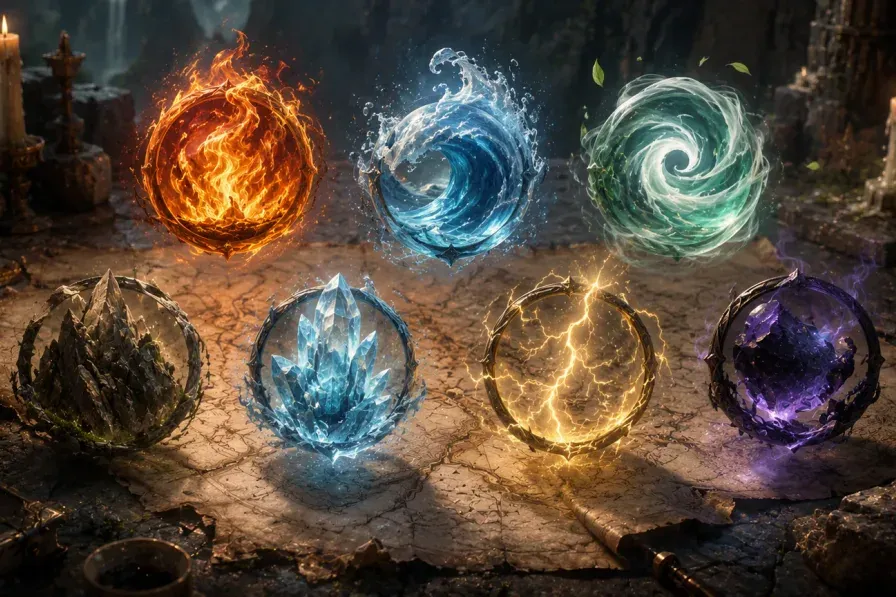
Elemental names have an advantage most fantasy names have to earn: the audience already knows the emotional language. Fire means appetite, courage, anger, purification, warmth, and destruction. Water means memory, healing, danger, movement, and depth. Earth carries patience and weight. Air carries distance and speed. Before a reader learns the politics of your world, a name like Searix the Bright Knife or Tidemere the Moon Pull has already made a promise about mood, texture, and power.
That promise matters because names are one of the first pieces of character design a reader encounters. A good elemental name gives them a mental shortcut without becoming flat symbolism. The trick is to choose details that feel specific: coal instead of generic fire, brine instead of generic water, rime instead of generic ice. If you want to compare possible first impressions, our sound and readability guide offers drafting exercises rather than findings about memory or reader behavior.
The four classical elements are older than fantasy gaming by a few thousand years. Greek philosophers argued over fire, water, air, and earth as building blocks of reality; Aristotle later tied them to qualities like hot, cold, wet, and dry. Medieval alchemists inherited that framework, then filled it with symbols, colors, planetary correspondences, and spiritual hierarchies. In the sixteenth century, Paracelsus popularized a different but hugely influential set of elemental beings: salamanders for fire, undines for water, sylphs for air, and gnomes for earth. Those names still echo through RPG bestiaries and fantasy novels.
Other systems complicate the picture in useful ways. Chinese Wu Xing works with wood, fire, earth, metal, and water as phases in motion rather than static substances. Japanese godai adds void alongside earth, water, fire, wind, and sky. Indian traditions describe great elements such as earth, water, fire, air, and space. You do not need to copy any tradition wholesale, but these older models treat elements as relationships, not damage types alone. A fire elemental can be a purifier, a cook, a solar judge, or a wildfire bandit. A water elemental can be a healer, an undertow, a rain bride, or a keeper of drowned archives. For a wider creature lens, the fantasy creature names guide shows how these beings fit beside dragons, unicorns, and other mythic forces.
The fastest way to make elemental names feel intentional is to listen before you explain. Fire names like Cindrax, Searix, and Pyrelith use clipped consonants and bright vowels; they crackle on the tongue. Water names such as Undalyn, Coralune, and Vellamora move more smoothly, with liquid consonants and open endings. Earth names tend to welcome weight: Granitus, Roothelm, Basaldrin, Gravalis. Air names need more lift, so they benefit from softer consonants, long vowels, and imagery tied to height or motion.
Use this as an optional English-language drafting palette. These associations are editorial choices, not rules about how every reader interprets sounds or elements.
Say the name beside the element without its title. If Voltara still feels electric without "the Lightning Weaver," the core name is doing real work.
Elemental names become much more interesting when they belong to a system. A lone fire spirit named Redbrand the Ashen Judge is memorable; an order of fire judges who all carry brand, ember, and ash titles becomes worldbuilding. Maybe mountain elementals use short public names and long geological names known only to their kin. Maybe water courts trade names like diplomatic gifts, so a river spirit changes its title every time it reaches the sea. Maybe lightning beings do not keep names at all, only strike marks burned into towers.
This is where elemental names overlap with spellcasters, constructs, and nature spirits. A storm mage from the wizard name generator might borrow titles from lightning elementals to show who trained them. A clay guardian from the golem name generator might share earth-rooted syllables with Terravoss or Basaldrin. A spring spirit related to the nymph name generator could use water names that sound gentler than deep-sea names. The same root system can tie all of those beings together without making them identical.
Fire, water, air, and earth give you the foundation. The stranger categories add drama. Ice brings preservation, stillness, punishment, memory, and delayed danger. Lightning brings speed, revelation, divine judgment, invention, and the one perfect instant. Shadow is not automatically evil, though lazy naming often treats it that way. It can mean secrecy, shelter, grief, espionage, or the mercy of being unseen.
Blood names are the most delicate because they can turn lurid fast. The strongest blood elemental names usually lean into life, kinship, medicine, vows, ancestry, and cost rather than gore for its own sake. Sanguivar the Blood Sage feels different from Gorevyn the Battle Bowl because one belongs in a ritual chamber and the other in trampled mud. Elemental dragons use similar distinctions, especially when a dragon is tied to storm, ice, or volcanic fire; the dragon names guide offers more examples of how a single force can produce very different personalities.
Start with role before syllables. Is the elemental a court official, a summoned soldier, a local guardian, a half-remembered god, or a dangerous accident? A hearth spirit and a wildfire spirit both belong to fire, but they should not sound like cousins unless your setting says they are. Decide whether the name should reveal the being's true nature or conceal it. Then choose an epithet that adds a second layer: Coal King, River Glass, Half-Light, Cut Palm. The title should not repeat the element; it should show how that element behaves.
Use the name category to signal more than magic type. The same element can point to temperament, social role, and plot function.
Choose anchored words like Warden, Gate, Root, Crown, or Pillar. These names feel stable even when the elemental is dangerous.
Use Road, Drift, Tide, Wake, Vane, or Horizon. They suit messengers, scouts, exiles, and spirits that refuse borders.
Add specificity before menace. Candle Eater, Broken Dam, and Tree Splitter create stronger images than simply calling a being dark or deadly.
Let warmth, guidance, craft, or healing into the title. Hearth Warden, Blue Lantern, and Red Mercy all promise help with a cost.
The lists below are grouped by elemental force rather than gender or ancestry because these beings are usually defined by what they do to the world. You can use the names as written, trim off the epithets for subtler characters, or keep the titles as ceremonial names used only in summoning circles and old treaties. If you are naming fae, dryads, or other nature-adjacent beings, the fairy names guide pairs especially well with the air, water, and earth sections.
Fire elemental names should feel hot before the description explains them. These names lean into ember, forge, ash, wildfire, solar heat, and ceremonial flame, so they work for salamanders, flame lords, hearth spirits, volcanic guardians, and dangerous summoned allies.
Water names work best when they flow between beauty and threat. This section includes rain spirits, river messengers, pearl-reef guardians, deep-sea powers, and flood elementals whose names can support healers, oracles, monsters, or coastal courts.
Air elemental names need lift, movement, and a little slipperiness. Use these for sylphs, wind dancers, sky scouts, storm messengers, cloud palace nobles, and small household breezes that know every secret passing through an open window.
Earth elemental names carry weight through stone, soil, ore, roots, and old places. They suit mountain spirits, mine guardians, clay helpers, temple pillars, forest-floor healers, and slow powers that think in centuries instead of minutes.
Ice names are cold, but they should not all be cruel. These names include glacier kings, frozen lake oracles, blizzard hunters, polar guides, frost gardeners, and ancient beings that preserve what warmer magic would destroy.
Lightning elemental names need speed and impact. The names here use bolts, arcs, storm rods, static omens, thunder marks, and split-second imagery for storm spirits, sky weapons, inventor familiars, and divine messengers.
Shadow names should feel quiet, not empty. This group includes eclipse-born powers, dusk guardians, mirror shades, secret keepers, urban alley spirits, and protective darkness that shelters as often as it threatens.
Blood elemental names are strongest when they balance danger with life. Use these for ritual spirits, battlefield powers, ancestral guardians, costly healers, oath enforcers, and magic systems where blood means memory, kinship, sacrifice, and vitality.
When you need more names for a campaign, novel, or magic system, use the elemental name generator to create fresh combinations by element. Then refine the result using the sound palette above, especially if the being is a spellcaster who commands elemental forces rather than an elemental spirit itself.
A good elemental name combines sound, imagery, and role. Fire names often use hard or bright sounds, water names flow smoothly, earth names feel weighty, and air names stay lighter and more musical.
This guide includes eight major elemental name categories: fire, water, air, earth, ice, lightning, shadow, and blood elementals.
Yes. Elemental names work for spirits, summoned beings, sorcerers, dragons, magical bloodlines, factions, relics, and places shaped by a dominant natural force.
Choose a few repeating roots, suffixes, or title patterns for each culture. A fire temple might favor Ign-, Pyre-, and -voss endings, while a river court might use Tide-, Ner-, and -mere.