Italian City Names: 120+ Beautiful Names from Rome to the Renaissance

Try our Italian city name generator →
A curated collection of 120+ authentic Italian city names spanning three millennia, from ancient Roman foundations to Renaissance jewels, coastal paradises to Alpine retreats, each carrying the weight of history and the beauty of Italian linguistic heritage.
Italian City Names: 120+ Beautiful Names from Rome to the Renaissance

A curated collection of 120+ authentic Italian city names spanning three millennia, from ancient Roman foundations to Renaissance jewels, coastal paradises to Alpine retreats, each carrying the weight of history and the beauty of Italian linguistic heritage.

The Timeless Poetry of Italian City Names

Italian city names read like verses from an ancient epic—each syllable weighted with centuries of history, conquest, art, and human drama. When you say "Firenze," you're not just naming a place; you're invoking the flowering of human creativity that gave us Michelangelo, Dante, and the Renaissance itself. "Venezia" conjures not merely a city but an entire civilization that rose from lagoon waters to dominate Mediterranean trade for a thousand years. These aren't arbitrary labels slapped on maps—they're linguistic time capsules preserving Etruscan mysteries, Roman ambitions, medieval piety, and Renaissance grandeur.

What makes Italian city names uniquely captivating is their musical quality combined with historical depth. The language itself seems designed for place names: those rolling double consonants, the way vowels flow into each other, suffixes like -ano, -ello, and -ino that soften harder sounds into something almost lyrical. A Germanic fortress becomes "Bolzano," a Celtic settlement transforms into "Bergamo," a Greek colony evolves into "Taranto"—each transition smoothing rough edges while preserving essential character. This linguistic alchemy turns geography and history into poetry.

Excavating Linguistic Layers

Italian city names reveal Italy's position as Europe's ultimate crossroads. Before the Romans, mysterious Etruscans left traces in names like Perugia (from the Etruscan family Perusna) and Mantova (possibly from the Etruscan god Mantus). Greek colonists planted seeds that bloomed into Neapolis (new city, now Napoli), Syracuse (Siracusa), and Taormina. Celtic tribes contributed "berg" (mountain) patterns visible in Bergamo and possibly Bologna. The Roman Empire then stamped its authority everywhere—Florentia, Mediolanum, Augusta—creating a baseline layer that subsequent centuries would build upon rather than erase.

The medieval period added its own distinctive flavor. The rise of Christianity scattered "San" and "Santa" across the map like holy water—San Gimignano, Santa Margherita, San Remo. Feudal lords stamped their power through castle names: Castelfranco (free castle), Castelnuovo (new castle), Castiglione (small castle). The communal movement brought geographic descriptors: Montepulciano (mountain of Politian), Pietrasanta (holy stone), Civitavecchia (old city). Each era didn't so much replace the previous naming conventions as layer new patterns atop older foundations, creating names that function as archaeological tells for the patient observer.

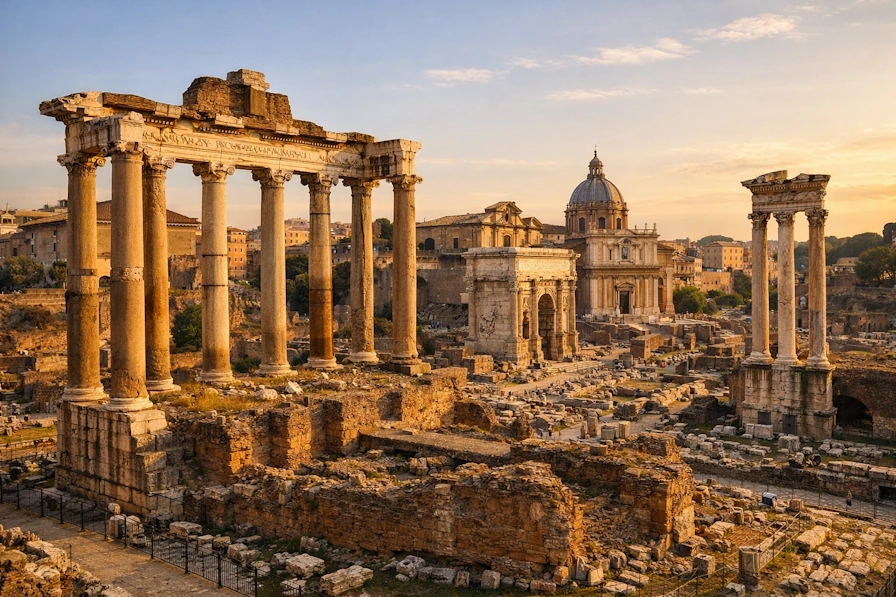
Ancient Roman Forum ruins in Italy showcasing classical columns and historical architecture

When All Roads Led to Properly Named Cities

Romans approached city naming with the same systematic genius they applied to roads and aqueducts. Found a military colony? Call it something practical yet aspirational. Mediolanum literally means "middle of the plain"—perfect for a city that became the administrative hub of northern Italy. Florentia ("flowering" or "prosperous") wasn't just describing current conditions but manifesting future greatness—and boy, did that prediction pan out. Augusta honored the emperor, appearing in multiple cities from Augusta Taurinorum (Turin) to Augusta Praetoria (Aosta), each stamp of imperial approval guaranteeing roads, walls, and amphitheaters.

The Via Aemilia, that arrow-straight Roman road cutting through the Po Valley, spawned an entire constellation of -ia names: Parma, Reggio Emilia (Regium Lepidi), Modena (Mutina), Bologna (Bononia), Rimini (Ariminum). Each city marked a day's march, a military station, a market town where Via Aemilia intersected local trade routes. These weren't random settlements—they were calculated nodes in a network designed to last millennia. The fact that we still use Romanized versions of these names two thousand years later testifies to engineering that went far beyond physical infrastructure into the realm of cultural architecture.

When Mountains, Seas, and Saints Collide

Italian geography practically demands poetic names. Those Alps aren't just mountains—they're theatrical backdrops that demanded recognition in every settlement name. Monte (mountain) became the most productive prefix in Italian toponymy: Montepulciano, Montecatini, Montefalco, Monterotondo. Each "monte" signals elevation, defense, spectacular views, and usually medieval origins when people fled valleys for defensible heights during barbarian invasions and feudal chaos.

The coasts generated their own naming poetry. Porto (port) anchors dozens of maritime names: Portofino (possibly "port of dolphins"), Portobello (beautiful port), Porto Romano (Roman port). The Amalfi Coast's vertical geography created names that climb like the towns themselves—Positano clinging to cliffs, Sorrento perched above the Bay of Naples, Amalfi tucked into its dramatic gorge. These aren't flat Midwestern grid-city names; they're three-dimensional descriptors for places where geography dictates everything from architecture to economy to strategic importance.

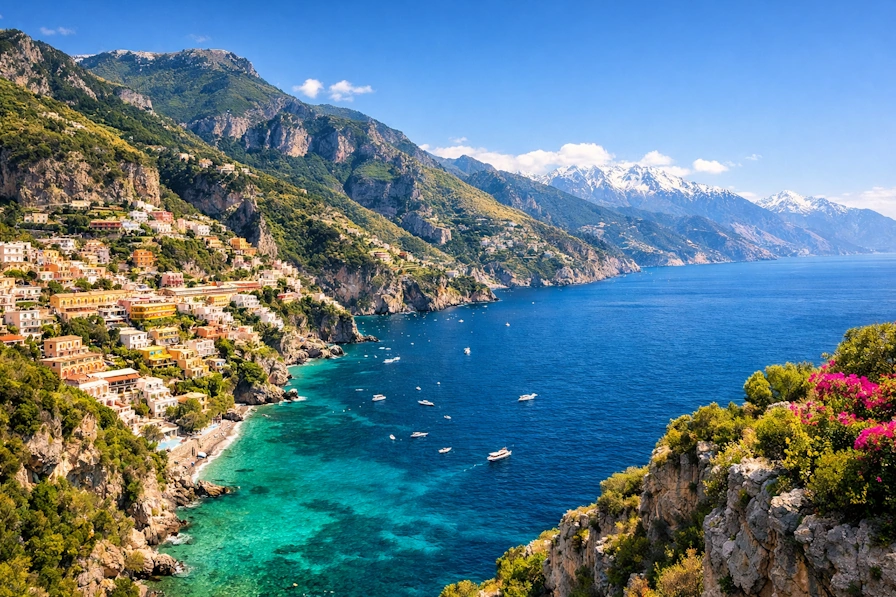
Italian coastal landscape with Mediterranean villages on cliffs and Alpine mountains

Decoding Italian City Name Patterns

Understanding the building blocks of Italian city names unlocks the ability to recognize historical periods, geographical features, and cultural influences at a glance. These patterns aren't arbitrary—they evolved organically over centuries, creating a systematic approach to naming that balances poetry with precision.

Geographic Prefixes

  • Monte-: Mountain locations (Montepulciano, Montefalco, Montecatini)
  • Porto-: Coastal ports (Portofino, Portobello, Portovenere)
  • Villa-: Estate or rural settlement (Villafranca, Villa Nova)
  • Rocca-: Fortress or stronghold (Rocca di Papa, Rocchetta)
  • Campo-: Field or plain (Campobasso, Campobello)
  • Pietra-: Stone or rock (Pietrasanta, Pietracamela)

Historical Suffixes

  • -ano/-ana: Roman land ownership pattern (Montepulciano, Bassano)
  • -ello/-ella: Diminutive forms (Castiglione > Castelletto)
  • -ino/-ina: Small or beloved (Cortina, Certaldino)
  • -poli: Greek "city" (from polis) in southern Italy
  • -eto/-eta: Grove or collection (Viterbo, Spoleto)
  • -neto/-neta: Small place (Conegliano, Feltre)

Religious and Feudal Elements

San/Santa (Saint): Indicates medieval Christian influence - San Gimignano (after St. Geminianus), Santa Margherita (St. Margaret). These names exploded during the Middle Ages as the Church's power grew.

Castello/Castel- (Castle): Medieval fortification heritage - Castelfranco (free castle), Castelnuovo (new castle). Often indicates 10th-14th century origins during feudal period.

Civita (City): From Latin civitas, emphasizing urban status - Civitavecchia (old city), Civitanova (new city). Usually marks ancient or medieval urban centers.

For more Italian naming traditions, explore our Italian name generator or discover global urban naming in our guide to world city names.

When Cities Became Art Projects

The Renaissance didn't just produce art and architecture—it reimagined cities themselves as expressions of ideal form. Pope Pius II transformed his birthplace Corsignano into Pienza, the first planned "ideal city" of the Renaissance, renaming it to honor himself. Vespasiano Gonzaga built Sabbioneta from scratch as a perfect Renaissance court city, demonstrating that human reason could design not just buildings but entire urban organisms. Palmanova's nine-pointed star fortress wasn't just military engineering—it was geometry made manifest, Platonic ideals translated into stone and earth.

These Renaissance interventions reveal changing attitudes toward city naming. Medieval names evolved organically; Renaissance names were conscious creations. The Este family transformed Ferrara from a medieval commune into a Renaissance showcase, though they kept the ancient name (possibly from Latin ferrum—iron—suggesting industrial origins). The Medici scattered their influence through Tuscany not by renaming cities but by commissioning buildings, piazzas, and gardens that redefined urban space. Yet their country villas—Poggio a Caiano, Castello—carried names emphasizing elevation and fortification even as the architecture celebrated openness and light. The tension between inherited medieval names and Renaissance ideals created a fascinating dialectic visible in cities throughout central and northern Italy.

A Nation United by Beautiful Diversity

Italian city names vary dramatically by region, reflecting Italy's late unification (1861) and deeper historical divisions. Northern cities carry Germanic echoes—Bolzano sounds different from Bologna, reflecting its position in historically Austro-Hungarian South Tyrol. Venetian territory developed its own naming conventions, with the Serenissima Republic leaving marks in cities from Bergamo to Padova to coastal Dalmatia. The Veneto loves its diminutives: Treviso, Bassano, Asolo—names that roll off the tongue like water flowing through canals.

Southern Italy tells different stories. Sicily's cities carry layers of Greek, Arab, Norman, and Spanish influence. Palermo comes from Greek Panormos (all-port). Caltanissetta preserves Arabic qalat an-nisa (castle of women). Cefalù derives from Greek kephale (head), describing the massive rock promontory. Sardinia maintains pre-Roman names that scholars still debate: Nuoro, Sassari, Oristano sound nothing like mainland Italian, preserving linguistic mysteries from before Rome conquered the island. Puglia's cities—Bari, Taranto, Lecce—show Greek and Messapian roots mixed with medieval additions. Each regional variation adds another color to Italy's already polychromatic linguistic tapestry.

Crafting Authentic Italian City Names

Whether you're writing fiction, designing games, or building imaginary worlds, creating believable Italian city names requires understanding the underlying patterns and historical logic. Authentic-sounding names aren't random assemblages of Italian words—they follow conventions developed over centuries.

Start with Geography

Real Italian city names almost always reference physical features. A coastal city needs porto, marina, or a reference to the sea. Mountain towns demand monte, colle (hill), or alto (high). River cities might use ponte (bridge) or fiume (river). Valley settlements could incorporate valle or piana (plain). Begin with your fictional city's location and let geography guide the name's structure. Monteverdi (green mountain) instantly conjures specific imagery; Casalmare (sea house) tells you it's coastal.

Layer Historical Periods

Ancient Roman foundations often have -a endings and simple Latin roots: Parma, Lucca, Pisa. Medieval additions bring castello, rocca, borgo (town), and San/Santa. Renaissance cities might have classical references or patron names. Modern industrial cities sometimes use -opoli (city) patterns. Mix elements carefully: "Castello San Marco" signals medieval fortification + Christian dedication. "Rocca d'Ambra" suggests medieval fortress belonging to the Ambra family. Historical layering creates depth.

Master the Sound Patterns

Italian phonology loves certain combinations. Double consonants (Bassano, Belluno, Messina) create musicality. Names often end in vowels, especially -o, -a, -i, -e. The suffix -ano/-ano indicates belonging (Montecassiano = belonging to Monte Cassino). Diminutives -ino/-ina/-etto/-etta soften meanings (Castellina = little castle). Avoid harsh consonant clusters that don't exist in Italian—no city would be named "Strzhborg" (too Germanic/Slavic). Test your invented name by reading it aloud; it should flow like wine, not stumble like cobblestones.

Consider Regional Authenticity

A Venetian-area city might be Bassano del Grappa or Conegliano—names with specific northern Italian character. A Sicilian city could be Caltabellotta (Arabic-Norman blend) or Agrigento (Greek roots). Tuscan cities love their -ano endings (Montepulciano, Montecatini Terme). Roman area cities might be Albano, Frascati, Velletri—ancient Latin names or medieval evolutions. If your story is set in a specific region, research that area's actual city names and extract the patterns. Details matter: a city in Piedmont wouldn't have an Arabic name unless you're creating alternate history.

How Ancient Names Navigate Contemporary Italy

Modern Italy faces fascinating tensions between preserving historical names and addressing contemporary needs. Unification in 1861 standardized Italian spelling, sometimes altering traditional names—Livorno had been Leghorn in English, Genova was Genoa, Firenze was Florence. Post-unification bureaucracy preferred Italian forms, though international usage varies. The South Tyrol question remains contentious: should Bolzano also be Bozen (its German name)? Official policy now recognizes both, reflecting the region's bilingual reality and complex history of Austrian rule, forced Italianization under Mussolini, and postwar compromise.

New urban developments rarely receive wholly new names. Instead, suburbs and industrial zones typically extend existing city names with geographic markers: Milano Marittima (seaside Milan—actually far from Milan), Roma Nord (North Rome), Napoli Est (East Naples). When truly new settlements appear, they usually combine traditional elements: Città Giardino (garden city), Villaggio (village) + sponsor name, or geographic description + -nuovo (new). The pattern holds: even in the 21st century, Italian city naming remains profoundly conservative, preferring to honor history rather than invent from whole cloth. This isn't mere nostalgia—it's recognition that names carrying centuries of meaning resist replacement by marketing department creations.

Why These Names Echo Through Global Culture

Italian city names have achieved global cultural penetration matched by few other naming traditions. Shakespeare set plays in Verona and Venice centuries before most Englishmen would visit. Byron made Rome and Venice central to Romantic literature. Henry James's American protagonists journey through Florence, Rome, and Venice as pilgrimages of cultural education. These weren't arbitrary settings—Italian city names carried connotations of ancient glory (Roma), romantic intrigue (Venezia), artistic genius (Firenze) that enriched narratives simply through invocation.

Modern popular culture continues the tradition. Video games set in Renaissance Italy (Assassin's Creed) meticulously recreate historic city names and architecture. Luxury brands adopt Italian city names to suggest quality and sophistication—Venezia watches, Milano fashion, Bologna leather goods. Even fictional Italian cities in games and stories usually follow authentic naming patterns because audiences have internalized what Italian city names should sound like. That's cultural power: when your naming conventions become the standard against which others are judged, when "Italian-sounding" becomes its own recognizable category transcending specific examples.

Using Italian City Names in Creative Projects

Writers setting stories in Italy—whether historical or contemporary—gain immediate atmospheric advantage through authentic city names. A character arriving in Montepulciano already suggests Tuscan wine country, hilltop medieval architecture, specific light and landscape. Contrast with a character in Genova—that connotes maritime trade, vertiginous streets climbing from harbor, centuries of nautical tradition. The names themselves do world-building work before a single description appears on the page.

Fantasy and alternate history writers can use Italian naming patterns to create believable fictional cities. Understanding that "monte" signals elevation, "porto" indicates harbors, "castello" suggests fortification allows construction of names that feel authentically Italian without stealing real places. "Monteluna" (moon mountain) or "Porto Stellare" (star port) sound plausibly Italian while being wholly invented. Game designers creating Italy-inspired settings benefit similarly—mix real patterns with fantastic elements, and players accept the hybrid as authentic because the underlying logic matches their expectations of how Italian city names should work.
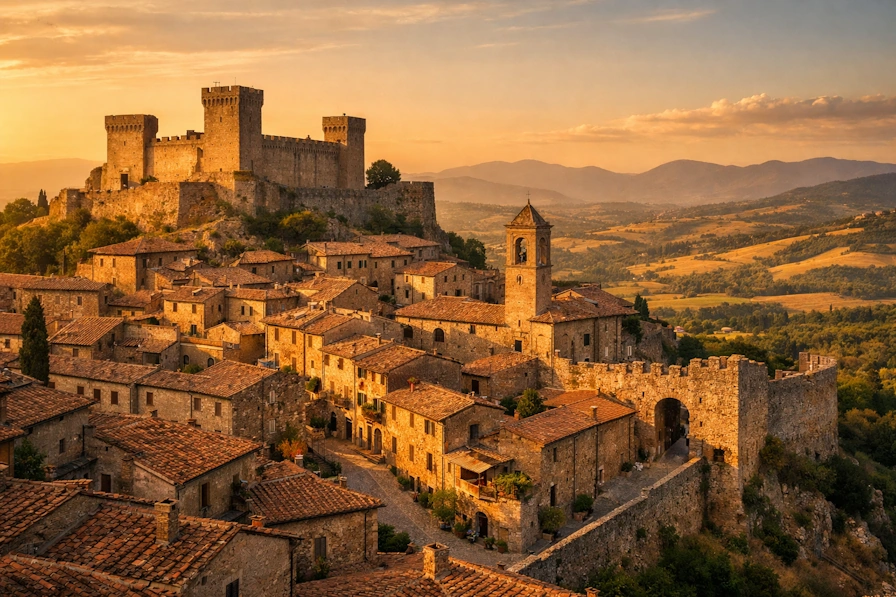
Medieval Italian castello fortress on hilltop with stone walls and Tuscan countryside

Famous Italian Cities

The great cities of Italy—Roma, Firenze, Venezia, Milano—carry names known worldwide, each syllable weighted with centuries of history, art, and culture. These aren't just places; they're concepts, archetypes of urban civilization that shaped Western culture. From ancient Roman power to Renaissance genius to modern fashion, these cities' names alone evoke entire civilizations. Perfect for establishing setting in historical fiction, creating prestigious locations in fantasy world-building, or simply appreciating the linguistic heritage that connects ancient foundations to contemporary reality. Each name tells a story of founding myths, cultural flowering, and enduring significance that transcends mere geography.

  1. 1
    Roma
    The Eternal City, capital of Italy and ancient heart of the Roman Empire, named after the legendary founder Romulus
  2. 2
    Firenze
    Florence, the cradle of the Renaissance, derived from Latin 'Florentia' meaning flowering or prosperous, home to the Medici and Michelangelo
  3. 3
    Venezia
    Venice, the city of canals built on 118 islands, named after the ancient Veneti people who inhabited the region
  4. 4
    Milano
    Milan, Italy's fashion and financial capital, from Celtic 'Mediolanum' meaning middle of the plain, a major center since Roman times
  5. 5
    Napoli
    Naples, founded by ancient Greeks as 'Neapolis' (new city), gateway to the stunning Amalfi Coast and home to authentic pizza
  6. 6
    Torino
    Turin, former capital of Italy and heart of the Savoy dynasty, named after the ancient Taurini Celtic tribe
  7. 7
    Genova
    Genoa, the proud maritime republic and birthplace of Christopher Columbus, possibly from Latin 'Janua' meaning door or gateway
  8. 8
    Palermo
    Sicily's capital, from Greek 'Panormos' meaning all-port, a crossroads of Mediterranean civilizations for three millennia
  9. 9
    Bologna
    The learned city, home to Europe's oldest university (1088 AD), possibly from Celtic 'bona' meaning settlement
  10. 10
    Verona
    The city of Romeo and Juliet, an important Roman colony whose name may derive from Celtic-Latin roots meaning 'fortified settlement'
  11. 11
    Pisa
    Home to the famous Leaning Tower, an ancient Etruscan city whose name possibly means river mouth in the Etruscan language
  12. 12
    Siena
    Medieval gem of Tuscany, famous for the Palio horse race, founded according to legend by Senius, son of Remus
  13. 13
    Ravenna
    Last capital of the Western Roman Empire, renowned for its Byzantine mosaics, name of uncertain Etruscan or pre-Roman origin
  14. 14
    Padova
    Padua, one of the oldest cities in northern Italy, legendarily founded by Trojan prince Antenor around 1183 BC
  15. 15
    Trieste
    Border city between Italy and Slovenia, from Latin 'Tergeste,' an important Austro-Hungarian port with unique cultural blend
  16. 16
    Perugia
    Etruscan stronghold and Umbrian capital, perched on a hilltop, name derived from the ancient Etruscan family name Perusna
  17. 17
    Assisi
    Birthplace of St. Francis, medieval hill town whose name may derive from Latin 'Asisium' or earlier Umbrian roots
  18. 18
    Urbino
    Renaissance jewel and birthplace of Raphael, from Latin 'Urbinum,' a perfectly preserved ducal city
  19. 19
    Mantova
    Mantua, Renaissance city of the Gonzaga family, surrounded by lakes, named possibly after Etruscan god Mantus
  20. 20
    Lucca
    Ancient walled city in Tuscany, from Celtic-Ligurian roots possibly meaning marshy place, birthplace of Puccini

Coastal Italian Cities

Italy's coastline has birthed some of the world's most romantically named cities, from glamorous Portofino to vertical Positano, each name reflecting maritime heritage, dramatic geography, and Mediterranean culture. These coastal jewels combine natural beauty with architectural audacity—towns clinging to cliffs, fishing villages transformed into resort destinations, ancient ports that once controlled trade routes. The names often incorporate "porto" (port), "marina" (seaside), or reference mythological origins, creating evocative combinations that capture the romance of the Italian coast. Ideal for stories featuring seaside settings, luxury resort locations, maritime adventures, or any narrative requiring the specific atmosphere that only Italian coastal towns provide—that blend of ancient tradition and dolce vita elegance.

  1. 1
    Portofino
    Glamorous fishing village on the Italian Riviera, name combines porto (port) with fino, possibly meaning fine harbor or dolphin port
  2. 2
    Positano
    Vertical gem of the Amalfi Coast, possibly named after the Roman freedman Posides or from Poseidon, Greek god of the sea
  3. 3
    Sorrento
    Cliff-top town overlooking the Bay of Naples, named after the Sirens of Greek mythology who lured sailors with their songs
  4. 4
    Amalfi
    Former maritime republic and heart of the Amalfi Coast, name possibly derived from Roman family name Amarinus or Greek melfi (fertile)
  5. 5
    Portobello
    Beautiful port combining porto (port) with bello (beautiful), a name pattern common in Italian coastal settlements
  6. 6
    Marina di Pisa
    Pisa's seaside resort, using 'marina' (marina, seaside) to denote its coastal location separate from the main city
  7. 7
    Viareggio
    Tuscan beach resort, from via reggia (royal way), marking an important medieval route to the sea
  8. 8
    San Remo
    Riviera resort city named after St. Romulus (San Romolo), patron saint, famous for its music festival and casino
  9. 9
    Cinque Terre
    The Five Lands, a cluster of five fishing villages (Monterosso, Vernazza, Corniglia, Manarola, Riomaggiore) clinging to Liguria's cliffs
  10. 10
    Cagliari
    Sardinia's capital and major port, from Latin Caralis, possibly of Phoenician origin, a strategic Mediterranean harbor for millennia
  11. 11
    Livorno
    Leghorn, Tuscany's major seaport rebuilt by the Medici, name possibly from Latin Liburnus referring to ancient Illyrian ships
  12. 12
    Brindisi
    Adriatic port from Messapic 'Brunda' meaning deer head (shape of the harbor), historic gateway to the Eastern Mediterranean
  13. 13
    Pescara
    Adriatic resort city, name derived from 'piscaria' (fishing place), reflecting its maritime heritage and fishing industry
  14. 14
    Rimini
    Ancient Ariminum, major Adriatic resort on the Romagna coast, an important Roman colony at the junction of major roads
  15. 15
    Ancona
    Adriatic port from Greek 'ankon' meaning elbow, describing the distinctive shape of the natural harbor formed by Mount Conero
  16. 16
    Taormina
    Sicilian cliff-top resort overlooking the Ionian Sea, from Greek Tauromenion, offering spectacular views of Mount Etna
  17. 17
    Cefalù
    Norman cathedral town on Sicily's northern coast, from Greek "kephale" meaning head, referring to the massive rock promontory
  18. 18
    Tropea
    Cliffside jewel of Calabria overlooking turquoise waters, possibly named after trophy (tropaion) marking ancient Greek victory
  19. 19
    Gallipoli
    Salento peninsula fortress city, from Greek kale polis (beautiful city), a strategic island connected to Puglia's mainland
  20. 20
    Alghero
    Catalan-influenced Sardinian port, name possibly from Latin 'Alguerium' or Arabic 'al-jazeera' (the island), unique linguistic heritage

Mountain Italian Cities

Italian mountain cities perch on hilltops or nestle in Alpine valleys, their names invariably incorporating "monte" (mountain), "colle" (hill), or geographic descriptors that emphasize elevation and dramatic setting. From Cortina d'Ampezzo in the Dolomites to Orvieto on its volcanic tuff, these cities were often founded for defensive purposes—height meant safety during centuries of invasions and warfare. The names reflect this strategic imperative while also celebrating the stunning vistas and alpine traditions that define mountain life. Many combine elevation markers with family names, saints, or natural features, creating compound names that encode both geography and history. Perfect for settings requiring mountain fortresses, ski resort locations, medieval hilltop towns, or any story where elevation and isolation play narrative roles. These names automatically suggest specific architecture, climate, and cultural traditions distinct from coastal or plains Italy.

  1. 1
    Cortina d'Ampezzo
    Queen of the Dolomites, Olympic ski resort where cortina refers to courtyard or basin, surrounded by dramatic mountain peaks
  2. 2
    Bolzano
    Bilingual capital of South Tyrol, from Latin Bauzanum or Pons Drusi (Drusus bridge), gateway to the Alpine region
  3. 3
    Trento
    Alpine city famous for the Council of Trent, from Latin Tridentum (three teeth), referring to the three peaks visible from the city
  4. 4
    Aosta
    Ancient Roman city at the foot of the Alps, from Augusta Praetoria, founded by Emperor Augustus in 25 BC
  5. 5
    Belluno
    Gateway to the Dolomites, possibly from Celtic bel-dunum (splendid hill), offering stunning mountain vistas
  6. 6
    Merano
    Alpine spa town in South Tyrol, name possibly of Celtic origin, famous for thermal baths and mountain air
  7. 7
    Montecatini
    Tuscan spa town combining monte (mountain) with Catini (family name or basin), renowned for thermal waters
  8. 8
    Montepulciano
    Hilltop wine town in Tuscany, from monte (mountain) and Politianus (family name), birthplace of Renaissance poet Poliziano
  9. 9
    Montefalco
    The balcony of Umbria, monte (mountain) + falcon, a medieval hilltop town offering panoramic views
  10. 10
    San Gimignano
    Medieval Manhattan of Tuscany with ancient towers, named after Saint Geminianus, bishop of Modena who saved the town from Attila
  11. 11
    Bergamo
    Two-tiered city from Celtic berg (mountain) + heim (home), ancient Lombard capital with spectacular upper town
  12. 12
    Como
    Alpine lake city at the foot of the Rhaetian Alps, from Latin Comum, a silk industry center with stunning lakeside setting
  13. 13
    Lecco
    Eastern branch of Lake Como, possibly from Celtic lech (stone), setting for Manzoni's "The Betrothed"
  14. 14
    Courmayeur
    Exclusive Alpine resort at the foot of Mont Blanc, French-influenced name meaning running water in the valley
  15. 15
    Orvieto
    Etruscan city perched on volcanic tuff, from Latin Urbs Vetus (old city), famous for cathedral and underground caves
  16. 16
    Gubbio
    Ancient Umbrian mountain town from Etruscan Ikuvium, perfectly preserved medieval architecture on Monte Ingino slopes
  17. 17
    Spoleto
    Umbrian hill town from Latin Spoletium, important Lombard duchy capital with Roman and medieval monuments
  18. 18
    Todi
    Perfectly preserved hilltop town in Umbria, from Etruscan Tutere (border), commanding views over the Tiber valley
  19. 19
    Ascoli Piceno
    Mountain city in the Marche, named after the Piceni tribe and from Latin asculum (fortress), surrounded by mountains
  20. 20
    L'Aquila
    The Eagle, Abruzzo's mountain capital founded by Emperor Frederick II, named for its eagle-shaped plan and imperial symbol

Roman Historical Cities

These cities preserve their Roman names or Latin-derived forms, direct linguistic links to the Empire that once dominated the Mediterranean world. Names like Aquileia, Ostia Antica, and Mediolanum aren't just historical curiosities—they're windows into Roman urban planning, military strategy, and imperial ambitions. The Romans approached city naming systematically: military colonies received martial names, commercial centers got pragmatic descriptors, colonies honoring emperors bore imperial titles. Understanding these Roman foundations reveals patterns that influenced all subsequent Italian urban development. Essential for historical fiction set in Roman times, fantasy world-building inspired by classical civilization, or any creative project requiring authentic ancient atmosphere. These names carry particular authority because they've endured two millennia, proving their phonetic and cultural resilience across radically different historical periods.

  1. 1
    Augusta
    Common Roman city prefix honoring Emperor Augustus, found in Augusta Taurinorum (Turin) and Augusta Praetoria (Aosta)
  2. 2
    Aquileia
    Ancient Roman city from Latin aquila (eagle), once the fourth largest city in the Empire, now a UNESCO site
  3. 3
    Ostia Antica
    Ancient port of Rome at the Tiber's mouth (ostium), preserved harbor city showing daily life in Imperial Rome
  4. 4
    Pompei
    Tragically preserved Roman city buried by Vesuvius in 79 AD, possibly from Oscan pompe (five) or goddess Pomona
  5. 5
    Ercolano
    Herculaneum, smaller Vesuvian city named after Hercules, offering glimpses of Roman luxury and daily life
  6. 6
    Capua
    Major Roman city where Spartacus began his revolt, from Etruscan Capeva, rivaling Rome in wealth and importance
  7. 7
    Benevento
    From Maleventum to Beneventum (good event) after Roman victory over Pyrrhus, Samnite capital with remarkable Roman arch
  8. 8
    Taranto
    Ancient Taras founded by Spartans, major Greek colony that became Roman Tarentum, strategic harbor in Magna Graecia
  9. 9
    Bari
    Adriatic port from ancient Barium, important Roman and Byzantine city, now home to the relics of St. Nicholas
  10. 10
    Mediolanum
    Ancient Roman name for Milan, meaning middle of the plain, became capital of the Western Roman Empire under Diocletian
  11. 11
    Bononia
    Ancient Roman name for Bologna, from Celtic Bona or Etruscan Velzna, important crossroads on the Via Aemilia
  12. 12
    Florentia
    Roman military colony that became Florence, founded by Julius Caesar, name means flowering or prosperous
  13. 13
    Parma
    From Roman Colonia Julia Augusta Parmensis, possibly from Etruscan parma (round shield), on the Via Aemilia
  14. 14
    Regium
    Ancient name of Reggio Emilia, from Regium Lepidi (Lepidus's kingdom), important Roman colony on the Via Aemilia
  15. 15
    Mutina
    Roman name for Modena, possibly of Etruscan origin, site of important battles during the late Republic
  16. 16
    Placentia
    Ancient Piacenza, from Latin placere (to please), Roman colony founded in 218 BC as military outpost against Gauls
  17. 17
    Forum Iulii
    Roman name of Cividale del Friuli (later shortened to Friuli), founded by Julius Caesar as a forum and market town
  18. 18
    Salernum
    Roman Salerno, possibly from Latin sal (salt) for ancient salt works, became Europe's first medical school in medieval times
  19. 19
    Surrentum
    Ancient Roman name for Sorrento, from Sirens of Greek mythology, aristocratic resort favored by emperors
  20. 20
    Comum
    Ancient Roman name for Como, birthplace of Pliny the Elder and Younger, important town at the foot of the Alps

Medieval Italian Cities

Medieval Italian city names reflect a period of castles, communes, and religious fervor, incorporating "castello" (castle), "rocca" (fortress), "borgo" (town), and "san/santa" (saint) with remarkable frequency. This era transformed Italy's urban landscape as people fled vulnerable valleys for defensible heights, creating the hilltop towns that define the Italian countryside today. Names like Castelfranco (free castle), Civitavecchia (old city), and Monteriggioni encode medieval political structures—free towns, fortified settlements, feudal holdings. The prevalence of saint names reflects Christianity's growing power, while castle terminology marks the feudal system's dominance. Perfect for medieval fantasy settings, historical fiction set during this turbulent period, or game design requiring authentic feudal atmosphere. These names automatically conjure images of stone walls, narrow streets, and the architectural heritage that draws millions of tourists to Italy annually.

  1. 1
    Castelfranco
    Free castle, from medieval fortified market town (castle + franco for tax exemption), pattern repeated across Italy
  2. 2
    Civitavecchia
    Old city (civita + vecchia), medieval name for ancient Centumcellae, rebuilt after Saracen destruction
  3. 3
    Rocca di Papa
    Papal fortress, combining rocca (fortress) with papal ownership, medieval stronghold in the Alban Hills
  4. 4
    Castelnuovo
    New castle, common medieval name pattern for fortified settlements replacing older structures, found throughout Italy
  5. 5
    Villafranca
    Free villa/town, medieval settlement with tax privileges, combining villa (estate) with franca (free from taxes)
  6. 6
    Fossombrone
    Medieval town from Forum Sempronii, transformed in the early Middle Ages, important stop on pilgrimage routes
  7. 7
    Gradisca
    From Slavic gradišče (small fortress), medieval fortified town on the Isonzo River with Venetian and Habsburg heritage
  8. 8
    Castiglione
    From Latin castellio (small castle), common medieval name for fortified hilltop settlements throughout Italy
  9. 9
    Monterotondo
    Round mountain (monte + rotondo), medieval hilltop town with circular layout, near Rome in ancient Sabine territory
  10. 10
    Pietrasanta
    Holy stone (pietra + santa), medieval town in Tuscany famous for marble quarries and sculpture workshops
  11. 11
    Castellammare
    Sea castle, common name for coastal medieval fortresses (castello + a mare), protecting harbors from pirates
  12. 12
    Monteriggioni
    Perfectly circular medieval fortress town in Tuscany, named for its mountain location (monte) and the Riccio family
  13. 13
    Cittadella
    Small city/citadel, perfectly preserved medieval walled town in Veneto, diminutive of città (city) emphasizing fortifications
  14. 14
    Bassano del Grappa
    Town at the base (basso) of Monte Grappa, medieval market town famous for its covered wooden bridge and grappa distilleries
  15. 15
    Vigevano
    Medieval Lombard town possibly from Latin vicus (village) + Germanic suffix, famous for its Renaissance piazza
  16. 16
    Sansepolcro
    Holy Sepulchre (santo sepolcro), medieval town founded by pilgrims returning from Jerusalem, birthplace of Piero della Francesca
  17. 17
    Castelvetro
    Old castle (castello + vetro), medieval Modena fortress town, perfect example of medieval urban planning
  18. 18
    Montecchio
    Small mountain (monte + diminutive), common medieval name pattern for fortified hilltop settlements
  19. 19
    Viterbo
    Papal city from Etruscan roots, medieval seat of the papacy, vetus urbs (old city) in Latin
  20. 20
    Fabriano
    Medieval town famous for papermaking since the 13th century, from Latin fabrica (workshop), birthplace of Gentile da Fabriano

Renaissance Italian Cities

Renaissance Italian cities represent a unique phenomenon—urban centers deliberately shaped by humanist ideals, classical learning, and princely ambition. Names like Pienza (renamed to honor Pope Pius II), Sabbioneta (Gonzaga's ideal city), and Palmanova (Venetian star-fortress) reflect conscious design rather than organic evolution. Even cities retaining older names—Ferrara, Urbino, Mantova—were fundamentally reimagined during this period, their urban fabric transformed by ducal patronage and artistic genius. These cities' names often connect to ruling families (Gonzaga, Este, Montefeltro) or classical references, reflecting Renaissance values of scholarship, artistic patronage, and rational urban planning. Ideal for historical fiction set during the Renaissance, fantasy worlds inspired by this creative explosion, or any narrative exploring the intersection of art, politics, and urban design. These names suggest sophistication, classical learning, and the flowering of human potential that defined this remarkable era.

  1. 1
    Ferrara
    Este family Renaissance capital, from Latin ferrum (iron) or ferraria (iron works), city of poets and artists
  2. 2
    Vicenza
    Palladio's architectural masterpiece, from Roman Vicetia, transformed during Renaissance into showcase of classical design
  3. 3
    Sabbioneta
    Ideal Renaissance city built by Vespasiano Gonzaga, perfect example of Renaissance urban planning from sabbia (sand)
  4. 4
    Pienza
    Pope Pius II's ideal Renaissance city, renamed from Corsignano to honor the pope (Pius + -enza), UNESCO World Heritage
  5. 5
    Palmanova
    Star-shaped Renaissance fortress city, planned by Venetian Republic, combining palma (victory palm) with nova (new)
  6. 6
    Carpi
    Pio family Renaissance court city, from Latin Carpus, known for refined culture and elegant palaces
  7. 7
    Mirandola
    Renaissance city-state of the Pico family, birthplace of philosopher Pico della Mirandola, diminutive of Miranda
  8. 8
    Correggio
    Renaissance court of the da Correggio family, birthplace of the painter Correggio, elegant small city in Emilia
  9. 9
    Casale Monferrato
    Renaissance capital of the Montferrat marquisate, from casa (house) + suffix, important fortress city
  10. 10
    Sabbioneta
    Perfect Renaissance planned city, from sabbia (sand), Gonzaga family's ideal city built from scratch
  11. 11
    Loreto
    Renaissance pilgrimage city housing the Holy House, name from Latin lauretum (laurel grove), Marche region's spiritual heart
  12. 12
    Camerino
    Renaissance university town in the Marche, from camera (chamber/room), ruled by the da Varano family
  13. 13
    Finale Emilia
    Renaissance town from Latin finalis (at the border), on the Via Aemilia, rebuilt after medieval destruction
  14. 14
    Sassuolo
    Renaissance ducal residence of the Este family, possibly from saxum solum (rocky ground), porcelain and ceramics center
  15. 15
    Poggio a Caiano
    Medici Renaissance villa town, poggio (hill) + Caiano (owner name), Lorenzo the Magnificent's ideal country retreat
  16. 16
    Montagnana
    Perfectly preserved Renaissance walled town from monte (mountain), with intact medieval walls and Renaissance additions
  17. 17
    Conegliano
    Venetian Renaissance town, possibly from Latin cuneus (wedge) describing terrain, birthplace of painter Cima da Conegliano
  18. 18
    Monteprandone
    Renaissance hilltop town, monte (mountain) + Prandone (medieval lord), birthplace of San Giacomo della Marca
  19. 19
    Recanati
    Renaissance town in the Marche, possibly from Latin recanum (residence), birthplace of poet Giacomo Leopardi
  20. 20
    Sulmona
    Ancient Sulmo, birthplace of Ovid, flourished in Renaissance for goldsmithing and confetti (sugared almonds) production

Regional Italian Cities

Italy's regional cities showcase the nation's remarkable diversity, with southern cities like Matera, Lecce, and Agrigento showing Greek, Arab, Norman, and Byzantine influences absent in northern Italy. Sardinian cities like Nuoro and Sassari preserve pre-Roman linguistic mysteries. Sicilian names often blend Greek, Arabic, and Norman elements—Caltanissetta combines Arabic qalat (castle) with uncertain etymology. Puglian cities reveal Messapian and Greek foundations beneath medieval and modern layers. These regional variations remind us that "Italy" is a relatively recent political creation (1861) unifying regions with vastly different historical experiences and linguistic traditions. Perfect for stories requiring specific regional flavor, games exploring Italy's cultural diversity, or any creative project benefiting from deep understanding of Italy's complex regional identities. These names don't sound like typical Italian cities—and that's precisely what makes them fascinating and useful for adding authentic variety.

  1. 1
    Sciacca
    Sicilian spa town from Arabic al-shaqqa (the gorge), famous for thermal waters and carnival celebrations
  2. 2
    Ragusa
    Baroque jewel rebuilt after 1693 earthquake, from Latin Ragusia, split into upper and lower towns with stunning architecture
  3. 3
    Matera
    Ancient Sassi cave dwellings in Basilicata, from Latin Matera or Greek meteora (celestial), European Capital of Culture 2019
  4. 4
    Catanzaro
    Calabrian regional capital, possibly from Byzantine katà (below) + zaro (fortress), city of three hills between two seas
  5. 5
    Cosenza
    Ancient Calabrian capital from Latin Consentia, historic center of culture and learning in southern Italy
  6. 6
    Potenza
    Basilicata's mountain capital, from Latin potentia (power), one of Italy's highest provincial capitals
  7. 7
    Campobasso
    Molise regional capital, from campo (field) + basso (low), medieval hilltop town overlooking the Biferno valley
  8. 8
    Isernia
    Ancient Samnite capital Aesernia in Molise, site of Paleolithic settlements dating back 700,000 years
  9. 9
    Caltanissetta
    Sicilian mountain city from Arabic qalat an-nisa (castle of women), center of Sicily's sulfur mining region
  10. 10
    Enna
    Geographical center of Sicily from ancient Henna, perched at 931 meters, ancient cult center of Demeter and Persephone
  11. 11
    Agrigento
    From Greek Akragas, home to Valley of the Temples, Sicilian city founded by Greeks in 582 BC, birthplace of Empedocles
  12. 12
    Siracusa
    Ancient Syracuse, once rivaling Athens in power, from Greek Syrakousai, birthplace of Archimedes and major Greek colony
  13. 13
    Sassari
    Second city of Sardinia, possibly from Latin Sassaris or Thathari, unique Sardinian-Catalan cultural blend
  14. 14
    Nuoro
    Heart of Sardinian tradition in the Barbagia mountains, name of pre-Roman origin, center of authentic Sardinian culture
  15. 15
    Oristano
    Sardinian city from Byzantine Aristanis, capital of medieval Giudicato, preserving ancient equestrian traditions
  16. 16
    Lecce
    Florence of the South, baroque capital of Salento, from Messapic Lupiae, unique local stone creates ornate architecture
  17. 17
    Foggia
    Puglia's granary city from Latin fovea (pit) for grain storage, crossroads of ancient transhumance routes
  18. 18
    Barletta
    Puglia port city famous for Colossus statue, possibly from bar (wheat) + Latin suffix, site of historic Challenge of Barletta
  19. 19
    Bitonto
    Ancient Butuntum in Puglia, from Peucetian roots, famous for olive oil production and Romanesque cathedral
  20. 20
    Altamura
    Puglia city famous for Neanderthal remains, from Latin alta mura (high walls), unique bread tradition and limestone landscape

Create Your Own Italian City Name

Ready to generate authentic Italian city names for your creative projects? Our Italian city name generator combines historical patterns, linguistic authenticity, and regional variations to create names that sound genuinely Italian while fitting your specific needs. Whether you're writing historical fiction set in Renaissance Italy, designing a fantasy world inspired by Italian culture, or creating game locations that need authentic Mediterranean atmosphere, our generator understands the patterns that make Italian city names work. For broader geographic inspiration, explore our worldwide city name generator, or dive deeper into Italian naming traditions with our Italian name generator. Each generator builds on centuries of linguistic evolution, ensuring your created names carry the weight of history and the musicality of the Italian language.