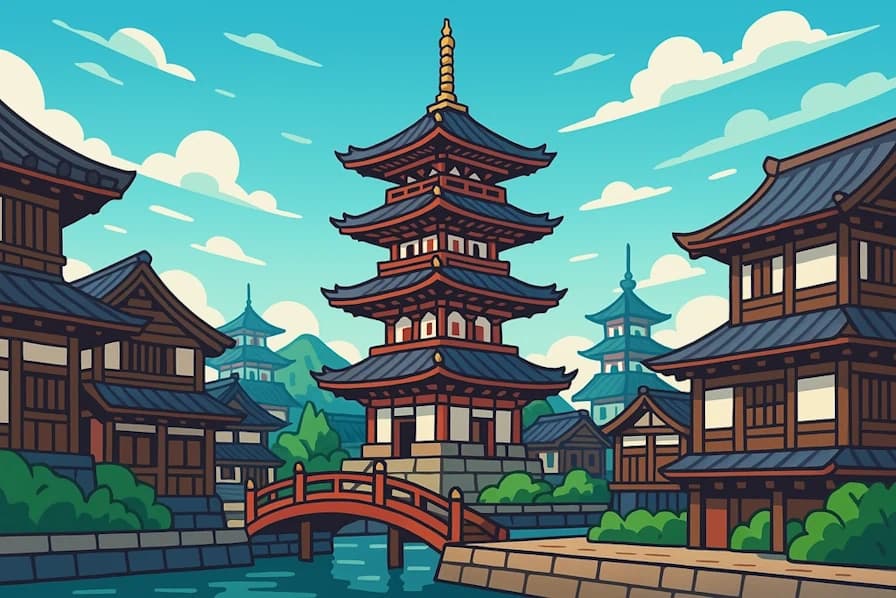
Best Japanese City Names: 200+ Historic & Modern City Ideas + Cultural Guide
Try our Japanese city name generator →
From ancient imperial capitals like Kyoto to the neon-lit streets of Tokyo, from castle towns preserving samurai heritage to futuristic planned cities, Japanese urban names tell stories spanning over a millennium. Whether you're creating a setting for a novel, developing a game world, researching Japanese culture, or simply fascinated by how geography and history intersect in language, this comprehensive guide offers over 200 authentic Japanese city names with their kanji characters, meanings, and rich cultural context.
Japanese city names aren't arbitrary labels—they're compressed history lessons. When you see 京 (kyo, meaning capital) in Kyoto and Tokyo, you're witnessing the transfer of power from west to east. The 川 (kawa, river) in Kawasaki and Kanazawa speaks to the life-giving waterways that dictated where settlements could thrive. Even the suffix 市 (shi, city) carries weight, a formal designation marking a place's evolution from village to recognized urban center. These names emerged organically from the landscape—from the 山 (yama, mountain) dominating Yamaguchi's entrance to the 浜 (hama, beach) defining Yokohama's identity as a coastal trading hub.
What makes Japanese urban naming particularly fascinating is how it reflects waves of development across distinct historical periods. Ancient capitals like Nara and Kyoto carry names rooted in their imperial legacy. Castle towns—Matsumoto, Himeji, Kanazawa—preserve the memory of feudal strongholds around which merchant districts grew. Port cities like Yokohama and Nagasaki record Japan's complicated relationship with the outside world, initially resisting then embracing international trade. And modern planned cities like Tsukuba represent Japan's post-war ambitions, consciously designed spaces embodying technological progress and rational urban planning. Each layer adds depth to understanding how Japan transformed from isolated archipelago to global economic power.
The Language of Japanese Geography
Japanese city names function like geographic DNA, encoding landscape features into sound. The character 川 (kawa/gawa) appears everywhere—Kanagawa, Kawasaki, Kawa goe—because rivers provided transportation, irrigation, and defense. Mountain references dominate interior regions: 山 (yama/san) in Wakayama, Okayama, Toyama marking cities nestled in or near peaks. Coastal cities claim 浜 (hama) like Yokohama and Hamamatsu, while 島 (shima/jima) marks island communities from Hiroshima to Miyakojima. This wasn't decorative naming—it was survival information encoded into language, telling travelers what terrain to expect.
Directional naming reveals power dynamics and administrative thinking. Tokyo literally means "Eastern Capital," defined by its relationship to Kyoto, the original capital. Kitakyushu ("North Kyushu") explicitly situates itself on the island's geography. This extends beyond cities: many neighborhoods carry directional markers—Nishi-Shinjuku (West Shinjuku), Minami-Aoyama (South Aoyama). The pattern reflects Chinese influence on Japanese administrative practices, where the capital sat at the cosmic center with directions radiating outward. Even today, addresses in Japanese cities use this logic, describing position through hierarchical relationships rather than sequential street numbers.
From Ancient Capitals to Modern Metropolises
Nara holds the distinction of being Japan's first permanent capital, established in 710 CE when the imperial court finally stopped relocating after each emperor's death. The city was designed following Chinese models—a grid layout with the imperial palace at the northern end, major temples strategically placed, and orderly blocks for aristocratic residences. But by 794, the court moved to Heian-kyo, later known as Kyoto, where it remained for over a millennium. Kyoto's name, 京都 (literally "capital city"), was so definitive it needed no other identifier for centuries. The city's preservation of traditional architecture, craft traditions, and cultural practices stems from this thousand-year accumulation of imperial patronage and aristocratic refinement.
The Tokugawa shogunate's choice of Edo (modern Tokyo) as their administrative base in 1603 gradually shifted power eastward, though the emperor remained in Kyoto. Edo exploded into one of the world's largest cities by the 18th century, home to over a million people—samurai administrators, merchants supplying the warrior class, craftsmen, entertainers, and laborers. The city's reputation for vibrant urban culture—kabuki theater, ukiyo-e woodblock prints, elaborate festivals—emerged from this dense concentration of wealth and people. When the Meiji Emperor moved the imperial residence to Edo in 1868, renaming it Tokyo ("Eastern Capital"), it formalized what had become practical reality: political and economic power had relocated from Kansai to Kanto.
Castle Towns: Urban Planning Around Power
Castle towns (城下町, jokamachi) represent a distinctive urban form that shaped Japanese cities from the late 16th century through the Edo period. Powerful daimyo constructed fortifications at strategic locations—mountain passes, river confluences, coastal harbors—then organized surrounding settlements according to strict social hierarchy. Samurai lived closest to the castle in the yamanote (uptown) districts, while merchants and craftsmen occupied the shitamachi (downtown) near markets and docks. Temples were often positioned at city boundaries as both spiritual centers and defensive positions. Cities like Kanazawa, Matsue, and Himeji still reflect this planned layout, their modern streets following Edo-period ward divisions.
The castle itself served multiple purposes beyond military defense. It symbolized the daimyo's authority—Himeji Castle's brilliant white walls and soaring towers announced power visible for miles. Castle construction techniques represented cutting-edge engineering: massive stone walls fitted without mortar, complex internal layouts designed to confuse attackers, and architectural features like hidden trapdoors and concealed arrow slits. Economically, castle building projects employed thousands, stimulating local economies and concentrating skilled craftsmen. Even after the feudal system ended, these castles remained civic focal points. Reconstructed castles like Osaka Castle or Kumamoto Castle function as museums, tourist attractions, and symbols of civic pride.
Understanding Japanese City Name Patterns
Japanese city names follow recognizable linguistic patterns that reflect geography, history, and administrative function. Learning these patterns helps decode the meaning and character of unfamiliar place names.
Geographic Elements
- 川 (kawa/gawa - river): Kawasaki ("river cape"), Kanagawa ("metal river")
- 山 (yama/san - mountain): Yamaguchi ("mountain entrance"), Okayama ("hill mountain")
- 浜 (hama - beach): Yokohama ("side beach"), Hamamatsu ("beach pine")
- 島 (shima/jima - island): Hiroshima ("wide island"), Kagoshima ("deer child island")
- 津 (tsu - port): Otsu ("large port"), Numazu ("swamp port")
Historical & Cultural Markers
- 京 (kyo - capital): Kyoto, Tokyo, Keicho (ancient name)
- 城 (jo - castle): Miyagi ("shrine castle"), often in old castle town names
- 市 (shi - city): Official designation for cities, appears in formal names
- 府 (fu - metropolitan): Osaka-fu, Kyoto-fu, special administrative status
- 都 (to - capital): Tokyo-to, highest administrative level
Related Resources
For authentic Japanese cultural names, explore our Hindu names guide or discover Indigenous Native American names. For fantasy world-building, check out our dragon names collection.
Port Cities and Meiji Modernization
The forced opening of Japan in 1853 by Commodore Perry's "Black Ships" transformed several coastal cities into international gateways. Yokohama, a small fishing village, was deliberately chosen as a treaty port precisely because it wasn't a major city—a strategy to contain foreign influence. Instead, Yokohama exploded into Japan's second-largest city, its Chinatown becoming the largest in East Asia, its port handling massive trade volumes. Nagasaki had already served as Japan's sole authorized port for Dutch and Chinese traders during the sakoku (closed country) period, giving it unique exposure to Western knowledge and technology centuries before Perry arrived.
Kobe followed a similar trajectory, designated as one of five treaty ports in 1868. The city's mixed foreign settlement introduced Western architecture, bakeries, and new social customs. To this day, Kobe retains its cosmopolitan character—the Kitano district preserves Victorian-era Western-style houses on hillsides, while Kobe beef became world-famous partly through foreign residents' appreciation. These port cities became conduits not just for trade goods but for ideas, technologies, and cultural practices that drove Japan's rapid modernization during the Meiji era. Railways connected them to inland cities, spreading Western influences throughout the archipelago.
Postwar Reconstruction and Planned Cities
Japan's devastating defeat in World War II leveled major cities through firebombing and atomic weapons, creating unwanted opportunities for urban redesign. Hiroshima's reconstruction as a "City of Peace" consciously transformed its identity from military headquarters to international symbol of nuclear disarmament. The city rebuilt around Peace Memorial Park, preserving the skeletal Atomic Bomb Dome as a UNESCO World Heritage Site and hosting annual peace ceremonies attended by world leaders. Tokyo's recovery was less ideologically driven but equally dramatic, rebuilding infrastructure at breakneck speed to host the 1964 Olympics, which announced Japan's return to the international community.
The 1960s and 70s saw deliberate creation of entirely new cities to address overcrowding and promote regional development. Tsukuba Science City, established in 1963, relocated dozens of research institutes from Tokyo to a planned environment 50 kilometers northeast. The city was designed from scratch with wide boulevards, distinct research zones, and residential areas separated by green spaces—rational planning impossible in historic cities with medieval street patterns. Tama New Town outside Tokyo housed over 200,000 people in modern apartment complexes, addressing the capital's housing crisis. These planned cities represent Japan's faith in technocratic solutions and rational design, a stark contrast to the organic growth that created traditional castle towns.
Using Japanese City Names in Creative Projects
Japanese city names offer rich possibilities for fiction, gaming, and world-building. Understanding their construction helps create authentic-feeling original locations.
Historical Fiction Settings
Use real castle towns like Kanazawa or Matsue for samurai stories, preserving authentic architectural and social details. Ancient capitals like Nara or Kyoto work for court intrigue narratives. Port cities like Nagasaki offer settings for cultural collision stories during Japan's opening to the West.
Cyberpunk and Futuristic Narratives
Tokyo's neon-lit districts like Shibuya, Akihabara, and Shinjuku provide ready-made cyberpunk aesthetics. For original cities, combine geographic elements (Neo-Yokohama, Shin-Osaka) or create portmanteaus (Kyoto-Osaka could become Kyosaka). Modern planned cities offer templates for techno-utopian or dystopian settings.
Fantasy and Alternative History
Recombine authentic name elements to create plausible new locations: Kagayama (combining 加賀 Kaga + 山 mountain), Mizusaki (水崎 water + cape), or Kitanami (北波 north + wave). Respect linguistic patterns—certain kanji naturally combine while others don't. Consider what geographic features would logically name a settlement.
Gaming and RPG Campaigns
Hot spring towns like Hakone or Beppu work for rest and recovery locations. Castle towns provide quest hubs with hierarchical social structures. Modern cities offer diverse districts—entertainment quarters, business centers, historic preservation areas—each with distinct atmospheres and challenges.
Hot Spring Towns: Healing Waters and Tourism
Japan's volcanic geology blesses the archipelago with thousands of hot springs (温泉, onsen), and towns built around these geothermal wonders developed into distinctive resort communities. Kusatsu Onsen in Gunma Prefecture produces more hot spring water than any other resort in Japan—over 32,000 liters per minute of sulfurous, highly acidic water celebrated for skin conditions and muscle pain. The town's yubatake ("hot water field") literally steams in the town center, wooden channels cooling the scalding spring water before distribution to bath houses. Visitors in traditional yukata robes stroll between public baths, watching performances of yumomi—rhythmic stirring of hot water with large wooden paddles, accompanied by folk songs.
Kinosaki Onsen in Hyogo perfected the "onsen town" aesthetic—a single main street following a willow-lined canal, traditional wooden inns facing each other across the narrow road. The town's seven public bathhouses (外湯, sotoyu) each have distinct characteristics and legendary origins. Guests stay at ryokan inns that provide yukata and wooden geta sandals, then spend evenings strolling between different baths, creating a social promenade unique to onsen culture. This pattern emerged during the Edo period when hot spring resorts became accessible to commoners, not just aristocrats. The towns developed entertainment quarters, souvenir shops, and distinctive local cuisines, transforming therapeutic bathing into complete cultural experiences.
Island Cities: Isolation and Identity
Okinawa Prefecture's unique history as the independent Ryukyu Kingdom until 1879 gives its cities distinct character. Naha, the capital, was a major trading hub connecting Japan, China, Southeast Asia, and Korea. Shuri Castle, the Ryukyu kings' palace, shows architectural influences from multiple cultures— Chinese-style painted decorations on Japanese-style wooden construction. The Ryukyuan language, related to but distinct from Japanese, persists in place names and local speech. Okinawan cities carry the weight of tragedy too—the Battle of Okinawa in 1945 devastated the islands, followed by decades under U.S. military administration, creating complex modern identities mixing Japanese, American, and Ryukyuan elements.
Hokkaido's cities reflect Japan's last frontier—deliberate colonization of Ainu lands during the Meiji era. Cities like Sapporo were built on American-style grids rather than organic Japanese patterns, and many place names preserve Ainu linguistic roots. Sapporo itself comes from Ainu "sat-poro-pet" (dry, great river). The tension between indigenous Ainu heritage and Japanese colonization creates complicated urban identities. Hakodate's position as one of the first ports opened to international trade gave it early Western influence—the city still maintains Russian Orthodox churches and Western-style diplomatic buildings. Island cities necessarily differ from mainland counterparts, shaped by isolation, distinct microclimates, and different cultural influences.
Regional Identity in Urban Naming
Japan's traditional division into regions—Kanto, Kansai, Tohoku, Kyushu, and others—manifests in urban character and naming patterns. Kansai cities (Osaka, Kyoto, Kobe) share cultural traits distinct from Kanto (Tokyo, Yokohama): different dialect, different food culture, different pace of life. Osaka prides itself on being more laid-back than Tokyo, its merchants' pragmatism contrasting with Tokyo's samurai-descended formality. Kyoto maintains aristocratic refinement, speaking a dialect considered more elegant than other regional varieties. These cities' historic competition and complementary roles—Kyoto as cultural capital, Osaka as commercial hub, Tokyo as political center—shaped modern Japanese identity.
Northern cities in Tohoku and Hokkaido developed differently, historically poorer and more agricultural than industrialized Pacific coast cities. Sendai, the Tohoku region's largest city, was called "City of Trees" for zelkova-lined streets, quite unlike Tokyo's concrete density. Cities like Akita and Aomori deal with heavy snowfall that southern cities never experience, influencing architecture and lifestyle. This regional diversity challenges stereotypes of Japan as homogeneous—while unified by language and government, local identities remain strong, and city names often reference these regional distinctions. Understanding these patterns helps appreciate why certain name combinations appear in specific regions and not others.
Major Japanese Cities
Japan's largest metropolitan areas represent the nation's economic engines and cultural centers. From Tokyo's neon-lit hypermodernity to Kyoto's thousand-year preservation of traditional arts, these cities anchor regions and define Japanese urban life. Each has evolved distinct character through centuries of development—Osaka's merchant culture differs from Tokyo's corporate formality, while Sapporo's frontier spirit contrasts with ancient Nara's imperial heritage. These names appear constantly in Japanese media, international news, and cultural discussions, making them essential knowledge for anyone exploring Japanese society. Whether you're writing fiction set in Japan, studying urban development, or simply appreciating linguistic geography, these major cities provide the foundation for understanding Japanese urban culture.
- 1Tokyo (東京)Japan's capital and largest metropolis, meaning 'Eastern Capital,' established when the imperial court moved from Kyoto in 1868
- 2Kyoto (京都)The ancient imperial capital for over 1,000 years, meaning 'Capital City,' renowned for its classical Buddhist temples, gardens, and traditional geisha culture
- 3Osaka (大阪)Western Japan's commercial hub meaning 'Large Slope,' known as the nation's kitchen for its culinary culture and merchant heritage
- 4Nagoya (名古屋)Central Japan's manufacturing powerhouse, historically a major castle town connecting Tokyo and Osaka on the ancient Tokaido road
- 5Yokohama (横浜)Japan's second-largest city meaning 'Side Beach,' transformed from a fishing village into a major port after opening to international trade in 1859
- 6Sapporo (札幌)Capital of Hokkaido and host of the 1972 Winter Olympics, named from the Ainu language meaning 'dry, great river'
- 7Kobe (神戸)Historic port city meaning 'Gate of the Gods,' known for its international atmosphere, sake production, and premium Kobe beef
- 8Fukuoka (福岡)Gateway to Asia on Kyushu island meaning 'Blessed Hill,' historically known as Hakata, an ancient trading port with continental Asia
- 9Hiroshima (広島)City of peace meaning 'Wide Island,' rebuilt after 1945 as a symbol of nuclear disarmament and international harmony
- 10Sendai (仙台)Largest city in the Tohoku region meaning 'Hermit Platform,' founded by the powerful feudal lord Date Masamune in 1600
- 11Kawasaki (川崎)Industrial city between Tokyo and Yokohama meaning "River Cape," developed as a post station on the historic Tokaido road
- 12Nara (奈良)Japan's first permanent capital (710-784 CE), housing ancient temples including the famous Great Buddha and friendly deer in Nara Park
- 13Kamakura (鎌倉)Coastal city that served as the de facto capital during the Kamakura shogunate (1185-1333), home to the iconic Great Buddha statue
- 14Nagasaki (長崎)Port city meaning 'Long Cape,' sole window to the West during Japan's isolation period, known for its unique blend of Japanese and European cultures
- 15Kanazawa (金沢)Castle town meaning 'Marsh of Gold,' preserved Edo-period districts including the famous Kenrokuen Garden, one of Japan's three great gardens
- 16Niigata (新潟)Major port on the Sea of Japan meaning 'New Lagoon,' known for its sake production and as the gateway to Sado Island
- 17Okayama (岡山)Castle town meaning 'Hill Mountain,' famous for its beautiful Korakuen Garden and the legend of Momotaro, the Peach Boy
- 18Hamamatsu (浜松)Industrial city meaning 'Beach Pine,' birthplace of major companies like Yamaha and Honda, with a rich musical instrument manufacturing heritage
- 19Kumamoto (熊本)Kyushu city meaning 'Bear Origin,' dominated by one of Japan's most impressive castles, rebuilt after the 2016 earthquakes
- 20Shizuoka (静岡)City with views of Mount Fuji meaning 'Quiet Hills,' center of Japanese green tea production and former capital of the Tokugawa shogunate
- 21Kagoshima (鹿児島)Southern Kyushu city meaning 'Deer Child Island,' dominated by the active volcano Sakurajima across the bay, historically a center of samurai culture
- 22Sakai (堺)Osaka Prefecture city meaning 'Border,' historically a wealthy merchant republic and center of tea ceremony culture, birthplace of Sen no Rikyu
- 23Kita-Kyushu (北九州)Industrial city meaning 'North Kyushu,' formed by merging five cities, gateway between Honshu and Kyushu islands
- 24Chiba (千葉)Prefecture capital meaning 'Thousand Leaves,' major port and industrial center east of Tokyo
- 25Saitama (埼玉)Prefecture capital meaning 'Cape Jewel,' rapidly developed suburban city north of Tokyo
- 26Kochi (高知)Shikoku castle town meaning 'High Knowledge,' known for Katsuo no Tataki (seared bonito) and the Yosakoi dance festival
- 27Tokushima (徳島)Shikoku city meaning 'Virtuous Island,' famous for the Awa Odori dance festival, one of Japan's largest traditional dance celebrations
- 28Maebashi (前橋)Gunma Prefecture capital meaning 'Front Bridge,' former silk production center at the foot of Mount Akagi
- 29Otsu (大津)Shiga Prefecture capital meaning 'Large Port,' ancient lakeside city on Lake Biwa, historically a critical junction on the Tokaido road
- 30Naha (那覇)Okinawa's capital city, historical center of the Ryukyu Kingdom, blending subtropical culture with Japanese and American influences
- 31Himeji (姫路)Major city featuring Japan's most magnificent castle, meaning 'Princess Road,' an important industrial and cultural center in western Japan
Historic Castle Towns
Castle towns (城下町, jokamachi) represent a unique form of Japanese urban planning that emerged during the Warring States period and flourished under the Tokugawa shogunate. Powerful feudal lords constructed impressive castles at strategic locations, then organized surrounding settlements according to strict social hierarchy. Many of these cities preserved their Edo-period street layouts, traditional crafts, and distinctive local identities despite modernization. Some maintain original castles like Himeji's spectacular White Heron Castle, while others reconstructed their keeps as symbols of civic pride. These towns offer glimpses into pre-modern Japan while functioning as contemporary cities, creating unique atmospheres perfect for historical fiction, samurai narratives, or understanding how feudal structures shaped modern urban forms.
- 1Matsumoto (松本)Alpine city meaning 'Origin of the Pine,' home to one of Japan's most beautiful original castles with distinctive black walls
- 2Hikone (彦根)Castle town on Lake Biwa preserving one of only twelve original castles, headquarters of the powerful Ii clan during the Edo period
- 3Himeji (姫路)Site of Japan's most spectacular castle, the White Heron Castle, meaning 'Princess Road,' a UNESCO World Heritage Site
- 4Takayama (高山)Mountain town meaning 'High Mountain,' preserving Edo-period merchant houses and famous for its spectacular spring and autumn festivals
- 5Matsue (松江)Castle town meaning 'Pine River,' known as the 'Water City' for its network of canals and the well-preserved black Matsue Castle
- 6Aizu-Wakamatsu (会津若松)Former samurai stronghold meaning "Young Pine of Aizu," site of fierce battles during the Boshin War marking the end of the samurai era
- 7Matsuyama (松山)Shikoku's largest city meaning 'Pine Mountain,' crowned by one of Japan's twelve original castles and home to ancient hot springs
- 8Gifu (岐阜)Central city where Oda Nobunaga launched his campaign to unify Japan, meaning "crossroads mount," strategically located on the Nagara River
- 9Uwajima (宇和島)Coastal castle town meaning 'Uwa Island,' preserving an original mountaintop castle and traditional bullfighting culture
- 10Tsuwano (津和野)Picturesque mountain town called 'Little Kyoto,' with canals filled with koi fish and well-preserved samurai and merchant districts
- 11Kofu (甲府)Former capital of Kai Province meaning 'Jeweled Prefecture,' power base of the legendary warlord Takeda Shingen
- 12Inuyama (犬山)River town meaning 'Dog Mountain,' home to Japan's oldest original wooden castle overlooking the scenic Kiso River
- 13Marugame (丸亀)Shikoku castle town meaning 'Round Turtle,' famous for its impressive stone walls and as the center of traditional uchiwa fan production
- 14Yamagata (山形)Mountain city meaning 'Mountain Shape,' former castle town known for cherry blossom viewing, hot springs, and traditional crafts
- 15Hirosaki (弘前)Northern castle town meaning 'Broad Front,' renowned for spectacular cherry blossom displays and apple orchards
- 16Fukuyama (福山)Western Honshu city meaning 'Blessed Mountain,' developed around a major Edo-period castle, now an industrial and commercial hub
- 17Kakegawa (掛川)Shizuoka castle town meaning 'Hanging River,' first wooden reconstruction of a castle tower in Japan, center of green tea production
- 18Tsu (津)Mie Prefecture capital meaning 'Port,' formerly a major castle town and post station on the Ise pilgrimage route
- 19Odawara (小田原)Gateway to Hakone meaning 'Small Field Plain,' stronghold of the powerful Hojo clan during the Warring States period
- 20Kishiwada (岸和田)Osaka Bay castle town famous for its dangerous Danjiri festival, where massive wooden floats are pulled at breakneck speed
- 21Nagahama (長浜)Lake Biwa castle town meaning 'Long Beach,' former domain of Toyotomi Hideyoshi, preserving traditional merchant architecture
- 22Shiroishi (白石)Miyagi castle town meaning 'White Stone,' former domain of the Date clan's retainers, preserving samurai residences
- 23Kitsuki (杵築)Oita castle town known as 'Little Kyoto of Kyushu,' with samurai and merchant districts separated by a valley
- 24Kakunodate (角館)Akita town called 'Little Kyoto of Tohoku,' famous for samurai houses and hundreds of weeping cherry trees
- 25Ozu (大洲)Ehime castle town meaning 'Great Island,' preserving a reconstructed wooden castle and traditional river culture
- 26Hagi (萩)Yamaguchi castle town crucial to the Meiji Restoration, birthplace of many revolutionary leaders, with pristine samurai districts
- 27Usuki (臼杵)Oita castle town meaning 'Mortar and Pestle,' known for ancient stone Buddha statues and traditional soy sauce production
- 28Obi (飫肥)Miyazaki castle town called 'Little Kyoto of Kyushu,' with white-walled samurai residences and cedar-lined streets
- 29Takada (高田)Niigata castle town known for spectacular cherry blossoms, heavy snowfall, and the impressive triple-turret castle keep
- 30Izushi (出石)Hyogo castle town called 'Little Kyoto of Tajima,' famous for Izushi-soba noodles served on small white dishes
- 31Shimabara (島原)Nagasaki castle town facing Ariake Sea, site of the Shimabara Rebellion, known for abundant spring water flowing through streets
- 32Imabari (今治)Ehime castle town meaning 'Now Govern,' gateway to the Shimanami Kaido, historically important for maritime defense
- 33Nihonmatsu (二本松)Fukushima castle town meaning 'Two Pines,' site of tragic battle where teenage samurai defended against superior forces
- 34Yamagata (山形)Castle town and prefecture capital meaning 'Mountain Shape,' known for cherry blossoms, hot springs, and traditional crafts
Modern Planned Cities
Japan's planned cities represent deliberate experiments in urban design, created to address specific needs like population decentralization, scientific research concentration, or postwar reconstruction. Unlike organic castle towns that grew incrementally over centuries, these cities emerged from blueprints, embodying modernist faith in rational planning. Tsukuba Science City consolidated research institutes to promote innovation, while massive new towns like Tama addressed Tokyo's housing crisis with modern apartment complexes. Waterfront developments like Minato Mirai and Odaiba showcase contemporary architecture and urban entertainment on reclaimed land. These planned environments offer futuristic aesthetics perfect for cyberpunk narratives, techno-utopian settings, or examining how intentional design shapes community formation differently than historical accident.
- 1Tsukuba (つくば)Science city established in the 1960s, home to numerous research institutes and universities, symbolizing Japan's technological advancement
- 2Makuhari (幕張)Planned business district in Chiba, featuring the massive Makuhari Messe convention center and futuristic urban development
- 3Minato Mirai (みなとみらい)Yokohama's waterfront district meaning 'Port Future,' a model of urban redevelopment with iconic skyline and cultural facilities
- 4Tama New Town (多摩ニュータウン)One of Japan's largest planned residential developments outside Tokyo, home to over 200,000 residents since the 1970s
- 5Senri New Town (千里ニュータウン)Osaka's pioneering new town meaning 'Thousand Ri,' Japan's first large-scale planned community developed in 1962
- 6Kobe Port Island (神戸ポートアイランド)Artificial island created from reclaimed land, housing modern medical facilities, universities, and the Kobe Airport
- 7Shin-Yokohama (新横浜)Business district meaning 'New Yokohama,' developed around the Shinkansen station, home to the iconic Nissan Stadium
- 8Rokko Island (六甲アイランド)Man-made island in Kobe Bay featuring international schools, modern housing, and recreational facilities with harbor views
- 9Shin-Osaka (新大阪)Modern business district meaning 'New Osaka,' developed as a major transportation hub connecting bullet trains and conventional rail
- 10Chiba New Town (千葉ニュータウン)Large-scale planned community northeast of Tokyo, developed to ease urban congestion with modern infrastructure
- 11Shinonome (東雲)Tokyo Bay waterfront district meaning 'Dawn Clouds,' featuring innovative sustainable housing and contemporary architecture
- 12Odaiba (お台場)Futuristic entertainment and shopping district on reclaimed land in Tokyo Bay, originally built as cannon batteries (daiba) to defend against foreign ships
- 13Harumi (晴海)Tokyo Bay district meaning 'Clear Sea,' site of the 2020 Olympic Village, showcasing sustainable urban development
- 14Toyosu (豊洲)Tokyo waterfront district meaning 'Abundant Island,' home to the modern Toyosu Fish Market that replaced Tsukiji
- 15Soka (草加)Planned city in Saitama meaning 'Add Grass,' developed as part of suburban expansion with modern infrastructure
- 16Kasai Rinkai (葛西臨海)Tokyo Bay waterfront district with parks and aquarium, meaning 'Facing the Sea at Kasai'
- 17Narita New Town (成田ニュータウン)Planned residential development near Narita Airport, designed to accommodate growing population
- 18Kinshicho (錦糸町)Eastern Tokyo district meaning 'Brocade Thread Town,' redeveloped with modern shopping and entertainment facilities
- 19Tokyo Skytree Town (東京スカイツリータウン)Modern complex around Tokyo Skytree, Japan's tallest structure, combining retail, offices, and cultural facilities
- 20Musashino (武蔵野)Planned residential city meaning 'Musashi Field,' known for orderly urban design and high quality of life
- 21Kohnan (港南)Planned residential area in Yokohama meaning 'Port South,' developed with wide streets and modern apartment complexes
- 22Kita-Kyushu Science Park (北九州学術研究都市)Academic city promoting industry-university collaboration, focusing on environmental technology and robotics research
- 23Shinagawa Seaside (品川シーサイド)Modern waterfront development combining residential towers, offices, and shopping facilities near Tokyo Bay
- 24Makomanai (真駒内)Sapporo's planned district developed for the 1972 Winter Olympics, featuring modern sports facilities and residential areas
- 25Sakura (佐倉)Planned community northeast of Tokyo meaning 'Cherry Blossom,' balancing historical castle town heritage with modern development
- 26Nagaoka Newtown (長岡ニュータウン)Planned residential development in Kyoto Prefecture, providing housing while preserving natural landscapes
- 27Inage New Town (稲毛ニュータウン)Chiba residential development meaning 'Rice Seedling,' designed with green spaces and modern amenities
- 28Nishi-Shinjuku (西新宿)Tokyo's modern business district meaning 'West Shinjuku,' transformed from water purification plant to high-rise office towers
- 29Tokyu Den-en-toshi (東急田園都市)Planned suburban development meaning 'Tokyu Garden City,' epitomizing Japan's post-war suburban ideal along the Den-en-toshi railway line
- 30Kazusa Academia Park (かずさアカデミアパーク)Chiba science park established in 1994, focusing on DNA research and biotechnology in a landscaped campus setting
- 31Haneda Innovation City (羽田イノベーションシティ)Tokyo's newest waterfront development near Haneda Airport, combining offices, hotels, and cultural facilities opened in 2020
Traditional Geographic Names
Cities named after geographic features encode environmental information into language, revealing how Japanese settlers read and adapted to diverse landscapes. Mountain cities like Yamaguchi and Nagano nestled in basins surrounded by peaks, their names warning travelers of the terrain ahead. River cities like Kawagoe and Asahikawa grew where waterways provided transportation and irrigation. Coastal cities incorporated 浜 (hama, beach) or 津 (tsu, port) into their names, announcing their maritime character. These naming patterns reflect pre-modern realities when knowing whether a destination was mountainous, coastal, or riverine significantly affected travel planning. For writers and world-builders, these authentic geographic names demonstrate how natural features should logically influence place names, creating believable fictional geographies.
- 1Yamaguchi (山口)Western Honshu city meaning 'Mountain Entrance,' gateway to the Chugoku mountains and former seat of the powerful Ouchi clan
- 2Kawagoe (川越)Little Edo near Tokyo meaning 'River Crossing,' preserving Edo-period merchant warehouses and traditional kurazukuri architecture
- 3Fujisawa (藤沢)Kanagawa city meaning 'Wisteria Marsh,' famous for Enoshima Island shrine and as a pilgrimage destination
- 4Numazu (沼津)Shizuoka port city meaning 'Swamp Port,' offering stunning views of Mount Fuji across Suruga Bay
- 5Hakodate (函館)Hokkaido port city meaning 'Box Building,' one of the first Japanese ports opened to international trade, famous for its night views
- 6Otsu (大津)Shiga Prefecture capital meaning 'Large Port,' ancient city on the shores of Lake Biwa, Japan's largest lake
- 7Shimonoseki (下関)Strategic strait city meaning 'Lower Barrier,' connecting Honshu and Kyushu, site of crucial battles in Japanese history
- 8Tomakomai (苫小牧)Hokkaido port city with an Ainu name meaning 'Swamp in the Back,' major industrial and ferry port on the Pacific coast
- 9Iwaki (いわき)Fukushima coastal city meaning 'Stone Castle,' formed by merging multiple towns, known for hot springs and beaches
- 10Kofu (甲府)Yamanashi capital meaning 'Jeweled Prefecture,' former domain of the Takeda clan, gateway to Mount Fuji and Japanese Alps
- 11Oita (大分)Kyushu city meaning 'Large Division,' known for hot springs and as capital of Oita Prefecture
- 12Yamaguchi (山口)Prefecture capital meaning 'Mountain Entrance,' historically powerful domain that produced many Meiji Restoration leaders
- 13Miyazaki (宮崎)Southern Kyushu city meaning 'Shrine Cape,' known for surfing, tropical climate, and legendary ancient shrines
- 14Matsusaka (松阪)Mie city meaning 'Pine Slope,' famous for premium Matsusaka beef and merchant heritage
- 15Fukui (福井)Prefecture capital meaning 'Lucky Well,' known for dinosaur fossils, eyeglass production, and nuclear power research
- 16Koriyama (郡山)Fukushima city meaning 'County Mountain,' major transportation hub and economic center of the Tohoku region
- 17Tsuruga (敦賀)Fukui port city on the Japan Sea, historically important for trade with continental Asia and northern Japan
- 18Takasaki (高崎)Gunma transportation hub meaning 'High Cape,' strategic castle town connecting Tokyo with northern and western Japan
- 19Toyama (富山)City on the Japan Sea meaning 'Wealthy Mountain,' gateway to the Japanese Alps and famous for traditional medicine
- 20Nagano (長野)Alpine city meaning 'Long Field,' host of the 1998 Winter Olympics, home to the famous Zenkoji Temple
- 21Akita (秋田)Northern city meaning 'Autumn Field,' known for heavy snowfall, rice production, and the loyal Akita dog breed
- 22Wakayama (和歌山)Kii Peninsula city meaning 'Harmony Song Mountain,' gateway to the sacred Kumano pilgrimage routes
- 23Aomori (青森)Northernmost Honshu city meaning 'Blue Forest,' famous for its spectacular Nebuta festival and apple orchards
- 24Morioka (盛岡)Tohoku city meaning 'Prosperous Hill,' former castle town known for its beautiful Iwate Park and traditional crafts
- 25Asahikawa (旭川)Central Hokkaido city meaning 'Morning Sun River,' Japan's coldest major city, gateway to Daisetsuzan National Park
- 26Toyohashi (豊橋)Aichi city meaning 'Bountiful Bridge,' major agricultural center known for roses and traditional hand-pulled trams
- 27Hachioji (八王子)Western Tokyo city meaning 'Eight Princes,' named after eight sons of deities enshrined at local Hachiman shrine
- 28Takamatsu (高松)Shikoku city meaning 'Tall Pine,' gateway to the island, famous for Ritsurin Garden and sanuki udon noodles
- 29Tottori (鳥取)San-in region city meaning 'Bird Catching,' known for the Tottori Sand Dunes, Japan's only large sand dune system
- 30Ise (伊勢)Sacred city in Mie Prefecture, home to Ise Grand Shrine, Japan's most important Shinto shrine, visited by millions of pilgrims
- 31Toba (鳥羽)Mie coastal city meaning 'Bird Feather,' famous for pearl cultivation and female ama divers harvesting seafood
- 32Imabari (今治)Ehime port city meaning 'Now Govern,' starting point of the Shimanami Kaido cycling route, famous for towel production
- 33Muroran (室蘭)Hokkaido industrial port with dramatic coastal cliffs, known for steel production and night industrial views
- 34Wakkanai (稚内)Japan's northernmost city, gateway to Russian Sakhalin Island, meaning 'Cold Water' in Ainu language
- 35Nemuro (根室)Easternmost Japanese city meaning "Root Room," known for seafood and proximity to disputed Northern Territories
- 36Miyako (宮古)Iwate coastal city meaning 'Shrine Old,' gateway to spectacular Sanriku Coast and Jodogahama Beach
- 37Omura (大村)Nagasaki Bay city meaning 'Large Village,' site of Japan's oldest Christian domain and modern airport
- 38Matsudo (松戸)Chiba city meaning 'Pine Door,' developed as a post station town along the Edo-period Mito road
- 39Yokosuka (横須賀)Kanagawa port city meaning 'Side Needed,' major naval base since the Meiji era, home to U.S. and Japanese fleets
- 40Utsunomiya (宇都宮)Tochigi capital known for gyoza dumplings, historically a post station on the Nikko road leading to Toshogu Shrine
- 41Ishinomaki (石巻)Miyagi port city meaning 'Stone Scroll,' major fishing port devastated by 2011 tsunami, rebuilding as a resilient coastal community
- 42Handa (半田)Aichi city meaning 'Half Rice Field,' historically important for sake brewing and vinegar production
- 43Takeo (武雄)Saga city meaning 'Military Hero,' known for its innovative public library and ancient hot springs with a distinctive vermillion gate
Island and Coastal Cities
Japan's island and coastal cities developed distinct identities shaped by maritime connections and geographic isolation. Okinawa's cities blend Ryukyuan, Chinese, and modern American influences, reflecting the islands' unique history as an independent kingdom. Hokkaido's ports show frontier character, developed during Meiji-era colonization with Western-inspired city planning. Historic ports like Nagasaki served as Japan's windows to the world during centuries of isolation, absorbing foreign influences that transformed them into cosmopolitan exceptions in a closed country. Island resort destinations like Ishigaki and Miyakojima showcase subtropical beauty distinct from mainland Japan. These locations offer rich settings for stories about cultural collision, isolation's effects on identity, and the sea's role in shaping civilization.
- 1Ishigaki (石垣)Okinawa island city meaning 'Stone Wall,' tropical paradise known for coral reefs, manta rays, and traditional Yaeyama culture
- 2Miyakojima (宮古島)Pristine island meaning 'Shrine Old Island,' famous for emerald-blue waters, white sand beaches, and the Irabu Bridge
- 3Naha (那覇)Capital of Okinawa with unique Ryukyuan culture, historically the center of the Ryukyu Kingdom's maritime trade network
- 4Sasebo (佐世保)Nagasaki naval port city, home to the Huis Ten Bosch Dutch-themed park and strategic military installations
- 5Shimoda (下田)Historic port meaning 'Lower Field' where Commodore Perry negotiated treaties opening Japan to the West in 1854
- 6Atami (熱海)Hot spring resort city meaning 'Hot Sea,' renowned for its spectacular fireworks over Sagami Bay and mountain hot springs
- 7Onomichi (尾道)Hiroshima Strait city known for its temple-studded hillsides, historic merchant houses, and the scenic Shimanami Kaido cycling route
- 8Kushiro (釧路)Eastern Hokkaido port city, gateway to Kushiro Wetlands National Park and home to the endangered tancho crane
- 9Enoshima (江の島)Sacred island near Kamakura meaning 'Inlet Island,' dedicated to the sea goddess Benzaiten with caves and stunning ocean views
- 10Ito (伊東)Izu Peninsula hot spring resort overlooking the Pacific, known for abundant geothermal springs and seafood
- 11Maizuru (舞鶴)Japan Sea port city meaning 'Dancing Crane,' important naval base with a beautiful natural harbor
- 12Uwajima (宇和島)Ehime coastal city preserving a mountaintop castle and traditional bullfighting, famous for cultured pearls
- 13Shimizu (清水)Port district of Shizuoka meaning 'Pure Water,' major tuna fishing port with views of Mount Fuji across Suruga Bay
- 14Karatsu (唐津)Saga port city meaning 'China Port,' ancient gateway for continental trade, famous for pottery and coastal pine forests
- 15Minamiboso (南房総)Southern Chiba peninsula meaning 'South House Peninsula,' known for flower fields, beaches, and mild climate
- 16Kamogawa (鴨川)Chiba coastal city meaning 'Duck River,' famous for its aquarium and as a popular surfing destination
- 17Kusatsu-Shirane (草津白根)Mountain resort area combining Kusatsu hot springs with the volcanic Mount Shirane, offering skiing and dramatic crater lakes
- 18Shibu (渋)Historic Nagano hot spring village with nine public bathhouses and narrow stone-paved streets, preserving Edo-period atmosphere
- 19Awara (あわら)Fukui hot spring resort near the Japan Sea, known for abundant geothermal water and traditional ryokan hospitality
- 20Yumoto (湯本)Generic name meaning 'Hot Water Origin,' used by many onsen towns including famous resorts in Nikko and Hakone
- 21Shuzenji (修善寺)Izu Peninsula hot spring town centered on an ancient temple, meaning 'Practice Virtue Temple,' favored by literary figures
- 22Minakami (水上)Gunma hot spring and outdoor sports resort meaning 'On the Water,' offering both thermal baths and adventure activities
- 23Ibusuki (指宿)Kagoshima resort city famous for natural sand baths where visitors are buried in geothermally heated beach sand
- 24Amami (奄美)Subtropical island between Kyushu and Okinawa, UNESCO World Heritage Site known for pristine nature and unique wildlife
- 25Chatan (北谷)Okinawa beach resort town blending American military culture with traditional Okinawan lifestyle, popular for its sunset beach
- 26Tateyama (館山)Southern Chiba city meaning 'Building Mountain,' blessed with mild winters, flowers, and beaches along Tokyo Bay
- 27Yonago (米子)Tottori port city meaning 'Rice Child,' gateway to Mount Daisen and the San-in coastal region
- 28Sakaiminato (境港)Tottori fishing port meaning 'Border Port,' famous for snow crab and as birthplace of manga artist Shigeru Mizuki
- 29Tsushima (対馬)Strategic island between Japan and Korea, historically crucial for diplomacy and trade, preserving ancient fortifications and unique wildlife
Onsen and Resort Towns
Hot spring resort towns represent a distinctive Japanese urban form where therapeutic bathing evolved into comprehensive cultural experiences. These communities developed around geothermal springs, combining natural healing waters with traditional hospitality at ryokan inns. Towns like Kusatsu and Hakone perfected the onsen town aesthetic—guests in yukata robes strolling between public bathhouses, steaming yubatake in town centers, traditional wooden architecture preserved along narrow streets. Mountain resorts like Hakone add spectacular natural scenery and art museums to the hot spring experience, while coastal onsen like Beppu or Atami combine ocean views with thermal bathing. For creative projects, these towns offer settings perfect for rest and recovery sequences, cultural exploration, or intimate character development in atmospheric traditional environments.
- 1Hakone (箱根)Famous mountain resort town meaning 'Box Root,' renowned for hot springs, art museums, and views of Mount Fuji from Lake Ashi
- 2Beppu (別府)Oita hot spring city meaning 'Separate Prefecture,' producing more hot spring water than any other resort in Japan with diverse onsen types
- 3Kusatsu (草津)Gunma hot spring town meaning 'Grass Port,' Japan's most famous onsen resort with the highest-volume natural hot spring and traditional yumomi performances
- 4Nikko (日光)Mountain town meaning 'Sunlight,' home to the ornate Toshogu Shrine and stunning natural scenery in the Japanese Alps
- 5Yufuin (由布院)Picturesque Oita hot spring town nestled between mountains, known for art galleries, boutiques, and rural charm
- 6Kinosaki (城崎)Historic Hyogo onsen town meaning 'Castle Point,' where visitors in yukata stroll between seven public bathhouses along a willow-lined canal
- 7Arima (有馬)Ancient onsen town near Kobe, one of Japan's three oldest hot spring resorts, famous for its gold and silver thermal waters
- 8Gero (下呂)Gifu hot spring town counted among Japan's three best onsen, known for smooth alkaline waters said to beautify skin
- 9Noboribetsu (登別)Hokkaido's premier onsen resort meaning 'Cloudy Creek,' featuring Hell Valley's volcanic landscape and diverse thermal waters
- 10Harajuku (原宿)Tokyo fashion district meaning 'Meadow Lodging,' global center of youth fashion and kawaii culture, famous for Takeshita Street
- 11Shinjuku (新宿)Tokyo's busiest district meaning 'New Lodging,' featuring the world's busiest train station, skyscrapers, and vibrant nightlife
- 12Ueno (上野)Tokyo district meaning 'Upper Field,' known for museums, zoo, cherry blossoms in Ueno Park, and traditional market atmosphere
- 13Ryogoku (両国)Tokyo district meaning 'Both Countries,' traditional center of sumo wrestling with the Kokugikan arena and sumo stables
- 14Nihonbashi (日本橋)Historic Tokyo district meaning 'Japan Bridge,' the kilometer-zero point from which all distances in Japan are measured
- 15Marunouchi (丸の内)Tokyo business district meaning 'Inside the Circle,' referring to the area within the outer moat of the Imperial Palace
- 16Tsukiji (築地)Former fish market district meaning 'Constructed Land,' built on reclaimed land during the Edo period, now transitioning to new uses
- 17Daikanyama (代官山)Trendy Tokyo neighborhood meaning 'Magistrate's Hill,' known for fashionable boutiques, cafes, and the T-Site cultural complex
- 18Shirahama (白浜)Wakayama beach resort meaning 'White Beach,' combining white sand beaches with hot spring baths overlooking the Pacific Ocean
- 19Karuizawa (軽井沢)Nagano mountain resort town, summer retreat for Tokyo's elite since the Meiji era, offering cool climate and European-style charm
- 20Ikaho (伊香保)Gunma mountain onsen town with a famous stone staircase lined with traditional inns, known for iron-rich golden waters
- 21Zao (蔵王)Mountain resort spanning Yamagata and Miyagi prefectures, famous for skiing, hot springs, and spectacular ice-covered trees
- 22Unzen (雲仙)Nagasaki mountain resort meaning 'Cloud Hermit,' volcanic hot spring area where Christian martyrs were executed in the 1600s
- 23Kinugawa (鬼怒川)Tochigi hot spring resort meaning 'Angry Demon River,' known for its gorge scenery and numerous large resort hotels
- 24Nozawa (野沢)Nagano ski resort village with over 30 free public hot spring bathhouses, blending world-class skiing with traditional onsen culture
- 25Dogo (道後)Matsuyama's ancient hot spring district, Japan's oldest onsen with a 3,000-year history mentioned in ancient chronicles
- 26Yamashiro (山代)One of the Kaga Onsen towns in Ishikawa, featuring a restored Edo-period public bathhouse and traditional ryokan inns
- 27Tamatsukuri (玉造)Shimane hot spring town meaning 'Jewel Making,' mentioned in ancient records as producing magatama jewels and beautifying waters
- 28Kurokawa (黒川)Kumamoto hot spring village meaning 'Black River,' known for its rustic rural atmosphere and rotenburo outdoor baths in natural settings
- 29Naruko (鳴子)Miyagi hot spring town meaning 'Crying Child,' famous for kokeshi wooden dolls and diverse onsen water types in close proximity
- 30Yudanaka (湯田中)Nagano hot spring resort meaning 'Hot Water Field Middle,' gateway to the famous snow monkey park where macaques bathe in natural springs
Famous Districts and Neighborhoods
While technically neighborhoods rather than independent cities, famous Japanese districts have achieved name recognition that transcends their administrative status. Shibuya and Harajuku define youth culture globally, their names synonymous with fashion trends and subcultural movements. Akihabara transformed from electronics district to otaku culture capital, embodying Japan's embrace of its unique popular culture exports. Kyoto's Gion preserves geisha traditions in a district that feels transported from the Edo period. These districts often have more distinctive identities than the larger cities containing them, functioning as self-contained worlds with their own rules, aesthetics, and communities. For fiction and gaming, these well-known districts provide immediately recognizable settings with built-in atmospheres, or templates for creating original neighborhoods with similar specificity and character.
- 1Kasumigaseki (霞ヶ関)Tokyo district meaning 'Barrier of Mist,' housing Japan's national government ministries in modern high-rise buildings
- 2Akihabara (秋葉原)Tokyo's electric town meaning 'Field of Autumn Leaves,' world-famous center of otaku culture, anime, manga, and electronics
- 3Takadanobaba (高田馬場)Student district in Tokyo meaning 'High Field Horse Ground,' named after an Edo-period horse riding ground
- 4Shimokitazawa (下北沢)Bohemian Tokyo neighborhood meaning 'Lower North Swamp,' known for vintage shops, live music venues, and theater culture
- 5Gion (祇園)Kyoto's famous geisha district named after Yasaka Shrine, preserving traditional wooden machiya houses and tea houses
- 6Dotombori (道頓堀)Osaka's entertainment district along a canal, named after developer Yasui Doton, famous for neon signs and street food
- 7Roppongi (六本木)Tokyo nightlife and art district meaning 'Six Trees,' home to museums, international restaurants, and sophisticated entertainment
- 8Nakameguro (中目黒)Trendy Tokyo neighborhood meaning 'Middle Eye Black,' known for cherry blossom-lined canal, cafes, and boutique shops
- 9Kawaramachi (河原町)Kyoto's main shopping street meaning 'Riverbank Town,' bustling with department stores, restaurants, and entertainment
- 10Ikebukuro (池袋)Major Tokyo district meaning 'Pond Bag,' featuring Sunshine City skyscraper, otaku culture, and diverse entertainment options
- 11Asakusa (浅草)Historic Tokyo district meaning 'Shallow Grass,' centered on Senso-ji Temple, preserving traditional shitamachi atmosphere
- 12Shibuya (渋谷)Tokyo's youth culture hub meaning 'Bitter Valley,' famous for the Scramble Crossing and as a trendsetting district
- 13Shinsekai (新世界)Osaka entertainment district meaning 'New World,' developed in 1912 with retro charm, kushikatsu restaurants, and Tsutenkaku Tower
- 14Kichijoji (吉祥寺)Residential Tokyo neighborhood meaning 'Lucky Auspicious Temple,' consistently rated as the most desirable place to live
- 15Ginza (銀座)Tokyo's upscale shopping district meaning 'Silver Mint,' where the Tokugawa shogunate established its silver coin mint in 1612
- 16Pontocho (先斗町)Narrow Kyoto alley meaning 'Point Town,' lined with traditional wooden buildings housing exclusive restaurants and tea houses
- 17Yanaka (谷中)Tokyo's old town district meaning 'Valley Middle,' surviving Tokyo's modernization with temples, traditional shops, and cemetery
- 18Kagurazaka (神楽坂)Tokyo hillside neighborhood meaning 'Sacred Music Slope,' blending French restaurants with traditional Japanese architecture
- 19Ebisu (恵比寿)Sophisticated Tokyo district named after the Shinto god of prosperity, developed around the former Yebisu Beer brewery
- 20Nakano (中野)Tokyo neighborhood meaning 'Middle Field,' famous for Nakano Broadway shopping complex and its subculture shops
- 21Kanda (神田)Historic Tokyo district meaning 'God's Rice Field,' known for secondhand bookshops, curry restaurants, and traditional merchant culture
- 22Namba (難波)Osaka's southern entertainment hub, historically a bustling port district, now famous for comedy theaters and street food
- 23Kabukicho (歌舞伎町)Tokyo's largest entertainment district in Shinjuku, named after a planned kabuki theater, known for vibrant nightlife and neon-lit streets
Create Your Own Japanese City Name
Ready to generate authentic Japanese city names for your creative projects? Our Japanese City Name Generator combines traditional geographic elements with cultural significance to create names that feel genuinely Japanese. Whether you need existing cities for accurate storytelling or imaginary locations for fantasy worlds, the generator understands naming patterns that make cities sound authentic. Explore other cultural generators like our Indian/Hindu names for diverse world-building, or check out cyberpunk names for futuristic Japanese-influenced settings.