Best German City Names: 200+ Historic & Imaginary Ideas
Try our German city name generator →
A comprehensive collection of 200+ German city names spanning two millennia of history, from Roman settlements and Hanseatic trading ports to medieval castle towns, Rhine Valley gems, Bavarian Alpine villages, and imaginative names for creative worldbuilding.
The Rich Tapestry of German City Names
German city names tell stories that span two thousand years of European history. Every syllable carries weight—the suffix "-burg" marks where medieval lords built fortresses, while "-furt" reveals ancient river crossings where merchants once forded streams. These aren't just place names; they're linguistic fossils preserving the moment Germanic tribes settled valleys, Roman legions established camps, and Hanseatic merchants created trading empires that shaped northern Europe. The names themselves serve as time capsules, encoding geography, history, and cultural memory in compact, evocative forms that have endured through centuries of political upheaval, war, and transformation.

Linguistic Foundations and Etymology
The architecture of German city names follows patterns established over a millennium. Understanding these linguistic building blocks unlocks the meaning behind hundreds of place names:
- -burg/-borg: From Old High German "burg" meaning fortress or fortified place. Hamburg literally means "fortress on the meadow," while Regensburg translates to "fortress on the Regen River." This suffix marks places where stone walls and castellated towers once protected medieval communities from marauders and invaders. The concentration of -burg cities along historical borderlands reveals the strategic thinking of medieval military planners.
- -stadt: Derived from "Stätte" meaning place or stead, this suffix indicates a formal settlement with urban privileges. Darmstadt ("place on the Darm") and Ingolstadt ("settlement of the Ingilo people") gained city status through royal charter. In medieval Germany, being granted "-stadt" status meant freedom from feudal obligations, the right to hold markets, and self-governance—a transformation that fundamentally altered a settlement's destiny.
- -furt: Meaning ford or river crossing, marking locations where travelers could wade across waterways before bridge technology became common. Frankfurt ("ford of the Franks") and Erfurt controlled vital trade routes, collecting tolls from merchants who needed safe passage. These crossing points became natural gathering places where markets emerged, inns sprang up to shelter travelers, and eventually permanent settlements took root.
- -berg: Simply "mountain" or "hill," describing settlements perched on elevated ground for defensive advantage. Heidelberg sits beneath a castle on a prominent hill overlooking the Neckar River, while Nürnberg ("rocky hill") commands high ground above the Pegnitz. Medieval builders understood that elevation meant visibility, defensibility, and—crucially—distance from the diseases that plagued low-lying marshlands.
- -dorf: The humble "village" or "thorpe," indicating rural origins that may have persisted or evolved into urban centers. Düsseldorf ("village on the Düssel") grew from a fishing settlement into a major city, yet retained its original name. The -dorf suffix often suggests agricultural roots—places where farming communities cultivated the land for generations before urbanization transformed them.
- -heim/-ham: Meaning "home" or "homestead," often marking the oldest Germanic settlements. Mannheim ("Mann's home") and Pforzheim trace their names to the personal possessions of tribal leaders who first claimed these lands. These -heim names often predate the Roman influence in Germany, preserving linguistic patterns from the migration period when Germanic tribes spread across Central Europe.
Historical Layers: From Roman Camps to Modern Metropolises
German urban history unfolds in distinct chronological strata, each leaving its mark on the urban landscape and naming conventions. The Romans established Colonia Agrippina (Köln) as a military outpost in 50 AD, creating a template that would influence urban planning for centuries. When Germanic tribes overwhelmed the Western Roman Empire, they didn't simply destroy these settlements—they adapted them, germanizing Latin place names and establishing new communities according to tribal patterns. The medieval period witnessed explosive urban growth as Hanseatic merchants created trading networks spanning the Baltic and North Seas, their wealth building the brick Gothic architecture that defines northern German cities. Later, the Industrial Revolution transformed sleepy market towns into coal-and-steel powerhouses almost overnight, adding another layer to Germany's complex urban palimpsest.
Roman Foundations and Germanic Transformation
The Roman limes—the fortified frontier of the Empire—runs like an invisible thread through German history, connecting cities whose names still betray Latin roots:
- Köln (Colonia): Founded by Emperor Claudius's wife Agrippina in 50 AD as Colonia Claudia Ara Agrippinensium, this became the Roman capital of Germania Inferior. The Germanic corruption of "Colonia" into "Köln" represents fifteen centuries of linguistic evolution. Under its Roman streets, archaeologists still discover mosaics, bathhouses, and temples, while the medieval cathedral rises above ancient foundations that knew the tread of legionaries.
- Trier (Augusta Treverorum): Established in 16 BC as the Roman Empire's northern stronghold, Trier claims the title of Germany's oldest city. Its Porta Nigra—the massive black gate—still stands as northern Europe's best-preserved Roman structure. Four Roman emperors ruled from here, making it briefly one of the Empire's capitals. Walking Trier's streets means stepping on 2,000 years of continuous urban habitation.
- Augsburg (Augusta Vindelicorum): Named after Emperor Augustus in 15 BC, this Alpine city guarded the routes to Italy. Its transformation from Roman military camp to Free Imperial City to Renaissance banking capital illustrates how geography creates destiny—the same mountain passes that Roman legions marched through later carried the silver that made the Fugger family Europe's wealthiest bankers.
Understanding German City Naming Patterns
German city names follow distinct regional patterns that reflect geography, history, and linguistic evolution. Recognizing these patterns helps you understand the character and origins of any German settlement.
Northern Patterns
- -haven/-hafen: Harbor towns (Bremerhaven, Wilhelmshaven)
- -burg: Fortified Hanseatic cities (Hamburg, Lüneburg)
- Low German influence: Softer consonants and maritime vocabulary
- Slavic elements: Eastern regions show Wendish roots (Schwerin, Rostock)
Southern Patterns
- -ingen: Alemannic settlements (Tübingen, Göppingen)
- -heim: Ancient homesteads (Mannheim, Rosenheim)
- -au/-aue: River meadows (Passau, Breisgau)
- Alpine references: Mountain and valley descriptors common
Regional Variations Across Germany
Western Rhineland: Often shows Roman and French influence with Latin-derived names and Romance language borrowings. Explore our guide to school names for more naming inspiration.
Eastern territories: Frequently display Slavic roots, especially in Mecklenburg, Brandenburg, and Saxony, where German settlement overlaid existing Wendish and Sorbian communities.
Central highlands: Names often reference topography, mining heritage, and medieval trading routes through mountain passes.
The Hanseatic League: Medieval Trade Networks in City Names
Between the 12th and 17th centuries, the Hanseatic League created Northern Europe's most powerful commercial empire—not through conquest, but through trade. Member cities shared a distinctive urban character: massive brick Gothic churches advertising merchant wealth, fortified warehouses protecting valuable cargo, and guildhalls where traders negotiated deals that moved herring, timber, furs, and grain across vast distances. The League's headquarters in Lübeck set architectural standards that spread from Novgorod to London. These "Hanse" cities developed a common legal framework, mutual defense pacts, and shared cultural identity that transcended national boundaries—a medieval European Union bound by profit margins and maritime law. Their wealth built the infrastructure that made them central to European trade for four centuries, and their independent spirit persists in cities like Bremen and Hamburg, which still officially title themselves "Free Hanseatic Cities."
Castle and Fortress Heritage
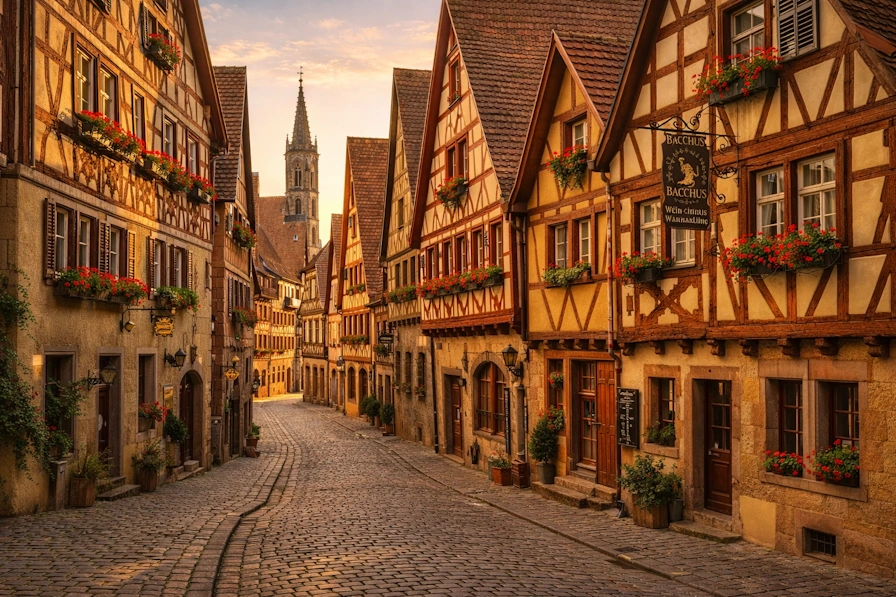
The castle-crowned city represents a quintessentially German urban form. Medieval rulers understood that defensible high ground meant survival in an age of constant warfare. They built Burgen (castles) on every promontory, cliff, and hilltop that could support fortifications, and settlements clustered beneath these stone guardians. Heidelberg Castle commands its hillside so dramatically that Romantic poets made it synonymous with ruined grandeur. Marburg's Landgrave Castle rises above the university town like a Gothic crown, while Rothenburg's intact walls and towers create a time capsule so perfect that films use it to represent idealized medieval Europe. These weren't just military installations—they were economic engines. Castle towns attracted craftsmen, merchants, and pilgrims, growing into cultural and commercial centers that outlived their defensive purposes.
Creating Authentic German-Style City Names for Worldbuilding
Whether you're writing fantasy novels, designing game worlds, or creating alternate histories, authentic-feeling German city names add depth and believability to your setting. Follow these principles used by actual German cities:
Geographic Descriptors + Suffix Pattern
Combine natural features (Wald=forest, Berg=mountain, Bach=stream, Feld=field) with urban suffixes (-burg, -stadt, -dorf, -heim). "Waldburg" (forest fortress) or "Silberstadt" (silver city) immediately convey setting and character. This formula works because real German cities evolved this way—people named places after what they saw and what they built there.
Historical or Founder References
Prefix personal names or historical elements before suffixes: "Friedrichsburg" (Friedrich's fortress) or "Kaiserstadt" (emperor's city) suggest specific historical moments. Medieval German rulers routinely stamped their names on new foundations— Friedrichshafen, Karlsruhe, and Ludwigshafen all follow this pattern. For fantasy worlds, this technique creates instant backstory.
Economic or Functional Identity
Reference the city's purpose: "Salzburg" (salt fortress) or "Goldental" (golden valley) hint at resources that drove settlement. Real German cities wear their economic history in their names—Eisenach (iron creek), Kupferstadt (copper city). This grounds fictional places in tangible, understandable motivations. See our German city name generator for more examples and instant inspiration.
Avoid Modern Sound Patterns
German city names accumulated over centuries, so avoid anything that sounds deliberately constructed or artificial. "Neustadt" (new city) works because many German cities literally called themselves this in the Middle Ages. "Technoville" doesn't work because it violates historical naming logic. Study real German toponyms to internalize what feels authentic versus what screams "made up by an English speaker."
Regional Characteristics: How Geography Shapes City Names
Germany's regional diversity manifests powerfully in urban nomenclature. The flat North German Plain produced Hanseatic ports with names emphasizing harbors and maritime connections— Bremerhaven (Bremen's harbor), Wilhelmshaven (Wilhelm's harbor). The Rhine Valley, Europe's historic superhighway, spawned cities defined by their relationship to the great river: Düsseldorf (village on the Düssel, a Rhine tributary), Koblenz (at the confluence), Bingen (controlling the river bend). Bavaria's Alpine character infuses southern city names with mountain references and Catholic spirituality— Berchtesgaden (mountain pasture), Garmisch-Partenkirchen (twin Alpine valleys). The Black Forest region speaks through dark woodland imagery, while the Ruhr Valley's cities bear the linguistic scars of rapid industrialization. Understanding these regional patterns lets you read Germany's geography through its urban names like a topographic map written in words.

The Rhine Valley: Europe's Liquid Highway
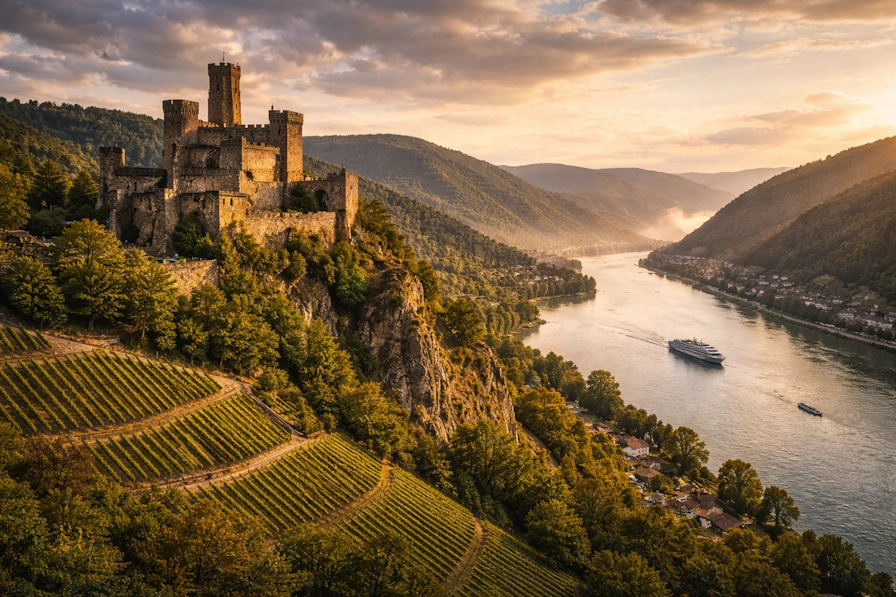
The Rhine River shaped European history like no other waterway. Roman legions followed it north to conquer Germania. Medieval merchants shipped wine, cloth, and grain along its currents. Robber barons built castles on every cliff to extract tolls from passing traffic. The UNESCO-listed Rhine Gorge between Bingen and Koblenz concentrates more castles per kilometer than anywhere on Earth—a medieval theme park of fortified extortion. Cities along its banks evolved specialized functions: Cologne dominated as the major trading hub, Mainz controlled the river's crucial bend, Bonn served as an ecclesiastical center, while smaller towns like Bacharach and Oberwesel thrived on wine production and toll collection. The river connected Switzerland's mountains to the North Sea, creating a 1,200-kilometer economic corridor that bound together Central Europe's fate.
Industrial Transformation: From Forge to Future
The Industrial Revolution hit Germany with particular intensity in the Ruhr Valley, transforming a pastoral landscape of farms and small towns into Europe's industrial heartland within two generations. Coal seams beneath the earth sparked an explosion of mining, followed by steel mills, chemical plants, and manufacturing complexes that forged the weapons and machinery of two world wars. Cities like Essen, Dortmund, and Bochum grew from populations of thousands to hundreds of thousands as workers flooded in from across Europe. The Krupp dynasty in Essen became synonymous with German industrial might—and military power. Today, these cities are reinventing themselves as cultural and technological centers, converting blast furnaces into concert halls and slag heaps into art installations. The industrial names persist, but their meanings evolve, proving that German cities continually rewrite their own narratives while honoring their pasts.

Modern Relevance and Cultural Continuity
Contemporary Germany maintains a fascinating relationship with its urban heritage. Cities fiercely preserve their medieval cores— Rothenburg ob der Tauber looks almost identical to engravings from 1500—while simultaneously embracing cutting-edge architecture and technology. This isn't simple nostalgia; it reflects a deep cultural conviction that the past and future should coexist rather than conflict. When Allied bombing reduced most German cities to rubble in World War II, the post-war debate centered on whether to rebuild historically or modernize completely. Most chose compromise: historic cores were reconstructed using surviving fragments and old photographs, while surrounding areas embraced modern planning. The result is a uniquely German urban landscape where medieval churches stand beside glass-and-steel office towers, and half-timbered houses share streets with contemporary designs—a physical manifestation of continuity through transformation.
Using German City Names in Creative Projects
German city names bring authenticity and depth to various creative endeavors:
- Fantasy Worldbuilding: The linguistic patterns of German cities provide templates for creating believable fantasy settlements. A dwarven mountain fortress called "Eisenberg" (iron mountain) or an elven forest city named "Silberwald" (silver forest) immediately feel authentic because they follow time-tested German toponymic logic. Game designers from the Witcher series to various D&D campaigns mine German city naming conventions for exactly this reason.
- Historical Fiction: Setting stories in real German cities requires understanding the layers of history embedded in their names. A novel set in 1930s Hamburg must acknowledge both its Hanseatic merchant heritage and its evolution into a major industrial port. The name itself carries connotations that readers familiar with German history will recognize and appreciate.
- Game Development: Strategy games, RPGs, and city-builders benefit enormously from authentic-sounding place names. Players accept "Münster" as a medieval trading city because the name follows recognizable patterns. Invented names that violate German linguistic rules jar players out of immersion. Using our German city name generator provides instant access to properly constructed names that enhance worldbuilding credibility.
- Alternate History: Speculative fiction exploring "what if" scenarios often needs to create new German cities or rename existing ones. Understanding the historical logic behind German place names—how they reflect political changes, territorial shifts, and cultural evolution—allows writers to craft names that feel historically plausible within their altered timelines.
Pronunciation Patterns and Linguistic Nuances
German city names challenge English speakers with unfamiliar sounds and letter combinations. The "ch" in "München" (Munich) requires a guttural rasp absent from English. The "ü" umlaut, as in "Würzburg," demands pursing your lips while saying "ee." Regional accents add another layer—Bavarians pronounce their cities differently than Prussians, and local dialects can make the same name sound drastically different. "Köln" remains stubbornly "Cologne" in English, an anglicization so old it dates to medieval trade relationships. These pronunciation variations aren't mere linguistic trivia; they reveal centuries of cultural exchange, regional identity, and the ways languages adapt foreign words to familiar sound patterns. Learning proper pronunciation shows respect for the cultural heritage these names embody.
Famous Historic German Cities
These legendary cities have shaped European history for over a millennium. Each name carries the weight of imperial politics, religious reformation, artistic achievement, or architectural innovation. Heidelberg's romantic castle ruins inspired Romantic poets across Europe, while Trier's Roman monuments predate most European cities by centuries. These aren't simply places on a map—they're living museums where every cobblestone and half-timbered house tells stories of merchants, monks, emperors, and artists who changed the world. Perfect for historical fiction set in medieval Germany, fantasy worlds inspired by Central European history, or game settings that need authentic-feeling major cities with rich backstories already built into their names.
- 1HeidelbergHome to Germany's oldest university (founded 1386) and the romantic ruins of Heidelberg Castle, perched majestically above the Neckar River
- 2Rothenburg ob der TauberA perfectly preserved medieval walled town that survived wars and time, featuring original ramparts, towers, and half-timbered houses from the 13th century
- 3LübeckThe "Queen of the Hanseatic League," this UNESCO World Heritage city dominated medieval Baltic trade with its distinctive red-brick Gothic architecture
- 4BambergBuilt on seven hills like Rome, this imperial city features over 2,400 listed buildings including a cathedral and medieval old town on an island
- 5RegensburgA 2,000-year-old city where the Holy Roman Empire held its perpetual Diet, featuring the oldest stone bridge in Germany (12th century)
- 6TrierGermany's oldest city, founded by the Romans in 16 BC, home to the Porta Nigra gate and more Roman ruins than anywhere north of the Alps
- 7QuedlinburgOver 2,000 half-timbered houses spanning eight centuries make this UNESCO site a living museum of medieval German architecture
- 8NürnbergThe unofficial capital of the Holy Roman Empire, where imperial treasures were stored in Kaiserburg Castle and the Imperial Diet convened
- 9WürzburgBaroque masterpiece featuring the Würzburg Residence, once home to prince-bishops and containing the world's largest ceiling fresco
- 10WeimarCultural heart of Germany where Goethe, Schiller, Bach, and Liszt lived and created, birthplace of the Weimar Republic and Bauhaus movement
- 11GoslarA thousand-year-old imperial city that grew wealthy from silver mining in the Harz Mountains, featuring the Kaiserpfalz palace
- 12Freiburg im BreisgauThe "Jewel of the Black Forest," founded by dukes of Zähringen in 1120, famous for its Gothic minster and medieval Bächle (water channels)
- 13AugsburgFounded by Emperor Augustus in 15 BC, this Free Imperial City became Europe's banking capital through the Fugger family in the Renaissance
- 14AachenCharlemagne's beloved capital where 30 German kings were crowned, featuring his palatine chapel now part of the cathedral
- 15StralsundHanseatic powerhouse on the Baltic Sea, its brick Gothic architecture rivals that of Lübeck and helped shape northern European city design
- 16ErfurtWhere Martin Luther studied at university and lived as a monk, this medieval trading hub features one of Europe's longest inhabited bridges
- 17SpeyerSite of the monumental Romanesque Imperial Cathedral where eight Holy Roman Emperors are buried in the royal crypt
- 18WormsOne of Germany's oldest cities where Martin Luther refused to recant his teachings at the Diet of Worms in 1521, changing Christianity forever
- 19MainzWhere Johannes Gutenberg invented the printing press around 1440, revolutionizing human communication and knowledge distribution
- 20WismarHanseatic port city whose Gothic brick churches and warehouses demonstrate the wealth and power of medieval Baltic trade networks
- 21PotsdamThe "Prussian Versailles," where Frederick the Great built Sanssouci Palace and created a royal landscape of palaces, parks, and Enlightenment ideals
- 22MeissenBirthplace of European porcelain (1710), where the Albrechtsburg castle overlooks the Elbe and Saxon kings guarded the secret of "white gold"
- 23Schwäbisch HallBuilt on salt springs that funded elaborate Renaissance architecture, its steep hillside Marktplatz hosts Germany's most dramatic festival stages
- 24SchwerinCapital of Mecklenburg featuring a fairy-tale island palace that served as ducal residence for centuries on Lake Schwerin
- 25LandshutHome to the world's tallest brick church tower (131m) and site of the legendary 1475 Landshut Wedding celebration
- 26PassauThe "City of Three Rivers" where the Danube, Inn, and Ilz converge, ruled by powerful prince-bishops from baroque palaces
- 27DinkelsbühlArguably Germany's most perfectly preserved medieval walled town, where the Thirty Years' War was averted by children's pleas
- 28CelleA ducal residence boasting over 500 half-timbered houses, including a Renaissance palace that housed the Hanoverian court
- 29KonstanzWhere the Council of Konstanz (1414-1418) ended the Western Schism, this Lake Constance city bridges Germany and Switzerland with Roman foundations
- 30UlmEinstein's birthplace featuring the world's tallest church spire (161.5m), a Free Imperial City whose medieval wealth built Gothic architectural marvels
Castle and Fortress Cities
German castles represent medieval military architecture at its most impressive—massive stone fortifications perched on crags, commanding river valleys and mountain passes. The cities that grew beneath these Burgen evolved symbiotically with their fortresses, providing craftsmen, merchants, and soldiers while the castle offered protection during warfare. Burghausen boasts the world's longest castle at over a kilometer, while Wartburg witnessed Martin Luther translating the New Testament into German, fundamentally altering Christianity. These names work brilliantly for fantasy RPG settings where fortified strongholds dominate the landscape, strategy games requiring defensible positions, or any worldbuilding that needs militarized urban centers with clear strategic importance.
- 1BurghausenHome to the world's longest castle complex at over 1,000 meters, stretching dramatically along a ridge above the Salzach River
- 2CoburgDominated by the massive Veste Coburg fortress, once called "Crown of Franconia" and where Martin Luther sought refuge
- 3MeersburgPerched on Lake Constance with Germany's oldest inhabited castle (7th century), offering stunning Alpine views across the water
- 4Kronberg im TaunusCrowned by a 13th-century castle that became a royal residence, this Taunus town exemplifies medieval fortified settlements
- 5MarburgRising steeply from the Lahn River to its hilltop Landgrave Castle, a Gothic masterpiece housing Germany's first Protestant university
- 6CochemThe Reichsburg Cochem towers dramatically over this Mosel wine town, a 19th-century reconstruction of the original destroyed by Louis XIV
- 7KönigsteinSite of an impregnable fortress on a sandstone plateau in Saxon Switzerland, never once conquered in its 800-year military history
- 8WartburgNamed after the UNESCO World Heritage castle where Luther translated the New Testament, a symbol of German cultural identity
- 9EltzNamed after Burg Eltz, a fairy-tale castle that has remained in the same family for 33 generations over 850 years
- 10StolbergA half-timbered jewel in the Harz foothills watched over by its Renaissance castle, once home to powerful mining princes
- 11KufsteinGuarded by a fortress on a rocky outcrop, this Bavarian border town controlled the strategic Inn valley trade route for centuries
- 12WertheimWhere the Tauber meets the Main, medieval Wertheim Castle ruins crown the promontory above this picturesque wine-trading town
- 13BurgTaking its name from the imposing castle on the Wupper River, this Solingen district preserves its fortress heritage in every stone
- 14FreudenbergThe fortress of joy, a half-timbered Old Town of identical black-and-white houses cascading down the hillside in perfect symmetry
- 15HardenburgNamed after the massive Renaissance fortress ruins, once the largest castle complex in the Palatinate before its 17th-century destruction
- 16HohnsteinA Saxon Switzerland fortress town perched on cliffs above the Polenz valley, commanding strategic views over medieval trade routes
- 17AltenaWhere the hilltop Burg Altena now houses the world's first youth hostel, established in 1912 within medieval castle walls
- 18BurgsteinfurtA moated water castle dominates this Münsterland town, surrounded by baroque gardens and protected by medieval fortifications
- 19HohenzollernNamed after the ancestral seat of Prussia's royal dynasty, a neo-Gothic castle reconstruction crowning an isolated mountain
- 20LichtensteinA romantic 19th-century castle built on medieval foundations, perched on a cliff edge above the Swabian Alps
- 21NeuschwansteinKing Ludwig II's theatrical dream made stone, a fantasy castle that became the template for fairy-tale architecture worldwide
- 22VeldenzOnce capital of an independent county, its ruins overlook the Mosel and bear witness to medieval territorial politics
- 23ViandenA Luxembourg border fortress town dominated by one of Europe's largest preserved medieval castles, commanding the Our valley
- 24SaarburgWhere a castle perches above a dramatic waterfall cascading through the town center, controlling the upper Saar valley
Hanseatic League Cities
The Hanseatic League created medieval Europe's most successful commercial network without a single standing army. These merchant republics built their power on trade routes, legal agreements, and the brick Gothic architecture that still defines northern German cities. Hamburg and Bremen remain officially "Free Hanseatic Cities" today, proud of independence earned through commerce rather than conquest. Lübeck's Holstentor gate symbolizes the League's wealth and power, while Greifswald's university demonstrates how merchant profits funded education and culture. These names suit trading-focused game campaigns, merchant guild storylines, or any setting where economic power trumps military might. Their historical association with maritime trade, guild politics, and urban independence makes them perfect for sophisticated political intrigue set in merchant republics.
- 1HamburgThe "Gateway to the World," northern Germany's greatest port city and second-largest Hanseatic power after Lübeck
- 2BremenA proud Free Hanseatic City for over 1,200 years, whose Town Musicians statue symbolizes civic independence and medieval trade wealth
- 3RostockThe largest city in Mecklenburg and a leading Hanseatic port, where merchants built Gothic brick churches to display their prosperity
- 4GreifswaldHome to one of Northern Europe's oldest universities, this Baltic Hanseatic town traded herring and salt across medieval seas
- 5LüneburgSalt made this Hanseatic city wealthy beyond measure, its "white gold" mines financing the magnificent brick Gothic architecture
- 6StadeA millennium-old Hanseatic port where merchants' houses and warehouses line canals that once connected to vital North Sea trade routes
- 7BuxtehudeA lesser Hanseatic town whose strategic location on the Este River made it a crucial link in the League's inland trade network
- 8LemgoThe "Pearl of the Weser Renaissance," this Hanseatic town built such ornate merchants' houses that it rivaled coastal ports in grandeur
- 9SoestOne of the wealthiest Hanseatic cities in Westphalia, where brewing and textiles created fortunes that built Romanesque churches
- 10HerfordA Hanseatic town that grew around a powerful women's abbey, blending ecclesiastical authority with merchant guild power
- 11DortmundA major Hanseatic trading center before becoming an industrial powerhouse, where medieval merchants laid foundations for future coal and steel wealth
- 12MünsterThe "Peace of Westphalia" city where Hanseatic merchants and prince-bishops shared power in an uneasy medieval balance
- 13GöttingenA Hanseatic member famous for its university and the merchants who funded academic excellence with their trade profits
- 14BraunschweigHenry the Lion's capital and Hanseatic powerhouse, where ducal authority and merchant wealth created a unique urban culture
- 15HildesheimA prince-bishop's seat that balanced religious authority with Hanseatic membership, famous for its UNESCO-listed Romanesque churches
- 16OsnabrückWhere the Peace of Westphalia was negotiated in 1648, this Hanseatic bishop's seat helped end the Thirty Years' War
- 17PaderbornFounded by Charlemagne at the Pader springs, this Hanseatic city balanced ecclesiastical power with merchant league membership
- 18HamelnThe Pied Piper town whose Hanseatic wealth built the Weser Renaissance facades that line its historic market square
- 19MindenA Hanseatic fortress guarding the Weser River gap through the mountains, where bishop and merchants competed for control
- 20RevalThe German name for Tallinn, northernmost Hanseatic city whose merchants dominated Baltic trade with Russia and Scandinavia
- 21RigaFounded by German merchants in 1201, this Hanseatic powerhouse controlled Daugava River trade and Baltic amber routes
- 22LübeckThe "Queen of the Hanse" and League headquarters, whose Holstentor gate became the symbol of Hanseatic commercial power
- 23DanzigGerman name for Gdańsk, the amber trade capital where Hanseatic merchants controlled Baltic grain exports to Western Europe
Rhine Valley Cities
The Rhine River functions as Germany's historical spine, connecting the Alps to the North Sea through a corridor of strategic cities. Every bend in the river hosted a toll station, every cliff sprouted a robber baron's castle, and every valley grew wine on sun-drenched slopes. Köln's Gothic cathedral dominates the riverscape for miles, while smaller gems like Bacharach and Rüdesheim preserve half- timbered perfection that Hollywood films use to represent idealized medieval Germany. The Rhine Gorge between Bingen and Koblenz packs more castles per kilometer than anywhere on Earth. These names work superbly for settings involving river trade, wine culture, castle intrigue, or journey narratives where characters travel along a major waterway encountering different cities with distinct personalities but shared river heritage.
- 1KölnColonia Agrippina, founded by Romans in 50 AD, crowned by its Gothic cathedral whose twin spires dominate the Rhine for miles
- 2BonnBeethoven's birthplace and West Germany's provisional capital for 40 years, a Roman settlement that became a prince-elector's residence
- 3KoblenzWhere the Rhine meets the Mosel at the German Corner, 2,000 years of strategic importance from Roman fortress to Prussian stronghold
- 4BingenGateway to the Romantic Rhine gorge, where Hildegard von Bingen, medieval mystic and composer, founded her revolutionary abbey
- 5BacharachA wine-trading jewel in the UNESCO Rhine Valley, where medieval walls encircle half-timbered houses and ruined Werner Chapel
- 6Sankt GoarNamed after the 6th-century hermit who aided Rhine travelers, now watched over by the imposing ruins of Rheinfels Castle
- 7RüdesheimThe Rheingau's wine capital, where steep Riesling vineyards cascade to the river and the Drosselgasse lane celebrates vintner traditions
- 8AndernachOne of Germany's oldest cities, where Romans built walls that medieval burghers strengthened and a 56-meter crane once loaded wine barrels
- 9Linz am RheinThe "Colorful City on the Rhine," its pastel-painted half-timbered houses creating a picturesque ensemble above the river
- 10KaubHome to Pfalzgrafenstein Castle, the ship-shaped toll station in the Rhine that collected tariffs from passing merchants for 500 years
- 11OberweselThe "City of Towers," where 16 of the original 21 medieval defense towers still guard the Rhine's banks and wine cellars
- 12BoppardRoman Bodobrica, where 4th-century fortress walls now protect medieval churches and Baroque merchant houses along Rhine promenades
- 13EltvilleThe "Wine City" and Rheingau's oldest settlement, where the archbishop of Mainz built his summer palace among premium vineyards
- 14NeuwiedA planned baroque town that welcomed religious refugees, creating a unique mix of Lutheran, Reformed, Catholic, and Moravian communities
- 15RemagenWhere Allied forces crossed the Rhine in 1945 at Ludendorff Bridge, changing the course of World War II in a single day
- 16BraubachGuarded by Marksburg Castle, the only Rhine fortress never destroyed, this medieval toll town controlled river traffic for centuries
- 17WiesbadenThe Roman Aquae Mattiacorum, where 26 thermal springs made it a spa destination for emperors, kaisers, and modern wellness seekers
- 18LahnsteinWhere the Lahn joins the Rhine, watched over by twin castles guarding one of the valley's most strategic confluences
- 19KönigswinterAt the foot of the Siebengebirge, where the Drachenfels castle ruins crown the most-climbed peak in Germany
- 20Bad HonnefKonrad Adenauer's home above the Rhine, where the first West German chancellor plotted post-war reconstruction
- 21IngelheimSite of Charlemagne's imperial palace on the Rhine, where medieval emperors held court among vineyards
- 22DüsseldorfFrom "village on the Düssel" to North Rhine-Westphalia's capital, where art, fashion, and banking transformed a Rhine tributary settlement
- 23MannheimThe baroque "city of squares" built on a grid pattern where the Rhine meets the Neckar, featuring a massive electoral palace
Bavarian Alpine Cities
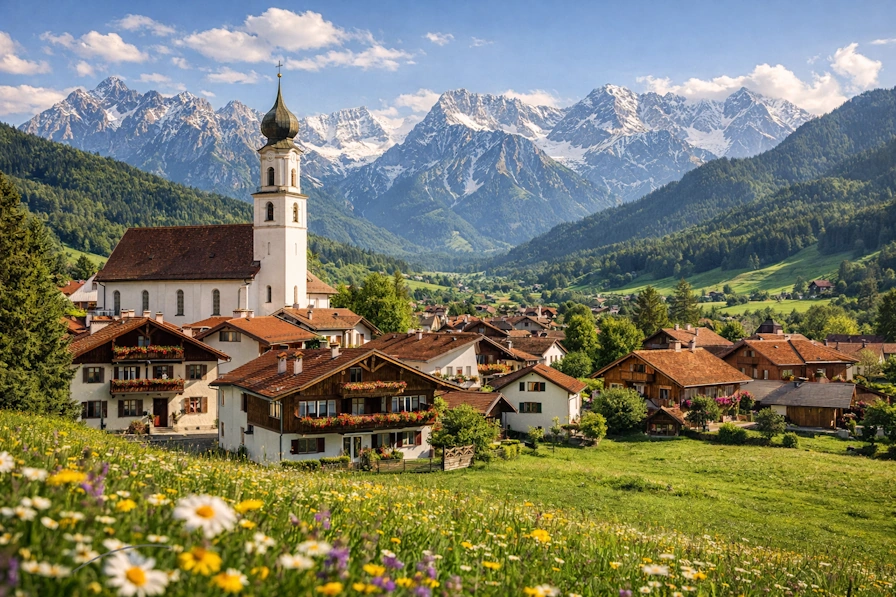
Bavaria's Alpine cities combine mountain grandeur with Catholic baroque exuberance and Gemütlichkeit (cozy contentment). München (Munich) leads as Bavaria's capital and Oktoberfest host, while smaller towns like Oberammergau stage passion plays and Mittenwald continues violin-making traditions spanning centuries. These settlements emerged where mountain passes met river valleys, controlling trade routes to Italy and collecting tolls from merchants crossing the Alps. Salt mining brought medieval wealth, while modern tourism capitalizes on stunning scenery and preserved traditions. Perfect for Alpine fantasy settings, winter sports narratives, stories involving mountain passes and trade routes, or any worldbuilding that needs cities where dramatic geography shapes culture and economy. The combination of Catholic spirituality, folk traditions, and mountain resilience creates a distinct cultural flavor that enriches fictional worlds.
- 1MünchenCapital of Bavaria and beer, where Henry the Lion founded a marketplace that grew into a royal residence and Oktoberfest home
- 2Garmisch-PartenkirchenGermany's winter sports capital beneath the Zugspitze, where two villages merged for the 1936 Winter Olympics and never looked back
- 3BerchtesgadenAlpine paradise bordering Austria, where salt mines brought medieval wealth and mountain beauty attracted Bavarian royalty for summers
- 4FüssenThe gateway to Neuschwanstein Castle and the southern terminus of the Romantic Road, a violin-making town in the Allgäu Alps
- 5OberammergauWorld-famous for its Passion Play performed every decade since 1634, where entire facades are painted with religious and folk scenes
- 6MittenwaldThe "living picture book" of the Alps, where lüftlmalerei frescoes adorn houses and violin-making traditions span four centuries
- 7Bad TölzA spa town on the Isar River where healing iodine springs and Baroque architecture draw visitors to the Bavarian uplands
- 8RosenheimAlpine gateway where salt trading routes crossed, creating wealth that built the arcaded Max-Josefs-Platz market square
- 9TraunsteinAncient salt and cattle trading center in the Chiemgau region, where medieval privileges created a self-confident market town culture
- 10KaufbeurenA thousand-year-old Free Imperial City that preserves five medieval gates and walls encircling its historic Altstadt core
- 11Landsberg am LechWhere the Romantic Road crosses the Lech River, a fortified medieval town that grew wealthy levying tolls on Alpine trade
- 12WeilheimGateway to the Bavarian Alpine foothills, where pilgrimage routes converge and baroque church spires pierce mountain-view horizons
- 13MurnauStaffelsee lakeside town where the Blue Rider artists found inspiration in Alpine light and traditional Bavarian folk art
- 14SchongauA completely walled medieval town on the Lech River, where merchants grew prosperous on the salt road to Augsburg
- 15Prien am ChiemseeGateway to Bavaria's largest lake and King Ludwig II's Herrenchiemsee Palace, a 19th-century tribute to Versailles on an island
- 16StarnbergLakeside retreat where King Ludwig II drowned mysteriously in 1886, forever linking this elegant resort to Bavarian royal tragedy
- 17KemptenCambodunum to the Romans, Bavaria's oldest town where Celtic, Roman, and medieval layers reveal 2,000 years of Alpine history
- 18RuhpoldingA Chiemgau village surrounded by dramatic peaks, where winter sports traditions and baroque pilgrimage churches coexist
- 19Bad ReichenhallSalt made this Alpine spa wealthy, its Alte Saline combining industrial heritage with healing brine traditions
- 20TegernseeA former Benedictine monastery on pristine Alpine waters, transformed into a royal Bavarian retreat and brewery
- 21LinderhofNamed for Ludwig II's smallest but most intimate palace, hidden in a remote valley with French baroque gardens
- 22EttalDominated by its domed Benedictine abbey church, a baroque masterpiece where monks still craft herbal liqueurs
- 23Gmund am TegernseeThe lakeside settlement where Bavaria's traditional Tracht clothing and beer culture meet Alpine wellness tourism
- 24Bad WiesseeA Tegernsee spa town where healing sulfur springs attracted Bavarian nobility seeking Alpine cures for centuries
Modern Imaginary German City Names
These invented names follow authentic German linguistic patterns, combining geographic descriptors with traditional suffixes to create believable place names for fictional settings. "Silberbrunn" (silver spring) sounds like it could be a real mining town in the Harz Mountains, while "Adlerstein" (eagle stone) evokes a dramatic cliff- top fortress. Each name was crafted using the same logic that produced real German city names over centuries—reference the landscape, note the resources, describe the fortifications. These work perfectly for fantasy worldbuilding where you need Germanic-flavored place names that feel authentic but aren't actual historical cities. Game designers, fantasy novelists, and alternate history writers will find these names ideal for creating depth and believability without appropriating real locations. They follow German toponymic rules so closely that German speakers will recognize them as constructed but plausible, while English speakers get evocative, fantasy-appropriate city names with built-in meanings.
- 1EichenhausenHouse of oaks, suggesting a town that grew from ancient Germanic forest settlements, protected by sacred oak groves
- 2SilberbrunnSilver spring, evoking a mountain village where precious metal deposits were discovered in crystal-clear waters
- 3AdlersteinEagle stone, conjuring images of a fortress town perched on rocky heights where eagles nest and medieval castles command valleys
- 4RosenfeldRose field, a pastoral name suggesting cultivated lands where monasteries might have grown medicinal herbs and flowers
- 5BlaubergBlue mountain, painting pictures of distant peaks wreathed in atmospheric haze, visible from a valley trading town
- 6WaldkirchenForest churches, implying a village that emerged around woodland chapels, where pilgrims found shelter among the trees
- 7SternenhofStar court, a poetic name suggesting an astronomical observatory or scholar's retreat in the Renaissance tradition
- 8DonnerfelsThunder cliff, dramatic imagery of storm-swept highlands where lightning strikes ancient rock formations
- 9GoldentalGolden valley, evoking prosperous farmlands where autumn wheat fields shimmer in late afternoon light
- 10HimmelspforteHeaven's gate, a name befitting a mountain pass town or pilgrimage destination with spiritual significance
- 11KristallseeCrystal lake, suggesting pristine Alpine waters so clear they reveal the depths, a spa town's natural attraction
- 12NachtigallNightingale, a lyrical name that might describe a town famous for music, festivals, or the poetry of its residents
- 13SturmbruckStorm bridge, marking a strategic river crossing where weather and history collided in dramatic fashion
- 14TannenwaldFir forest, Black Forest imagery of dark evergreen woods concealing small settlements and ancient traditions
- 15SonnenhügelSun hill, a bright name for a south-facing slope where vineyards might flourish in exceptional warmth and light
- 16FalkenhorstFalcon's nest, suggesting a hunting lodge settlement of nobility, perched high with commanding territorial views
- 17MorgentauMorning dew, a gentle name evoking misty valley meadows and the peaceful awakening of a rural community
- 18GrünhainGreen grove, calling to mind protected forest clearings where Cistercian monks might have established self-sufficient abbeys
- 19EisentorIron gate, industrial heritage imagery of mining towns and metalworking centers that guarded mountain passes
- 20SternenruhStar's rest, a romantic name for a mountain village where clear night skies and peace draw astronomers and poets
- 21KupferhammerCopper hammer, evoking the clang of medieval forges in mining districts where master smiths worked precious metals
- 22LichtenauLight meadow, suggesting a clearing in dark forests, perhaps where religious communities brought enlightenment
- 23WolfsbachWolf stream, frontier imagery of wild lands being settled, where nature's dangers were gradually tamed
- 24BirkenhainBirch grove, Northern European imagery of pale-barked forests and the resilient settlements they shelter
- 25SturmhafenStorm harbor, a coastal or lake port that offers shelter from tempests, built with massive sea walls and breakwaters
- 26RubinsteinRuby stone, suggesting either gemstone mining heritage or red sandstone cliffs that define the landscape
- 27LindenplatzLinden square, the town centered on Germany's most symbolic tree, under which justice was dispensed and festivals held
- 28NebelheimFog home, mysterious lowland settlement where morning mists roll in from marshes and rivers, concealing the town
- 29BronzefeldBronze field, suggesting either ancient battlegrounds or the open lands where metalworkers established their foundries
- 30RegenbogenRainbow, a hopeful name perhaps for a town rebuilt after war, or where meteorological conditions create frequent rainbows
- 31DrachenfelsDragon's cliff, legendary site where Siegfried slew the dragon, now a romantic ruin with sweeping Rhine valley panoramas
- 32MondscheinMoonlight, a dreamy name for a hilltop village where silver light transforms landscapes into ethereal nocturnal realms
- 33SturmbergStorm mountain, where wild weather patterns collide with peaks, creating dramatic meteorological displays year-round
- 34HirschwaldDeer forest, conjuring images of ancient hunting grounds where nobility pursued game through endless woodland
- 35SilberseeSilver lake, suggesting mirror-calm waters reflecting mountain peaks in pristine Alpine clarity
- 36FelsenburgRock fortress, a stronghold carved from living stone, defying attackers from naturally fortified positions
- 37GrünwaldGreen forest, indicating sustainable woodland management and communities living in harmony with nature
- 38BergfriedMountain peace, a secluded valley retreat where tranquility reigns among protective peaks
- 39GoldbachGold stream, where prospectors panned for precious metal in mountain brooks during medieval gold rushes
- 40SternentorStar gate, a mountain pass where the night sky seems close enough to touch, opening pathways to infinity
- 41SilberhornSilver peak, a distinctive mountain summit whose snows catch dawn light in metallic brilliance
- 42FeuersteinFirestone, suggesting flint deposits crucial for prehistoric settlement or volcanic geological features
- 43HimmelreichHeavenly realm, an aspirational name for a high-altitude village where earthly concerns seem distant
- 44TannenbergFir mountain, densely forested slopes concealing villages and the timber that built regional prosperity
- 45KristallbergCrystal mountain, suggesting either quartz mining heritage or ice-covered Alpine peaks that sparkle in winter sunlight
- 46RabenwaldRaven forest, dark woodland imagery where corvids gather and folk tales warn of witches and wild magic
Industrial Heritage Cities
The Ruhr Valley transformed from agricultural backwater to Europe's industrial powerhouse within two generations, creating cities synonymous with coal, steel, and working-class culture. Essen's Krupp steelworks armed empires, Dortmund's breweries and mines built fortunes, while Bochum's thousand mining shafts honeycombed the earth beneath. These cities survived devastating Allied bombing in World War II, rebuilt through the post-war miracle, then faced deindustrialization as mines closed and factories moved abroad. Today they're reinventing themselves as cultural and technology centers, converting industrial architecture into museums, concert halls, and art spaces. These names suit steampunk settings, industrial-era historical fiction, stories about economic transformation and working-class resilience, or any worldbuilding that needs gritty, no-nonsense urban centers with recent industrial heritage. The transformation from forge to future makes them perfect for narratives about change, adaptation, and communities redefining their purpose.
- 1EssenSteel and coal empire of the Krupp dynasty, where blast furnaces once illuminated night skies and forged the weapons of empires
- 2DortmundFrom Hanseatic trading port to coal and steel powerhouse, now reinventing itself as a technology and cultural center
- 3BochumThe heart of the Ruhr mining region, where the German Mining Museum preserves the memory of centuries underground
- 4DuisburgEurope's largest inland port, where the Rhine meets an industrial landscape transformed into cultural spaces
- 5GelsenkirchenOnce a thousand mining shafts dotted this landscape, creating a working-class culture fiercely proud of its football team
- 6OberhausenWhere the massive Gasometer, an industrial cathedral of steel, now hosts art installations in its cylindrical space
- 7WuppertalThe suspended monorail gliding above the Wupper River symbolizes this valley's innovative textile manufacturing heritage
- 8SolingenThe "City of Blades," where master craftsmen have forged the world's finest cutting instruments since medieval times
- 9RemscheidTool-making excellence defined this Bergisches Land city, where precision engineering traditions endure in modern manufacturing
- 10VölklingenIts UNESCO-listed ironworks stand as a cathedral to industrial might, preserved exactly as workers left them in 1986
- 11SaarbrückenFrench and German influences merge in this coal and steel city on the Saar, now focused on IT and nanotechnology
- 12ChemnitzKarl-Marx-Stadt under communism, this Saxon industrial center was the "Manchester of Germany" for textile manufacturing
- 13ZwickauWhere Audi was born as Horch automobiles and generations of Trabants rolled off socialist assembly lines
- 14WolfsburgLiterally built for Volkswagen, this planned Nazi-era city became synonymous with the people's car and German industry
- 15SchweinfurtBall bearing capital of the world, so crucial to the Nazi war machine that it endured devastating Allied bombing raids
- 16LeverkusenBuilt entirely around the Bayer chemical works, this corporate city exemplifies German pharmaceutical and chemical industry dominance
- 17LudwigshafenBASF's home on the Rhine, where the world's largest chemical complex transforms raw materials into thousands of products
- 18RüsselsheimOpel's birthplace and home, where automobile assembly lines have defined community identity for over a century
- 19IngolstadtWhere Audi builds luxury cars within medieval walls, merging precision engineering with centuries of Bavarian tradition
- 20SindelfingenMercedes-Benz manufacturing hub, where automotive excellence and Swabian engineering perfectionism intersect
- 21SalzgitterBuilt from scratch by the Nazis for steel production, its blast furnaces still shape iron ore into modern products
- 22BottropRuhr mining city where collieries once employed tens of thousands, now transforming former industrial sites into cultural venues
- 23HalleChemical industry center in East Germany where communist-era factories met medieval salt-trading heritage
- 24EisenhüttenstadtStalin's socialist model city, built to house steelworkers in East Germany's first planned industrial community
- 25Mülheim an der RuhrWhere leather tanning gave way to coal and steel, this Ruhr city now transforms industrial heritage into cultural innovation
- 26KrefeldThe "Velvet and Silk City" where textile manufacturing created baroque merchant palaces and working-class solidarity
Create Your Own German City Name
Ready to explore the full world of German city naming? Our German city name generator creates authentic names following the same linguistic patterns used by real German cities over two millennia. Whether you're building a fantasy world, writing historical fiction, or designing a game campaign, you'll find the perfect names that capture Germany's rich urban heritage. Looking for more naming inspiration? Check out our school names guide or explore indigenous naming traditions from cultures around the world.