Loading...
Loading...
CurrentImaginary
Explore 2 styles for this generator. Switching styles refreshes the results automatically.
Use the copy icon to send any result to your clipboard.
Download fresh minerals batches for drafts, campaigns, and prototypes.
4 results ready in Imaginary style.
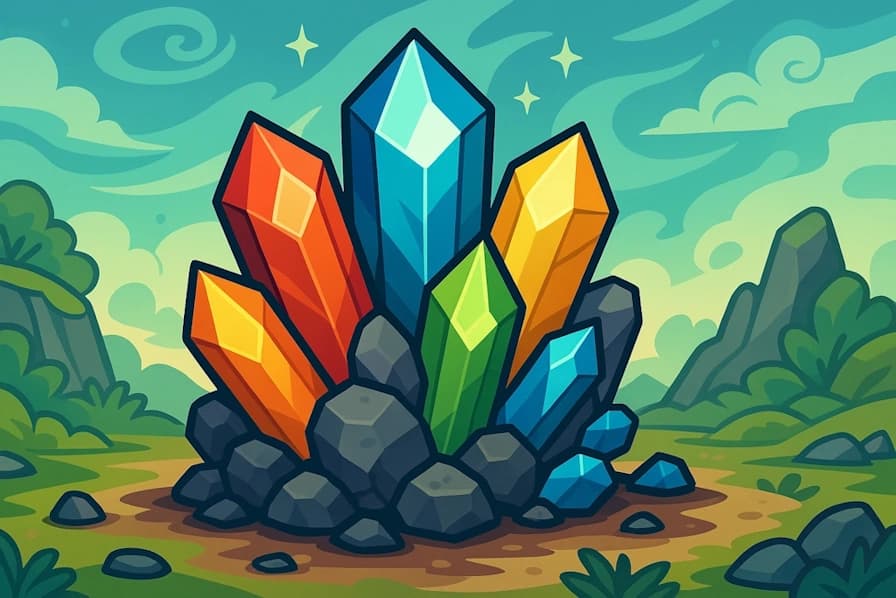
Generate names for precious stones, gems, and crystalline formations found in the earth.
Minerals are naturally occurring substances formed through geological processes, possessing a defined chemical composition and crystalline structure. These fundamental components of our planet's makeup play a vital role in various industries and have significant scientific importance. From the gems that adorn our jewelry to the ores that drive industrial advancements, minerals are integral to both our natural and economic systems. This overview looks at the origins, classifications, and significance of minerals.
The term "mineral" comes from the medieval Latin "minerale," meaning "something mined." This reflects the historical importance of minerals in mining and metallurgy. In scientific terms, a mineral is defined by specific criteria: it must be a naturally occurring, inorganic solid with a definite chemical structure and physical properties. Minerals are the building blocks for rocks and the Earth's crust, forming the basis for much of our planet's geology.
Minerals are categorized based on their chemical composition and crystal structure. The major classes of minerals include:
These classifications help geologists understand mineral formation, properties, and applications.
Minerals have vast industrial applications, from construction to technology. Common uses include:
The demand and exploitation of these resources have far-reaching economic and environmental impacts.
Minerals form through a variety of geological processes, including crystallization from magma, precipitation from solutions, and alterations under high pressure and temperature. They are found in different geological settings, such as:
Understanding these processes helps geologists locate mineral deposits and predict their characteristics.
Beyond their industrial uses, minerals have cultural and aesthetic significance. Precious and semi-precious gemstones, like diamonds, rubies, and emeralds, are prized for their beauty and rarity. These gems have been used in jewelry and as symbols of status and power throughout history, each with unique lore and symbolism. The study of gemstones, or gemology, is an important field within mineralogy, focusing on the properties and origins of these stunning natural wonders.
As global demand for minerals continues to rise, sustainability becomes a critical issue. The mining industry faces challenges in reducing environmental impact and managing finite resources. Innovations in recycling, sustainable mining practices, and the exploration of undersea and extraterrestrial minerals are advancing the dialogue on responsible resource utilization. Some proposals also look at undersea deposits, lunar minerals, and asteroid mining as future sources.
Overall, minerals are essential to Earth's physical structure and human civilization's development. Their properties connect geology with industry, craft, science, and technology.