Loading...
Loading...
CurrentReptilian
Explore 8 styles for this generator. Switching styles refreshes the results automatically.
Use the copy icon to send any result to your clipboard.
Download fresh alien race names batches for drafts, campaigns, and prototypes.
4 results ready in Reptilian style.
Generate unique alien race names for sci-fi stories, games, and worldbuilding projects. From humanoid civilizations to energy beings.
Browse 140 alien race names for sci-fi worldbuilding, including warrior civilizations, energy beings, and species ideas for stories and games.
Browse spaceship names for starships, freighters, explorers, warships, alien vessels, and sci-fi campaigns, with sleek, epic, and story-ready ideas and fleets.
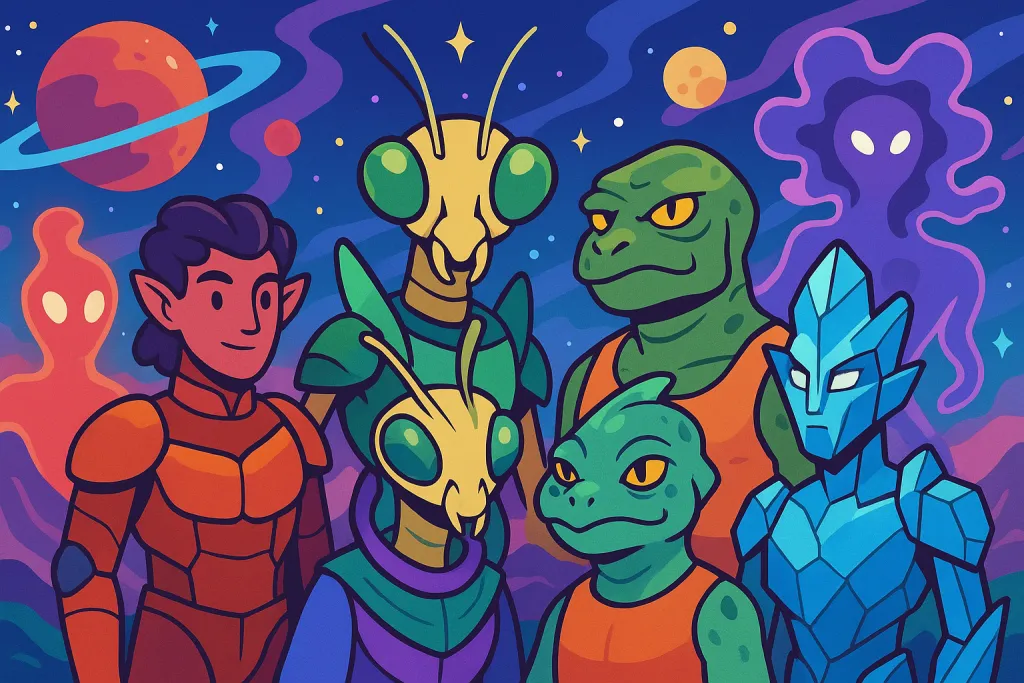
Science fiction has explored countless alien physiology types, each offering unique opportunities for storytelling and worldbuilding. Our generator organizes alien races into seven distinct physiological categories, each with authentic naming conventions that reflect their biological nature and cultural development.
Humanoid aliens represent the most common archetype in science fiction, from the logical Vulcans to the warrior Klingons. These races share basic bipedal anatomy with humans but often possess unusual abilities, different lifespans, or unique cultural perspectives. Their names typically follow flowing patterns with recognizable syllable structures, making them accessible to human audiences while maintaining alien distinctiveness.
Reptilian races draw inspiration from Earth's ancient predators, often portrayed as ancient, cunning civilizations with advanced technology. Their naming conventions incorporate sibilant sounds and harsh consonants, reflecting their serpentine or lizard-like origins. These races frequently appear as either wise ancient beings or formidable military powers in science fiction narratives.
Insectoid aliens represent collective consciousness and hive-mind societies, inspired by Earth's social insects. Their names feature clicking consonants and chittering sounds that mirror insect communication. These races often explore themes of individual versus collective identity, advanced biotechnology, and efficient resource management through their organizational structures.
Energy beings transcend physical form, existing as pure consciousness or electromagnetic phenomena. Their names flow with ethereal, musical qualities that suggest their non-corporeal nature. These entities often serve as advanced guides, cosmic forces, or beings who have evolved beyond physical limitations, representing the ultimate potential of consciousness.
Aquatic aliens evolved in oceanic environments, often possessing advanced underwater civilizations. Their names incorporate fluid sounds and rolling syllables that echo underwater acoustics. These races bring unique perspectives on technology, architecture, and social organization adapted to three-dimensional aquatic environments.
Crystalline beings represent silicon-based life forms with mineral-like physiology. Their names feature sharp consonants and geometric sound patterns reflecting their crystalline structure. These races often possess unique relationships with technology, resonance-based communication, and architectural styles that merge seamlessly with their geological nature.
Gaseous aliens exist as atmospheric phenomena, dwelling in gas giant atmospheres or existing as sentient weather patterns. Their names flow with airy, wind-like qualities that suggest their gaseous nature. These beings often possess unique abilities related to atmospheric manipulation and environmental control.
The art of alien naming has evolved from simple modification of human names to sophisticated linguistic systems that reflect alien biology and culture. Early science fiction often used variations of human names, while modern works develop complete linguistic frameworks that consider alien physiology, culture, and environmental factors.
Effective alien names consider multiple factors:
Real astrobiology suggests that alien life could take radically different forms based on their planet's conditions. Silicon-based life, methane-breathing organisms, and plasma-based consciousness represent scientifically plausible alternatives to carbon-based Earth life. Each possibility opens unique avenues for creative naming and cultural development.
Our alien race name generator combines scientific plausibility with creative naming conventions, helping writers and game designers create believable extraterrestrial civilizations that feel both alien and memorable. Each generated name reflects the unique biological and cultural characteristics of its physiological category.
For deeper species-building prompts, the alien race names guide expands on how biology, culture, and sound can work together.