
Loading...
Loading...

A collection of 350+ centaur names drawn from Greek mythology, ancient traditions, and fantasy literature, including warriors like Chiron, nature spirits, and modern fantasy versions.
Centaurs sit in a strange place in Greek mythology: creatures born from chaos yet capable of great wisdom. Picture Chiron, the greatest teacher of heroes, whose students included Achilles, Asclepius, and Heracles. Much like the great dragons of mythology, centaurs embody the tension between raw power and ancient knowledge. His cave on Mount Pelion became antiquity's most famous academy, where future legends learned medicine, music, archery, and warfare. Yet most centaurs embodied the opposite extreme: wild, wine-drunk warriors who wielded trees as clubs and were civilization's savage shadow. That split between brutality and wisdom is what gives centaur mythology its bite.
Use the matching Centaur Names without leaving the article. Pick a style, generate fresh names, and copy the good ones.
Style
Choose a style before generating.
6 names ready to copy.
Starter names from the generator
The very name "centaur" carries linguistic mystery. Ancient Greeks called them Κένταυροι (Kentauroi), possibly from κεντέω (kenteo, "to pierce") and αύρα (aura, "breeze"), suggesting creatures who strike like piercing wind. Some scholars trace connections to Sanskrit gandharva, celestial musicians with similar dual natures. Others point to kentauros as "bull-killers," describing their fierce hunting abilities. Whatever the etymology, centaurs carried a primal conflict: reason against instinct, culture against wilderness, all within one body.
Centaurs emerged from Thessaly's mountainous wilderness, where reality and myth blurred among pine forests and rocky peaks. The earliest stories describe them as children of Ixion and Nephele, born from a king's lust and a cloud shaped by Zeus to resemble Hera. This bizarre origin story explains their conflicted nature: part divine punishment, part natural force, never quite belonging to either human or animal worlds.

Ancient descriptions make centaurs both impressive and dangerous. From the waist up, they had human torsos: muscled, expressive, and capable of using weapons and tools. Below, strong horse bodies provided strength and speed that surpassed any human cavalry. Vase paintings show varied features: some with fully human upper bodies, others with equine ears or wild manes that continued down their backs. They lived perhaps 60-80 years, aging like horses rather than humans, which partly explains their wild-youth behavior.
Centaur society operated through strength and reputation rather than formal hierarchies. Herds gathered around strong leaders, not always the eldest or wisest, but those who commanded respect through deeds. Females remained relatively rare in myths, with notable exceptions like Hylonome suggesting they matched males in physical capability while perhaps tempering their violent impulses.
Greek centaur names followed patterns that revealed character and destiny. These naming conventions share similarities with other fantasy races. Our guide to fantasy names by race explores how different mythological creatures develop distinct linguistic traditions. Chiron (Χείρων) derived from cheir ("hand"), emphasizing his skilled craftsmanship and healing touch. Pholos (Φόλος) connected to pholis ("scale"), suggesting earth-nature harmony. Nessus (Νέσσος) possibly stemmed from neo ("to swim"), fitting his ferryman role. Names weren't random. They pointed to something important about the bearer's nature or fate.
Crafting believable centaur names starts with Greek linguistic patterns and thematic elements that define these creatures. Whether for D&D campaigns, fantasy novels, or creative projects, names that follow these patterns feel more at home in centaur lore.
For characters who interact with centaurs, explore our elven names guide, a useful fit for woodland allies. If you're building Greek-inspired campaigns, our wizard names collection includes classical scholars. For other mythical creatures, check the griffin generator and minotaur generator.
Modern fantasy transformed centaurs from Greek exclusivity into universal archetypes. C.S. Lewis's Chronicles of Narnia gave us noble warrior centaurs defending righteous causes. Rick Riordan's Percy Jackson series brought Chiron into contemporary settings as a wheelchair-bound Latin teacher, a brilliant disguise that honored his teaching role while adapting to modern sensibilities. J.K. Rowling's Harry Potter centaurs reclaimed wildness, rejecting wizard authority and reading futures in stars and planetary movements. For more on how elves and other fantasy races coexist with centaurs in these worlds, explore our best elven names collection.
Dungeons & Dragons gave centaurs clear game mechanics: horse-like movement speed with human-like versatility. They became playable races in D&D 5E through the Mythic Odysseys of Theros supplement, allowing players to explore the dual nature firsthand. Video games from World of Warcraft to Hades featured centaur clans, each with distinct cultures ranging from peaceful scholars to violent marauders. This diversity reflects mythology's original spectrum: centaurs as blank canvases for exploring civilization versus savagery.
Selecting the right centaur name establishes instant character identity. Names signal background, personality, and role within your story or campaign. Consider these approaches when choosing or creating names for your centaur characters.
For combat-focused characters, choose names emphasizing strength, weaponry, or battlefield prowess. Greek warrior names like Theron (hunter) or compound names like Ironhoof/Stormhoof work well. These centaurs can be protectors, soldiers, or champions, so their names should sound formidable and memorable. Consider adding descriptors related to their primary weapon or fighting style: Spearmaster, Strongbow, Shieldbearer.
Intellectual centaurs following Chiron's tradition need names suggesting wisdom and learning. Classical philosopher names (Solon, Pythagoras) or wisdom-based compounds (Wiseheart, Truthseeker) establish scholarly credentials immediately. These characters serve as teachers, healers, advisors, or mystics, so their names should suggest respect and trust. Include references to specific knowledge domains: Starreader for astronomers, Herbmaster for healers.
Centaurs tied to wilderness embody primal forces, so their names should reflect specific environments or natural phenomena. Forest dwellers might be Oakhorn or Fernstep, mountain centaurs could be Cliffjumper or Mountaincrest. These characters serve as rangers, guides, or wild protectors. Match names to their territory: desert centaurs need different naming than marsh dwellers or highland runners.
For urban fantasy or contemporary settings, blend human first names with nature-inspired surnames: Alexander Swiftbrook, Victoria Greenfield. This approach maintains centaur identity while allowing integration into modern societies. These characters might be rangers, conservation workers, or individuals bridging ancient traditions with contemporary life. The human name grounds them in current reality while the nature surname preserves their heritage.
Centaurs moved beyond mythology as images of humanity's divided nature. Carl Jung analyzed them as archetypes of the unconscious mind struggling against conscious control. Feminist scholars examined gender dynamics in centaur-human relationships, noting how myths positioned wild masculine energy against civilizing feminine influence. Modern environmentalists embrace centaurs as symbols of nature-civilization balance, creatures existing between wilderness and culture without fully belonging to either.
The astronomical legacy is easiest to see in Sagittarius, the Archer, which places Chiron among the stars, aiming his arrow toward Scorpius's heart. Ancient sailors navigated by this constellation, while modern astrologers associate it with philosophy, travel, and higher learning. The centaur constellation reminds us that even wild natures can reach for something greater, that wisdom emerges from unlikely sources, and that the best teachers often come from outside civilization's comfortable boundaries.
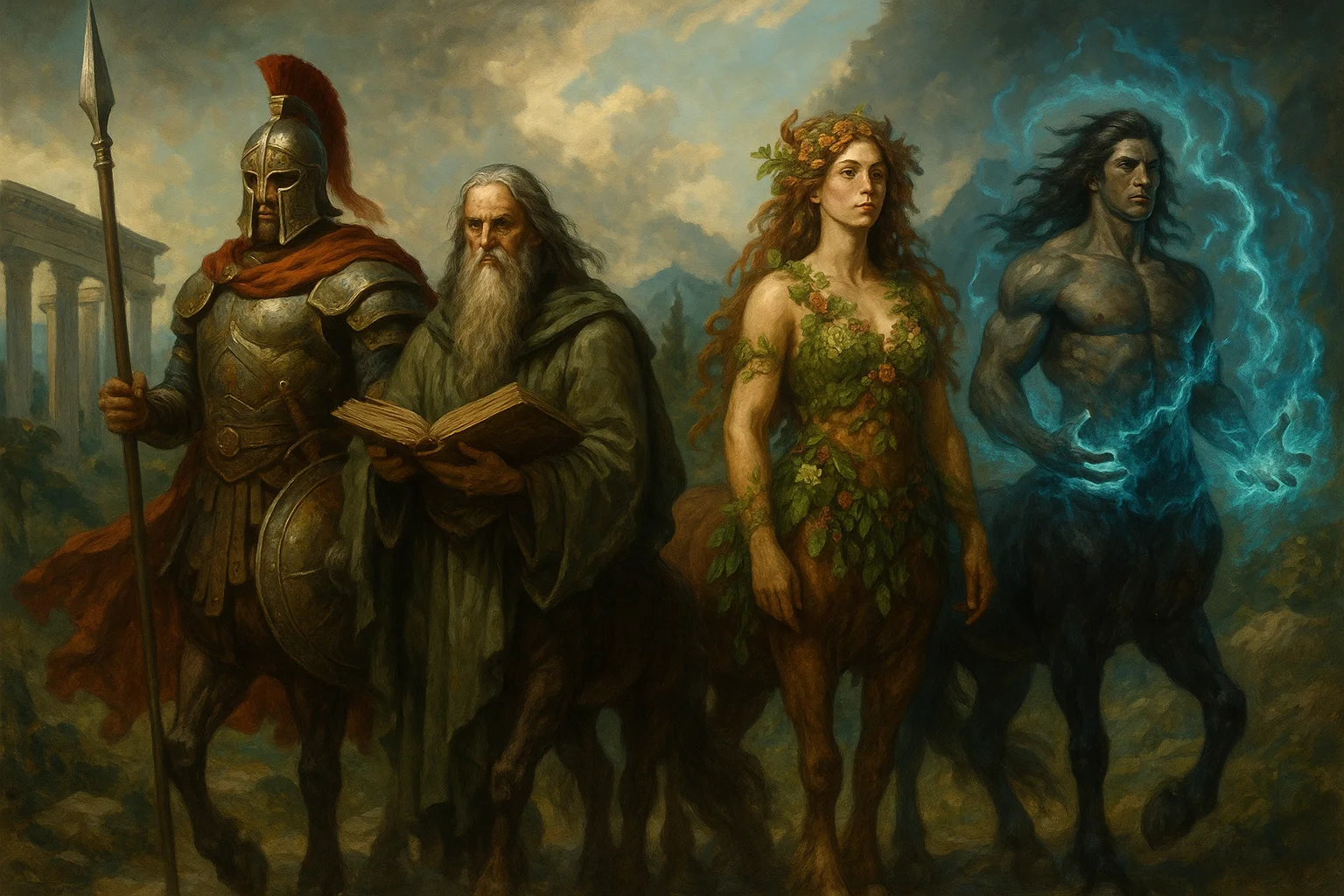
Below you'll find centaur names organized by type and purpose. Each name includes descriptions with context, meaning, and usage suggestions. Whether you're creating a noble sage like Chiron, a fierce warrior, or a nature-spirit guardian, these lists give you options rooted in Greek tradition and fantasy naming.
These mythic centaurs shaped the way later fantasy treats the species. From Chiron's wisdom to Nessus's cunning, these figures defined what centaurs could be. These names carry weight and recognition, useful for connecting a character to classical mythology or creating characters who follow in famous hoofprints. Each shows a different side of centaur nature: teacher, warrior, lover, prophet, or tragic figure. Use these when you want immediate mythological gravitas and instant character depth through association with their legendary namesakes.
Battle-tested names for centaur warriors who defend their herds and territories with strength and courage. These names combine Greek elements with martial descriptors, creating identities that sound ancient and forceful. Use them for D&D barbarians, fighters, or rangers with centaur heritage. Each name suggests a combat style, such as archers like Swiftarrow, heavy cavalry like Ironhoof, or scouts like Mountaincrest. Consider the character's fighting approach when selecting: does he charge headlong into battle or strike from shadows? The name should match tactical style and personality.
While Greek mythology featured fewer female centaurs, modern fantasy gives them fuller roles. These names blend strength with grace for centaur women who match males in capability while often displaying greater wisdom and restraint. Use them for healers, diplomats, warriors, or spiritual leaders. Names like Artemisia Huntress honor warrior traditions, while Daphne Willowgrace suggests healing arts. The variety reflects centaur society's complexity. Not every female centaur is gentle or fierce, but all possess the dual nature that defines their kind. Choose based on character role and personality rather than gender stereotypes.
Following Chiron's intellectual tradition, these names suit scholars, teachers, healers, and philosophers. Drawing from classical Greek thinkers, each name carries associations with specific knowledge domains: mathematics, medicine, astronomy, or philosophy. Use them for NPC mentors in campaigns or wise elder characters who guide younger heroes. Consider the scholar's specialty when choosing: Pythagoras Starreader for astronomers, Hippocrates Healer for physicians, Socrates Questioner for philosophers. These centaurs bridge wild nature and refined civilization, proving wisdom can emerge from unexpected sources and challenging prejudices about "savage" creatures.
Centaurs tied to wilderness draw names from forests, plants, and natural phenomena. These names work beautifully for rangers, druids, or characters emphasizing their wild heritage over civilized aspects. Each name suggests specific environments and roles: Oakhorn Deeprooted for forest guardians, Reedwhisper Water for marsh dwellers, Sagebrush Desert for arid-land survivors. The natural world shapes these centaurs deeply. They are part of nature, with identities tied to specific places and ecosystems. Use these names when environmental connection defines the character more than martial prowess or intellectual achievement.
For fantasy settings where magic permeates reality, elemental centaurs channel primal forces: fire, water, earth, air, and beyond. These names suit settings like Dungeons & Dragons, Pathfinder, or original fantasy worlds where centaurs developed magical affinities alongside physical prowess. Pyros Flamewalker commands fire, Boreas Northwind embodies winter storms, Gaea Earthshaker channels geological power. These centaurs transcend mundane limitations, becoming living expressions of natural forces. They fit epic-level campaigns, mystical guardians, or establishing centaur varieties adapted to extreme environments such as volcanic badlands, frozen tundras, or storm-wracked coastlines.
Urban fantasy and contemporary settings require centaurs who navigate modern society while maintaining their heritage. These names blend common human first names with nature-themed surnames, creating identities that work in 21st-century contexts. Alexander Swiftbrook could be a park ranger, Victoria Greenfield an environmental activist, Sophia Starfield an astronomer combining ancient star-lore with modern astronomy. These centaurs bridge ancient traditions meeting contemporary challenges, magical heritage hidden behind normal facades. They fit stories about how mythological beings survive in age of smartphones and satellites while preserving their essential nature.
A good centaur name usually starts with Greek myth, herd identity, and the push between civilized thought and wild instinct. Use these steps to shape a name for your centaur character:
Choose based on role: Warrior centaurs need strong, martial names; Sage centaurs favor wise, scholarly names; Nature-attuned centaurs incorporate elemental themes; Modern centaurs blend traditional with contemporary elements.
Draw from famous centaurs and Greek naming conventions: Chiron (the wise), Pholus (the hospitable), Nessus (the vengeful). Use Greek roots and classical endings to honor their mythological origins.
Show their dual nature: combine civilized elements (wisdom, honor, art) with horse-related ideas (speed, freedom, instinct). The name should make room for both sides.
Many centaurs identify with specific territories, herds, or philosophical schools. Include geographic or tribal affiliations that establish their place in centaur society and their relationship with the land.
Use the centaur name generator tool for names rooted in Greek myth, herd culture, and the half-human, half-horse nature of centaurs.
Ready to name your centaur character? Our centaur name generator creates names drawing from Greek mythology and fantasy traditions. Generate male or female names instantly, each suited to half-human, half-horse characters. Use it for D&D campaigns, fantasy novels, or other projects featuring centaurs. Explore related generators for other mythical beings: the griffin generator for noble guardians, or the minotaur generator for labyrinth dwellers. For broader fantasy worldbuilding, visit our ultimate guide to fantasy creature names. Also explore our guides for other mythological creatures like wolf names for pack-based characters.
Centaurs originated in Greek mythology as creatures with the upper body of a human and the lower body of a horse. They were often depicted as wild and unruly, inhabiting the mountains and forests of Thessaly.
Chiron is the best-known centaur, remembered for his wisdom and for teaching heroes like Achilles and Heracles. Nessus is also well known for his role in the death of Heracles.
Greek-style centaur names typically draw from ancient Greek roots and traits like strength, nature, or wisdom. Combining Greek prefixes and suffixes related to horses, mountains, or heroic qualities produces fitting results.
In Greek mythology, centaur names often end in suffixes like "-us" or "-on" and reference natural elements or character traits. Examples include Pholus (related to a cave) and Eurytion (meaning "wide-flowing").