
Loading...
Loading...

Discover mystical wizard names spanning all schools of magic, from ancient sages to modern magical innovators. Perfect for fantasy characters, D&D campaigns, and creative writing projects.
Looking for the perfect wizard name? Our wizard name generator creates mystical names across all magical specializations and eras.
Use the matching Wizard Names without leaving the article. Pick a style, generate fresh names, and copy the good ones.
Style
Choose a style before generating.
6 names ready to copy.
Starter names from the generator
The art of naming wizards goes far beyond simply combining mystical-sounding syllables. Throughout history, magical practitioners have carried names that reflect their specializations, origins, and the very essence of their arcane pursuits. Whether you're crafting characters for Dungeons & Dragons campaigns, writing fantasy novels, or developing magical personas for creative projects, the right wizard name can instantly convey power, wisdom, and mystical authority.
Long before Merlin became synonymous with magical wisdom or Gandalf captured imaginations worldwide, ancient civilizations developed sophisticated naming conventions for their magical practitioners. In Mesopotamian traditions, wizards often bore titles that referenced celestial bodies and cosmic forces—reflecting their role as intermediaries between earthly and divine realms. Egyptian magic users incorporated hieroglyphic symbolism into their names, with each element representing different aspects of magical knowledge.
The Celtic druids practiced perhaps the most complex naming system, where magical names evolved throughout a practitioner's lifetime. A young apprentice might begin with a simple nature-based name, gradually acquiring additional elements as they mastered different aspects of natural magic. By the time they achieved arch-druid status, their full ceremonial name could contain references to multiple elements, seasons, sacred groves, and ancestral spirits.
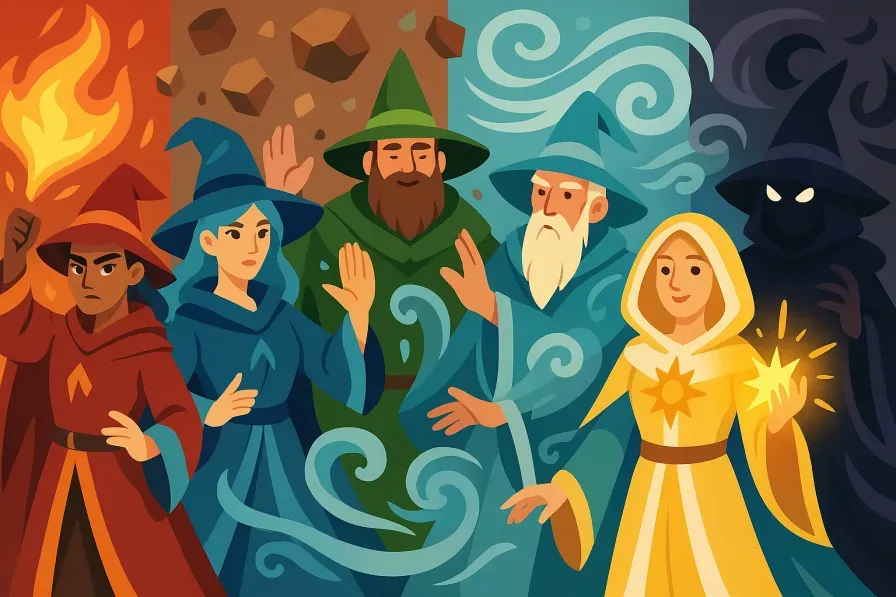
Each school of magic has developed distinct naming patterns that reflect its underlying philosophy and practical applications. Elemental wizards typically incorporate references to their chosen element—fire mages might bear names suggesting heat, light, or transformation, while water wizards often carry names evoking flow, depth, or purification. These aren't merely aesthetic choices; they represent the fundamental way each wizard relates to magical forces.
Necromancers face unique naming challenges, as their craft deals with taboo subjects that many societies prefer to ignore. Historically, death magic practitioners often adopted titles that softened their true purpose—referring to themselves as “shepherds of souls” or “guides to the next realm.” However, some embraced the fear their abilities inspired, choosing names that explicitly referenced bones, graves, or the undead state. Try our necromancer name generator to explore these darker naming conventions.
Elemental wizards throughout history have gravitated toward names suggesting controlled destruction and creative force. The naming of powerful spells often follows similar patterns, with incantations echoing their creator's title. The legendary Pyrion traditions of the Eastern Kingdoms required fire mages to earn their “flame titles” through specific achievements—mastering blue fire, creating eternal flames, or successfully binding fire elementals. Each accomplishment added a new element to their name, creating complex titles that served as magical résumés.
The explosion of fantasy literature and role-playing games in the 20th century revolutionized how we think about wizard names. Tolkien's Middle-earth introduced the concept of names that felt ancient yet pronounceable, with clear etymological roots that suggested deeper meaning. Gandalf's name, derived from Old Norse meaning "staff-elf," established a template that countless fantasy creators have followed—combining familiar linguistic elements in ways that feel both magical and grounded.
Dungeons & Dragons fundamentally changed wizard naming by systematizing magic into schools and encouraging players to create backstories that explained their character's abilities. This led to the development of naming conventions that immediately communicated a wizard's specialization, personality, and origins. Players choosing between a wizard and a sorcerer often find that naming conventions differ as much as the classes themselves. A player encountering "Thalion the Necromancer" instantly understood something very different from meeting "Celeste the Lightbringer."
Try speaking the wizard's name as an introduction, a warning, and a classroom roll call. Compare a name built around S or F with one using M, N, or L. Which rhythm suits your scene? That is an editorial choice, not a prediction of the reader's response.
Compare "Hex" or "Blaze" with "Chronothius the Timekeeper." A short name may suit a hurried introduction; a long title may suit a formal ceremony. Either could belong to a scholar or an impatient apprentice. Name length does not establish wisdom or memorability.
Different fantasy cultures have developed unique approaches to wizard naming that reflect their broader social structures and magical philosophies. In aristocratic societies, wizard names often incorporate titles of nobility—"Lord Malachar the Shadowweaver" suggests both magical and political power. Nomadic cultures might use names that reference specific locations or journeys—"Sandara of the Shifting Dunes" or "Northwind the Wanderer."
Some cultures practice collective naming, where wizards become part of larger magical identities. The Circle of Storms tradition assigns members temporary names based on current weather patterns, while the Lunar Coven changes their titles with each moon phase. These practices reflect philosophies that view individual identity as less important than connection to larger magical forces.
Choose a sound pattern you want to try, then give the wizard a reason to use that name. The palettes below are fictional design options, not properties of real languages or proven audience responses. Consider the wizard's abilities and ambitions.
Consider how your wizard's culture affects their naming. Aristocratic societies favor elaborate titles, while practical cultures prefer descriptive names. Don't forget about elven naming traditions if creating magical elves, or explore our demon names collection for dark magic practitioners who draw power from infernal sources.
The most famous wizard names in literature and mythology share certain characteristics that have made them endure across centuries and cultures. Merlin's power lies partly in its simplicity—a single word that carries the weight of infinite magical knowledge. The name's Celtic roots suggest both wisdom and wildness, reflecting the dual nature of magic itself as both scholarly pursuit and primal force.
Modern fantasy has expanded the wizard naming tradition in fascinating directions. Names like Dumbledore demonstrate how whimsical-sounding combinations can carry serious weight when attached to complex characters. Wizards who deal with dragons or consort with fairy courts often adopt titles reflecting those relationships. The greatest wizard names work on multiple levels—they sound impressive when spoken aloud, carry meaningful etymology for those who investigate deeper, and feel appropriate to the character's personality and magical specialty.
Urban fantasy and science fantasy have introduced entirely new categories of wizard names that blend traditional mystical elements with contemporary or futuristic concepts. These modern magical practitioners might bear names like "Neo Matrix" or "Cyber Sage," reflecting the integration of technology and magic in their fictional worlds.
The rise of diverse fantasy literature has also brought attention to non-European magical naming traditions. African magical traditions emphasize names that connect practitioners to ancestral spirits and natural forces. Asian magical naming often incorporates concepts of balance, harmony, and the flow of mystical energy through all things. These expanding traditions offer rich inspiration for creators seeking to move beyond Western European magical archetypes.
A wizard's name should feel like the natural result of their life experiences, magical education, and personal choices. Consider both the name they were born with and the titles they've earned through magical achievement.
These scholarly magic users often acquire multiple titles throughout their careers. Start with their birth name, add their academic specialization, and include any prestigious positions they've held. Examples: "Aldrich of the Golden Tower, Master of Transmutation" or "Professor Elara Starweaver, Dean of Celestial Studies."
Names should reflect their chosen element while suggesting mastery level. Beginning practitioners might use simple descriptors like "Ember" or "Frost," while masters earn elaborate titles like "Pyrion the Eternal Flame" or "Glacius the Winter's Heart." Consider how their element shapes their personality and worldview.
These traveling mages often pick up names from the places they've visited and the people they've helped. Their full names might tell the story of their journeys: "Thorian Stormcaller, Liberator of Westmarch, Protector of the Singing Hills." Each title represents a different chapter in their magical career.
Balance intimidation with sophistication. Names like "Shadowmere the Voidwalker" suggest danger while maintaining scholarly credibility. Consider whether they embrace their dark reputation or hide behind more benign titles. Some might use their threatening name as a tool, while others reserve it for dire circumstances.
The most interesting wizard characters often experience name evolution throughout their magical careers. Young apprentices might begin with simple given names, gradually acquiring titles and epithets as they master new spells and gain recognition. This process mirrors real-world academic and professional advancement, where doctors, professors, and other experts accumulate credentials and specializations over time.
Some wizard names change dramatically following transformative events. A light wizard who falls to corruption might shed their original name entirely, adopting something that reflects their new dark path. Conversely, a redeemed dark wizard might reclaim an abandoned true name or earn a new title that acknowledges their change of heart. These naming transitions provide powerful storytelling opportunities that reflect character growth and transformation.
These are the names that have become synonymous with magical power across cultures and centuries. Drawing from literature, mythology, and legendary figures, these wizard names carry the weight of greatness and the promise of extraordinary magical ability. Each name represents not just a character, but an archetype that has shaped how we understand wizardry itself. Perfect for player characters destined for greatness or NPCs whose very names inspire awe and respect.
Elemental wizards represent the oldest and most intuitive form of magic—the direct manipulation of fire, water, earth, air, ice, and lightning. These names reflect deep spiritual connections to natural forces, suggesting practitioners who don't simply command elements but partner with them. Each name tells a story of specialization and mastery, from the gentle guidance of flowing water to the explosive power of volcanic forces. Ideal for characters whose magic draws directly from nature's primal energies.
These names belong to wizards who have transcended normal lifespans, accumulating knowledge across centuries or millennia. They represent the scholarly ideal taken to its ultimate conclusion—beings who have had time to master every magical discipline and understand the deep patterns that govern reality itself. Their names often reference concepts of time, eternity, and fundamental forces. Perfect for ancient mentors, library guardians, or cosmic-level magical entities whose knowledge spans ages.
Practitioners of dark magic face unique challenges in a world that often fears their abilities. These names balance intimidation with sophistication, suggesting wizards who have chosen to study forbidden magics for reasons ranging from academic curiosity to darker motivations. Not all practitioners of dark arts are evil—some study shadow magic for protection, necromancy for healing, or corruption magic to better understand purity. These names work for complex antagonists, morally ambiguous allies, or heroes who walk dangerous paths.
Champions of light magic dedicate themselves to healing, protection, and the preservation of hope in dark times. Their names reflect divine connection, moral purpose, and the responsibility that comes with wielding forces of pure good. These wizards often serve as beacons of inspiration during crises, their very presence bringing comfort and renewed strength to allies. Perfect for heroic characters, divine servants, or wise mentors whose magic draws from the brightest sources of power.
Alchemy represents the intersection of magic and science, requiring both mystical intuition and precise methodology. These master brewers and distillers understand that true magical potions are more than simple chemical reactions—they're transformative experiences that can alter mind, body, and spirit. Their names often reference botanical knowledge, chemical processes, or the transformative nature of their work. Ideal for scholarly characters, merchant wizards, or specialists whose magic takes physical form through elixirs and compounds.
Seers and oracles occupy a unique position in magical society—they know what others cannot, see what others miss, and bear the burden of knowledge about events yet to come. Their names often carry weight of prophecy and the mystery of time itself. These practitioners understand that knowledge of the future is both a gift and a curse, and their names reflect the complexity of their calling. Perfect for mysterious NPCs, prophetic mentors, or characters whose abilities drive plot development through foresight.
In contemporary and futuristic settings, magic evolves alongside technology, creating entirely new categories of magical practitioners. These modern wizards blend traditional spellcasting with cutting-edge scientific understanding, creating hybrid approaches that neither pure science nor classical magic could achieve alone. Their names reflect this synthesis, combining mystical elements with technological terminology. Perfect for urban fantasy settings, science fantasy campaigns, or any story exploring how ancient magical traditions adapt to modern worlds.
Creating a mystical wizard name requires understanding their magical power, arcane knowledge, and mystical heritage. Follow these steps to craft the perfect name for your spellcaster:
Choose naming style based on the wizard's magical tradition: Classical European for traditional wizards, Eastern mysticism for martial mages, or unique fantasy conventions for original settings. Each tradition brings distinct sounds and cultural depth.
Incorporate references to magic, elements, celestial bodies, or ancient knowledge. Names should hint at magical prowess and years of study in the arcane arts.
Consider adding a magical title or earned epithet that reflects accomplishments: "the Wise," "Stormcaller," or references to famous spells or magical discoveries.
Create names with mystical, flowing syllables that suggest otherworldly power and ancient wisdom accumulated over decades of magical study.
Generate authentic wizard names using our wizard name generator that combines arcane elements, mystical traditions, and magical epithets for perfect spellcaster characters.
Ready to discover your perfect wizard name? Our comprehensive wizard name generator offers thousands of combinations across all magical specializations—from elemental masters to necromancers, ancient sages to modern innovators. Each name is crafted to reflect authentic magical traditions while providing the depth and authority your character deserves. For death-magic specialists, see our necromancer names guide. Explore our related articles on elven names for magical elf characters, or discover demon names for practitioners who draw power from infernal sources. For magical institution names, check out our school name generator guide.
Wizard names often use archaic or Latin-inspired syllables to evoke wisdom and mystery. Long, flowing names with soft consonants like "l," "r," and "th" are common, as seen in names like Gandalf and Merlin.
Gandalf comes from Old Norse meaning "wand-elf." Merlin derives from the Welsh name Myrddin, meaning "sea fortress." Many iconic wizard names have roots in ancient languages that reflect their mystical nature.
Combine elements from ancient languages like Latin, Old English, or Greek. Mix meaningful root words related to magic, elements, or wisdom, and add suffixes like "-us," "-or," or "-ius" for a classic arcane feel.
Wizard names tend to sound scholarly and ancient, reflecting learned magic. Sorcerer names often sound more primal or exotic, reflecting innate magical power rather than academic study.