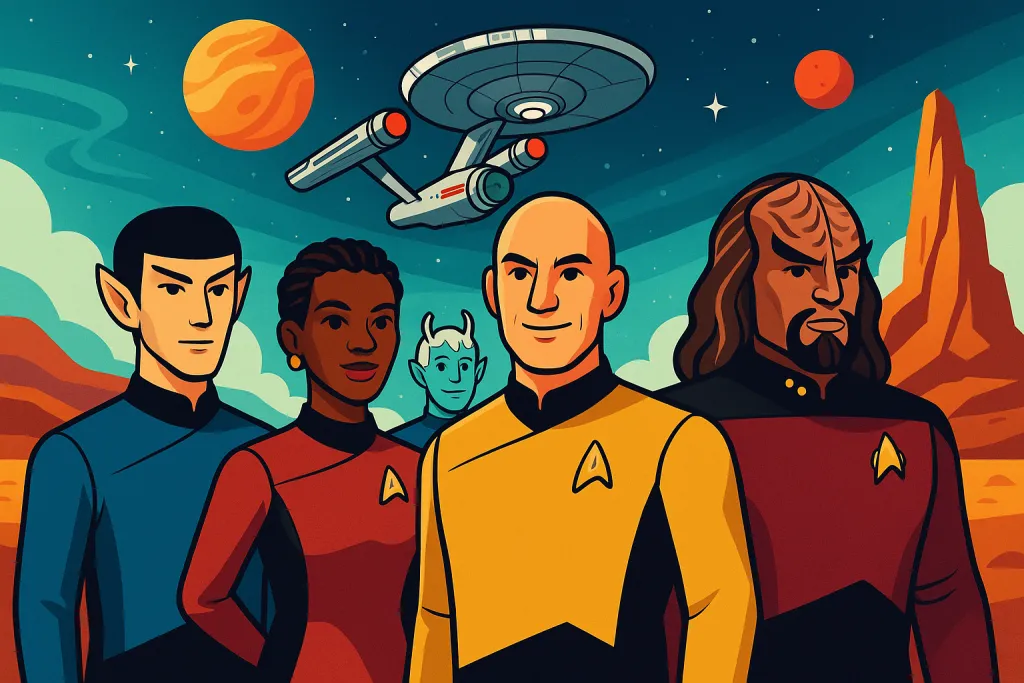
The Star Trek Universe and Its Diverse Species
Star Trek has built a broad fictional galaxy across decades of television and film. From the idealistic United Federation of Planets to the warrior culture of the Klingon Empire, each species brings naming conventions that reflect its history, values, and social structures.
Star Trek Naming Philosophy
Star Trek names serve multiple narrative purposes:
- Cultural Identity: Names immediately establish a character's species and background
- Social Status: Titles and ranks indicate position within society or Starfleet
- Character Depth: Names often carry hidden meanings or references to their traits
- World Building: Consistent naming patterns help create believable alien cultures
United Federation of Planets and Starfleet
The Federation represents a utopian alliance of over 150 member worlds, with Starfleet serving as its exploratory and defensive arm. Federation names reflect the diversity of Earth cultures and member species.
Starfleet Ranking System
Understanding Starfleet ranks adds authenticity to Federation characters:
- Enlisted: Crewman Recruit, Crewman Apprentice, Crewman, Petty Officer
- Junior Officers: Ensign, Lieutenant (Junior Grade), Lieutenant
- Senior Officers: Lieutenant Commander, Commander, Captain
- Flag Officers: Commodore, Rear Admiral, Vice Admiral, Admiral, Fleet Admiral
Starfleet Departments and Positions
- Command Division: Captain, First Officer, Helmsman
- Operations Division: Chief Engineer, Operations Officer, Transporter Chief
- Sciences Division: Chief Science Officer, Chief Medical Officer, Counselor
- Security Division: Chief of Security, Tactical Officer, Security Guard
Vulcan: Logic and Ancient Wisdom
Vulcan names reflect their pursuit of logic, ancient heritage, and connection to their desert homeworld. Most Vulcan names are short, precise, and often begin with traditional consonants.
Vulcan Naming Patterns
- Traditional Prefixes: S', T', V' - "S'chn T'gai Spock"
- Logical Structure: Names often follow mathematical or linguistic patterns
- Ancient Origins: Many names reference pre-reform Vulcan history
- Family Lines: Names often indicate clan or family heritage
Vulcan Titles and Positions
- Religious: High Master, Master, Kolinahr Master
- Political: Ambassador, Minister, Administrator
- Academic: Elder, Healer, Teacher, Student
- Cultural: Clan Leader, House Elder, Matriarch
Klingon Empire: Honor and Warfare
Klingon names reflect their warrior culture, with harsh consonants and guttural sounds that mirror their aggressive language. Names often reference battles, honor, or family lineage.
Klingon Naming Traditions
- Warrior Heritage: Names often reference famous battles or warriors
- House Affiliation: "Son of" or "Daughter of" indicates parentage
- Honor Titles: Earned names reflecting great deeds or victories
- Clan Identity: Names link individuals to their Great Houses
Klingon Military Structure
- High Command: Chancellor, General, Admiral
- Field Officers: Colonel, Captain, Commander
- Ship Positions: First Officer, Weapons Officer, Helmsman
- Ground Forces: Warrior, Bekk, Sergeant
Romulan Star Empire: Secrets and Subtlety
Romulan names share Vulcan linguistic roots but have evolved to reflect their more passionate and secretive nature. They often sound more flowing and melodic than their Vulcan cousins.
Romulan Social Structure
- Military Ranks: Commander, Centurion, Subcommander, Admiral
- Political Positions: Praetor, Senator, Proconsul
- Intelligence Services: Tal Shiar Agent, Operative, Handler
- Noble Houses: Patrician families with ancient lineages
Cardassian Union: Order and Hierarchy
Cardassian names reflect their highly structured, militaristic society. The frequent use of titles emphasizes their rigid social hierarchy and respect for authority.
Cardassian Social Order
- Military Ranks: Gul (equivalent to Captain), Legate (General), Glinn (Lieutenant)
- Political Positions: Castellan, Minister, Advisor
- Intelligence: Obsidian Order agents and operatives
- Civilian Roles: Academic, Scientist, Engineer
Bajoran Culture: Spirituality and Tradition
Bajoran names follow the pattern of family name first, given name second, reflecting their strong emphasis on family and tradition. Their deep spirituality is reflected in religious titles and references to the Prophets.
Bajoran Religious Structure
- Kai: Spiritual leader of all Bajor
- Vedek: High-ranking religious figure
- Prylar: Mid-level religious position
- Ranjen: Student or novice in religious studies
Ferengi Alliance: Commerce and Profit
Ferengi names often sound commercial or business-like, reflecting their culture's obsession with profit and the Rules of Acquisition. Many names are short and punchy, easy to remember for business purposes.
Ferengi Business Structure
- Nagus: Leader of all Ferengi, Grand Nagus
- Daimon: Ship captain or business leader
- Liquidator: Financial enforcement officer
- Eliminator: Auditor who can shut down businesses
Andorian Empire: Honor and Clan Loyalty
Andorian names often include clan affiliations and reflect their warrior culture. Their four-gender society creates complex naming conventions that honor their unique biology and social structures.
Andorian Clan System
- Clan Names: Often begin with "zh," "ch," "th," or "sh"
- Gender Designations: Four genders with specific naming patterns
- Military Ranks: Commander, Captain, Admiral in Imperial Guard
- Diplomatic Roles: Ambassador, Envoy, Cultural Attaché
Creating Authentic Star Trek Characters
When developing Star Trek characters, consider these elements to ensure authenticity and depth:
Species-Specific Characteristics
- Biological Traits: Lifespan, physical abilities, sensory differences
- Cultural Values: What does their species prize or condemn?
- Historical Context: How has their species' history shaped them? shaped them?
- Social Structure: How do they relate to family, government, religion?
Character Development Considerations
- Career Path: Starfleet Academy, military service, civilian expertise
- Personal History: Family background, formative experiences
- Motivations: What drives them to explore, fight, or serve?
- Conflicts: How do their personal values clash with duty?
Lesser-Known Star Trek Species
The Star Trek universe includes hundreds of species beyond the major powers. Here are naming inspirations for some notable ones:
Alpha Quadrant Species
- Betazoid: Empathic abilities, peaceful names
- Trill: Symbiotic species with joined names
- Bolian: Blue-skinned, often cheerful-sounding names
- Tellarite: Argumentative pig-like species
- Orion: Green-skinned traders and pirates
Delta Quadrant Species
- Talaxian: Cheerful, optimistic-sounding names
- Kazon: Warrior culture with harsh names
- Vidiian: Disease-afflicted species
- Malon: Waste-export species
- Hirogen: Hunter species with predatory names
Star Trek Timeline and Naming Evolution
Different Star Trek eras have distinct naming conventions that reflect technological advancement and social evolution:
Enterprise Era (22nd Century)
- More Earth-centric names for humans
- Early contact protocols affect naming
- Primitive universal translators
- Less standardized rank structures
Original Series Era (23rd Century)
- Classic Earth names predominant
- Clear military hierarchy established
- Alien names becoming more standardized
- Federation ideals fully formed
Next Generation Era (24th Century)
- More diverse human naming conventions
- Complex alien species introduced
- Sophisticated diplomatic protocols
- Post-scarcity society naming freedom
Using Star Trek Names in Roleplaying Games
Star Trek names work excellently in science fiction RPGs and fan fiction. Consider these applications:
Campaign Settings
- Starfleet Campaigns: Focus on exploration and diplomacy
- Merchant Adventures: Ferengi-style trading missions
- Military Conflicts: Klingon or Cardassian war stories
- Espionage Missions: Romulan Tal Shiar or Section 31 operations
Character Archetypes
- The Explorer: Curious scientist pushing boundaries
- The Diplomat: Skilled negotiator preventing conflicts
- The Engineer: Technical genius solving impossible problems
- The Warrior: Honor-bound fighter protecting others
This generator draws from Star Trek's long history of species and faction naming. Whether you're creating a bold Starfleet captain, a logical Vulcan scientist, an honorable Klingon warrior, or a cunning Romulan spy, the names are meant to feel at home in that style while leaving room for your own character details.