
Loading...
Loading...
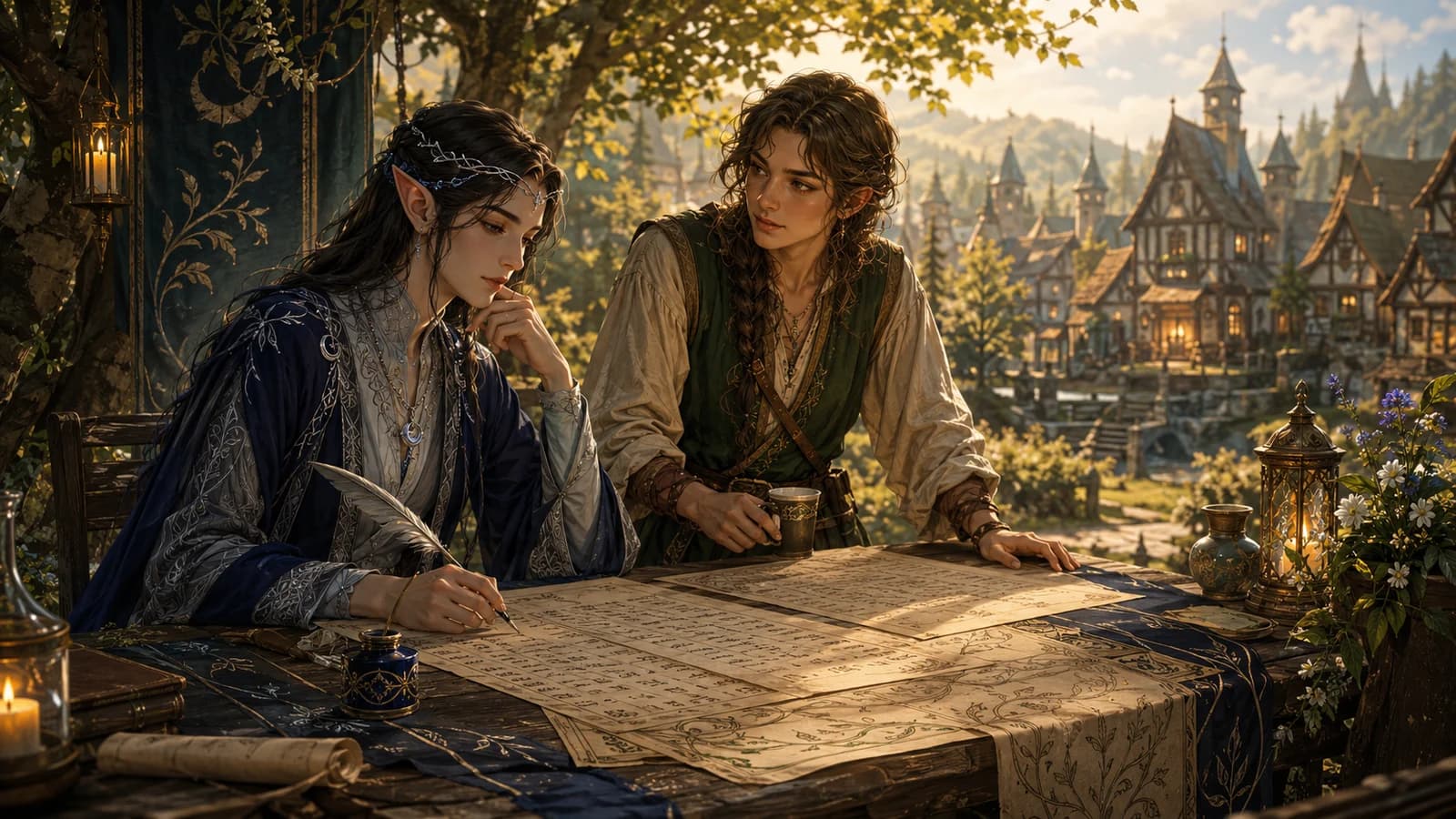
A curated half-elf naming guide with human-elven blends, D&D-ready adventurer names, court names, wanderer names, and practical advice for choosing the right style.
Half-elf names have a useful tension built into them. They can sound graceful without floating away from everyday speech, old without becoming unreadable, and human without losing the glint of another world. That makes them some of the most flexible names in fantasy. A half-elf can be a court diplomat, a tired border scout, a bard who changes names with every city, or a child of two families that never agreed on what to call them.
Use the matching Half-elves Names without leaving the article. Pick a style, generate fresh names, and copy the good ones.
Style
Choose a style before generating.
6 names ready to copy.
Starter names from the generator
This guide gives you 120 curated half-elf names and the naming logic behind them. If you want instant combinations, start with the half-elf name generator. If you want to tune a name by hand, use the sections below to decide how much human rhythm, elven music, family history, and personal reinvention your character should carry. For the broader elven side of the cluster, our elf names guide covers high, wood, dark, and sea elf styles in more detail.
A full elven name can carry long vowels, liquid consonants, and nature imagery for several syllables before it reaches the surname. A human name, especially in a medieval or tabletop setting, often needs to survive a tax roll, a tavern shout, and an impatient party member asking who is on watch. Half-elf names work best when they respect both pressures. They should be pleasant to say, but not so polished that the character sounds carved from marble.
The easiest pattern is contrast. Pair Aelrion with Thorne, Tomas with Silverreed, or Liora with Ashford. One half of the name tells us where the character might pass unnoticed. The other half tells us what gets noticed eventually. That small friction is useful for writing, because it gives the name a built-in question.
If you are building a D&D character, keep table use in mind. The name needs to be readable aloud on the first try. A gorgeous four-syllable elven name may fit a backstory document, but the group will shorten it by session two. That is not a problem. Give the character a formal name and a nickname on purpose, then let the nickname say something about who gets close enough to use it.
When a name feels almost right but not quite, check which side is doing the heavy lifting. These patterns give you quick fixes without starting over.
For a race-by-race comparison, see our D&D naming conventions guide. For how sound shapes character impressions, read the psychology of fantasy names.
Mixed ancestry does not automatically produce a mixed name. A half-elf raised in a human fishing town may have a completely human given name, a practical surname, and only one elven lullaby left from childhood. A half-elf raised in an elven court may use a formal name that humans shorten badly within five minutes. A character raised between both places might learn to answer to two names before they learn to write either one.
That is why half-elf names are good tools for backstory. They can show acceptance, distance, adoption, rebellion, grief, or strategy. A character named Edwin Moonglass may be trying to sound ordinary while carrying a surname nobody in town can explain. A character named Lethariel Stone may be doing the opposite, preserving an elven first name while honoring a human parent with a blunt surname.
Fantasy has long used half-elven characters to explore choice and belonging. Tolkien's Half-elven, including Elrond and Elros, are tied to the question of which kindred they choose. Tabletop fantasy often makes the theme more social: a half-elf can move through both communities, yet still be treated as slightly outside each one. A name can carry that pressure quietly, without a speech about identity in the first scene.
Half-elf surnames can come from several places. Human surnames often point to trades, settlements, local landmarks, or family reputation: Ashford, Ward, Pike, Cross, Lowfield. Elven surnames tend to feel more symbolic: Moonbrook, Starhaven, Willowcrest, Brightleaf. The best hybrid surnames do both. They sound like a place you could visit and a story someone might sing about afterward.
Nicknames matter too. A half-elf named Quenlaris Reed may become Quen in a human city, while Brynna Silverlock might be called Lock by adventurers who trust her with doors. These shortened forms are not throwaway details. They show intimacy, impatience, class, and culture. In fiction, the first person allowed to use a private nickname can tell the reader a lot about a relationship.
Secret names are another strong option. Some elven families might keep a childhood name for kin only. A human town might know a character by an adopted surname that protects them from court politics. A bard might collect stage names until nobody knows which one came first. If you are choosing between several names, do not discard the runners-up. Keep one as a nickname, one as a legal name, and one as the name that hurts to hear.
A convincing half-elf name starts with one question: which world shaped the character first? Use these steps to pick a name that feels lived-in rather than stitched together.
Decide whether the character grew up in an elven enclave, a human town, a mixed borderland, or on the road. The same ancestry can produce very different names depending on who filled out the birth record and who shouted the name across dinner.
Use softer vowels, liquid consonants, and nature imagery for elven-leaning names. Use shorter given names, occupational surnames, and place names for human-leaning names. Balanced names usually pair one element from each side.
Surnames do most of the worldbuilding. A half-elf might carry a human town name, an elven house name translated into Common, an adopted family name, or an earned road name that says more than their bloodline does.
Half-elves often move between groups. A courtly elven name, a shortened tavern nickname, and a family-only childhood name can all belong to the same person and reveal how they act in different rooms.
Use the half-elf name generator to create extra combinations, then adjust the surname, nickname, or cultural lean until the name fits your character voice.
A diplomat usually benefits from a balanced name: polished enough for an elven court, direct enough for a human council chamber. A ranger can carry a looser surname tied to roads, weather, or tracks. A sorcerer may want the elven side more visible, especially if the magic is inherited. A rogue might choose the most forgettable human name possible and hide the elven surname until it becomes useful.
If your half-elf is part of a broader fantasy cast, compare their name against neighboring cultures. Our guide to fantasy names by race shows how elves, dwarves, orcs, halflings, dragonborn, and fairy folk use different sound palettes. Half-elf names should sit near elven names without becoming identical. That slight difference is the whole point.
Use the name to answer a story question. A half-elf name should tell you something about where the character belongs, where they pretend to belong, or where they refuse to belong.
Choose balanced names such as Arlen Moonbrook or Seris Dawnfield for diplomats, mediators, healers, and party faces who can translate more than language.
Use formal names such as Seraphine Mooncourt or Alaric Vaelmont when the character knows etiquette but still hears whispers after every audience.
Pick names like Nyssa Wayfinder, Ander Nighttrail, or Merrin Westwind when the character has rebuilt identity through work, travel, and chosen companions.
Pair a plain public name with a more revealing surname. Tomas Silverreed or Clara Thistledown can pass as ordinary until the family history becomes impossible to ignore.
The lists below are organized by cultural lean and character use. You can use a name as written, swap the surname, or treat the description as a backstory prompt. If you need darker elven roots, compare these against our high elf vs dark elf naming guide. If you want a cousin culture with the same mixed-heritage tension, the half-orc name generator can help you build contrast inside the same party.
Balanced names work when neither side of the heritage should dominate. They pair familiar human shapes with elven nature, moon, river, and tree imagery. Use this list for diplomats, healers, bards, and characters who move between communities often enough to need a name both sides can say without fuss.
These names make the elven side more visible through long vowels, soft consonants, and ceremonial rhythm. The surnames are shorter or more human so the full name still feels mixed. Use them for characters educated in elven halls, raised by an elven parent, or expected to represent an old house.
Human-leaning names are useful for characters who grew up in towns, farms, ports, and guild streets. The given names are familiar, while the surnames carry the elven signal. That makes the heritage visible only after a second look, which is often exactly what the character wants.
Tabletop names need to survive fast speech, jokes, initiative tracking, and dramatic reveals. These D&D-ready names keep the syllables clear while giving each character a role hook: bow, road, dusk, hearth, river, lock, or blade. They are built for play at the table as much as for a lore document.
Court names carry pressure. They need to sound presentable in both human and elven rooms, and they often hide family politics behind soft vowels and polished surnames. Use these for heirs, envoys, royal wards, academy students, and characters whose manners are partly armor.
Borderland names are roadworn. They sound less like ancient houses and more like ferries, bridges, cold camps, marsh paths, and towns where nobody asks the same question twice. Use them for scouts, exiles, guides, smugglers, and half-elves who built a home out of movement.
Before you settle on a name, say it in three situations: a parent using it softly, a guard reading it from a list, and a friend shouting it during a fight. If it works in all three, you probably have a keeper. If it only works in one, decide whether that mismatch is a flaw or a story clue.
You can also tune a name by changing only the surname. Caelan Rosemere becomes more human as Caelan Cross, more elven as Caelan Moonwhisper, and more dangerous as Caelan Thornbridge. That small change can move a character from noble court to road campaign without losing the given name you liked.
Use these lists when you want hand-picked names with story hooks. When you need more combinations, try the half-elf name generator and then refine the result with the patterns above. For neighboring fantasy naming styles, compare the elf name generator with our D&D race naming reference.
A good half-elf name usually blends one human-readable element with one elven element. That might mean an elven given name with a human surname, a human nickname with an elven house name, or a surname that translates elven nature imagery into Common speech.
It depends on upbringing. A half-elf raised in a human town may use a familiar given name and keep elven ancestry in the surname. A half-elf raised among elves may have a lyrical given name but use a shorter public nickname when traveling in human lands.
Good D&D half-elf names include Shava Brightbow, Darion Glenstep, Kethra Moonknife, Tessa Dawnwhisper, Rian Leafmantle, Cailen Hearthsong, and Nyssa Wayfinder. They are easy to say at the table and still hint at mixed human-elven heritage.
Yes. Two-name identity works especially well for half-elves. A character might use an elven childhood name with family, a human nickname in town, and an earned adventuring name on the road. That gives writers and players a natural way to show trust and belonging.
Tie the surname to a specific place, family role, oath, craft, or event. Moonbrook is prettier than random syllables because it suggests water, night travel, and an old border community. A name becomes memorable when it points to a story.