
Loading...
Loading...
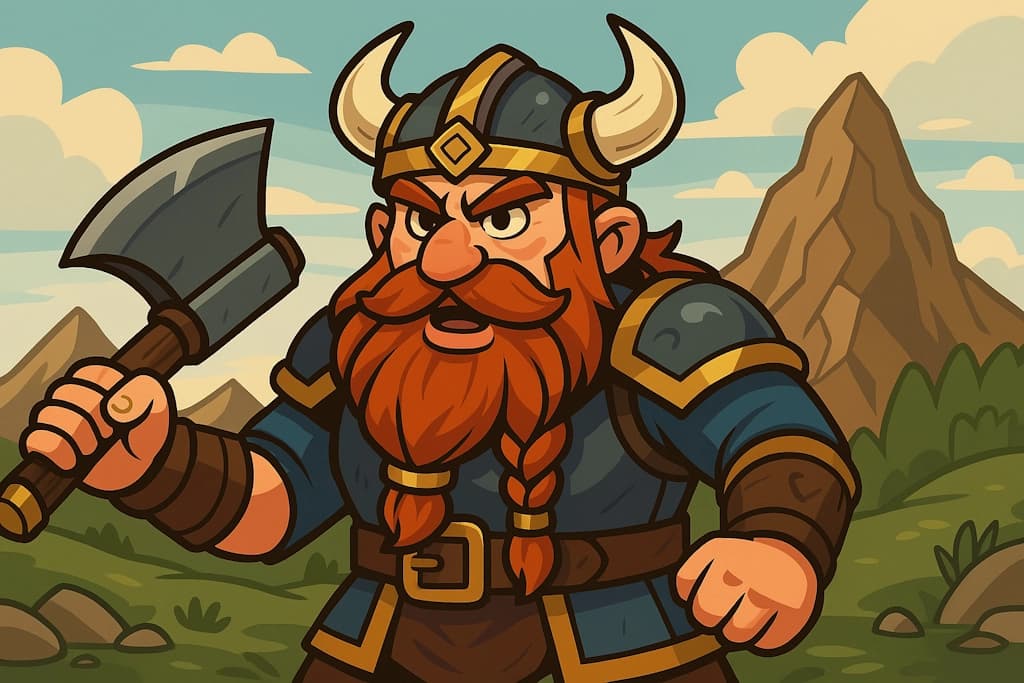
An extensive collection of 290+ authentic dwarf names spanning legendary Norse mythology, Tolkien's Middle-earth, clan founders, and modern fantasy traditions—perfect for D&D campaigns, fantasy stories, and character creation.
You can't name a dwarf "Bob" and expect it to work. There's something fundamentally wrong about it—like calling a mountain "Steve" or a thunderstorm "Kevin." Dwarf names carry geological weight. They need to sound like they've been carved from granite, forged in volcanic heat, or excavated from veins of ore that predate human civilization.
Use the matching Dwarves Names without leaving the article. Pick a style, generate fresh names, and copy the good ones.
Style
Choose a style before generating.
6 names ready to copy.
Starter names from the generator
The genius of traditional dwarf naming lies in its dual nature—harsh consonants that evoke hammering metal meet compound descriptors that tell entire stories. "Thorin Oakenshield" doesn't just sound impressive; it communicates character. You immediately picture a dwarf king who once used an oak branch as an improvised shield in desperate battle. Compare that to melodic elven names like "Galadriel" or fierce orc names like "Grom Hellscream," and you'll hear how each race's naming conventions reflect their entire culture.
Most people don't realize that fantasy dwarves are essentially Norse mythology filtered through Tolkien's philological genius. The Old Norse word "dvergr" (plural dvergar) originally described supernatural beings who lived in rocks and mountains—master craftsmen who created legendary artifacts for the gods.
According to the Völuspá, a 10th-century Norse poem, dwarves were created from the blood and bones of the giant Ymir. The poem lists dozens of dwarf names—Nýi, Niði, Norðri, Suðri, Austri, Vestri—many of which Tolkien borrowed directly for The Hobbit. When you see names like "Dwalin" or "Thorin" in Middle-earth, you're reading names that existed in Icelandic poetry a thousand years ago.
But here's what's fascinating: Norse dwarves weren't always the bearded mountain-dwelling smiths we know today. Early sources describe them as ambiguously sized, sometimes even shape-shifters. Andvari, for instance, lived as a pike in a waterfall guarding his cursed gold. The modern image—short, stocky, bearded, excellent at metalwork—crystallized through medieval German folklore, reached Wagner's Ring Cycle in the 1800s, and finally achieved its definitive form when Tolkien wrote The Hobbit in 1937.
J.R.R. Tolkien didn't just borrow Norse dwarf names—he understood their linguistic architecture and built upon it. As a professor of Anglo-Saxon at Oxford, he recognized that Norse dwarf names followed specific phonetic patterns: harsh consonant clusters (kr, gr, th), short syllables, and compound structures.
His innovation? Adding a second layer—the secret language of Khuzdul. In Tolkien's legendarium, dwarves keep their true names in their own language completely secret from outsiders. The names we know them by—Thorin, Gimli, Dáin—are actually from the language of northern Men. This created narrative depth that transformed dwarves from mythological craftsmen into a proud race with their own history, language, and fierce sense of cultural identity.
Effective dwarf names follow patterns refined over centuries of mythology and fantasy literature. Understanding these structures helps you create names that feel authentic rather than randomly generated. Each fantasy race has developed its own distinct naming conventions, but dwarven traditions remain among the most recognizable.
Dwarf names favor specific sound combinations that evoke stone, metal, and ancient craftsmanship:
Dwarf surnames tell stories. They combine base elements describing materials, tools, physical features, or achievements with descriptive endings. The formula is simple but powerful.
The most memorable dwarf names commemorate specific deeds—"Dragonbane" killed a dragon, "Orcslayer" has a trophy collection, "Mountainbreaker" achieved an impossible engineering feat. These earned names carry more weight than inherited ones. For more naming inspiration across fantasy races, explore our guide to wizard names or demon names.
Dwarf society revolves around clans—extended family groups united by shared ancestry, profession, or geographic location. Your clan name matters more than individual achievement because it connects you to centuries of accumulated reputation. Clan rivalries with goblin tribes and other underground races often shape surnames through generations of conflict.
Take the Ironfoot clan. When you introduce yourself as "Dáin Ironfoot," you're not just describing your personal epithet—you're invoking generations of renowned warriors known for unwavering reliability. Every member bears that surname, building on its legacy or occasionally tarnishing it through disgrace.
Here's something that confuses people: in Tolkien's work, female dwarves exist but are rarely seen by outsiders. They make up only about a third of the population, rarely travel beyond their homes, and famously grow beards indistinguishable from males. This isn't sexism—it's cultural preservation. Dwarf women are so valued that clans protect them jealously.
Tolkien only names one female dwarf in all his writing: Dís, mother of Fíli and Kíli, sister of Thorin Oakenshield. Her name means "goddess" in Old Norse—fitting for the founder of a royal line. This scarcity creates problems for fantasy writers and gamers who need female dwarf names for characters.
Most modern fantasy solves this by using Norse female names with traditional dwarf surnames: Freya Ironshield, Astrid Mountainheart, Sigrid Deepforge. These combinations respect the phonetic patterns while acknowledging that female dwarves exist as warriors, smiths, and leaders—not just as rare treasures locked away.
A great dwarf name is just the foundation. The character becomes memorable through how that name reflects personality, history, and cultural identity.
Use simpler single-element surnames—Olin Ironhand, Dura Stonefoot. Young dwarves haven't earned complex epithets yet. They might carry a parent's name ("son of Glóin") rather than a personal title. Consider giving them aspirational names that hint at what they hope to become—a young smith might be called Brokk Forgeborn even before mastering the craft.
These dwarves have earned their surnames through achievement—Dolgrim Orcslayer, Katla Deepdelver, Thormund Goldseeker. Their names tell career stories. A warrior bears combat titles, a merchant carries wealth references, a miner gets geological descriptors. The surname should align with their primary reputation within the clan.
Ancient dwarves accumulate multiple titles. They might be formally addressed by several names simultaneously—"Lord Thorin Oakenshield, King under the Mountain, son of Thráin, son of Thrór." These layered identities reflect accumulated achievements, family lines, and political positions. Give elder characters at least two earned epithets that mark different life chapters.
Dwarves separated from their clans often adopt geographic or circumstantial surnames—Barok the Exile, Grimnar Mountainless, Dura Far-Wanderer. These names carry narrative weight, immediately suggesting backstories of loss, quest, or disgrace. They're perfect for player characters who need reasons to adventure rather than remain with their people.
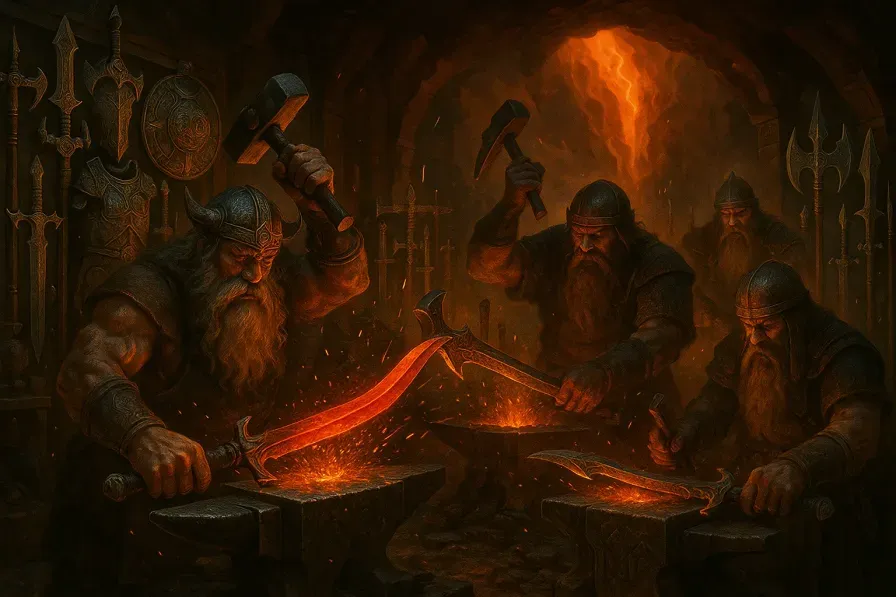
You can't discuss dwarf culture without talking about metalworking. It's not just an occupation—it's a religious practice, an art form, and the foundation of their civilization. The greatest dwarf names in mythology belong to smiths whose creations shaped reality itself.
In Norse mythology, the dwarf brothers Brokkr and Eitri forged Thor's hammer Mjölnir—a weapon that could level mountains and always returned to his hand. They also created Odin's ring Draupnir, which dropped eight new gold rings every nine nights, and Freyr's golden boar Gullinbursti, which glowed in the dark and could run faster than any horse. These weren't just craftsmen; they were reality-shapers whose work had divine power.
Tolkien's Telchar carries that tradition forward. This First Age dwarf of Nogrod forged Narsil—the sword that cut the One Ring from Sauron's hand, later reforged as Andúril for Aragorn. He also created Angrist, the knife that cut a Silmaril from Morgoth's crown, and the Dragon-helm of Dor-lómin. Think about that: one smith's works directly shaped three pivotal moments across thousands of years of history. That's the weight a master smith's name carries in dwarf culture.
Contemporary fantasy has expanded dwarf naming beyond pure Norse-Tolkien roots while maintaining core principles:
Creating a dwarf character means more than picking a cool-sounding name. The name should reflect backstory, profession, clan identity, and personality while fitting the specific game or story world you're using.
D&D recognizes multiple dwarf subraces—Mountain Dwarves, Hill Dwarves, Duergar (gray dwarves), and Dwarves—each with subtle naming differences. Mountain Dwarves favor harsh, geological names: Dolgrin Rockshatter, Tordek Ironforge. Hill Dwarves use softer names with more nature references: Eberk Meadowstone, Rurik Hillheart. Duergar, living in the Underdark and often evil, adopt darker surnames: Moradin Shadowforge, Thuldor Painbringer. The name should signal subrace without being stereotypical. For a deeper dive into race-specific naming, see our guide to D&D naming conventions by race.
These are the names that defined dwarf culture across Norse mythology and Tolkien's Middle-earth. Each one carries stories of legendary craftsmanship, heroic battles, or tragic fates. Use these when you need to reference established lore or want to honor the traditions that shaped modern fantasy dwarves. These names work perfectly for campaign NPCs who represent ancient history or legendary standards that modern characters aspire to match.
Drawing directly from Norse mythology and Old Norse language, these names combine authentic Scandinavian elements with traditional dwarf descriptors. Perfect for campaigns set in Norse-inspired settings or characters who honor the original dvergar traditions. These names feature the harsh consonants and compound structures that make dwarf names immediately recognizable, blending historical authenticity with fantasy appeal. Use these for clans that pride themselves on maintaining ancient traditions and ancestral customs.
These names follow the patterns established by J.R.R. Tolkien, drawing from the Völuspá's catalog of dwarves and the linguistic structures he developed for Middle-earth. They work perfectly for D&D campaigns, fantasy novels, or any setting that honors the definitive modern dwarf archetype. Many of these names appear in The Hobbit, The Lord of the Rings, and The Silmarillion, or follow the same phonetic and structural patterns. Choose these when you want names that feel immediately "right" to readers familiar with classic fantasy.
Every great dwarf clan traces its lineage back to a legendary founder whose achievements established the family's reputation for generations. These names work perfectly for NPCs in your game world's deep history, ancient ancestors mentioned in character backstories, or the legendary dwarves who founded the holds and cities in your campaign setting. Each name comes with an implicit achievement story—discovering a new mineral deposit, surviving an impossible siege, developing revolutionary crafting techniques. Use these to add weight and history to your dwarf characters' family backgrounds.
Female dwarves in fantasy are as tough, skilled, and proud as their male counterparts—they're warriors, smiths, engineers, and leaders who earn their epithets through achievement rather than inheritance. These names combine traditional Norse feminine elements with characteristic dwarf surnames, creating identities that honor both historical roots and modern fantasy needs. Perfect for player characters who want to break stereotypes while respecting cultural traditions, or NPCs who demonstrate that dwarf society values skill over gender. According to Tolkien, female dwarves even grow beards indistinguishable from males—a tradition some settings maintain and others modify.
These names span the full spectrum of dwarf society—from young miners earning their first epithets to ancient kings whose surnames have become legendary. Each name combines traditional harsh consonant clusters with meaningful compound surnames that tell stories of profession, achievement, or character. Use these for D&D player characters, fantasy novel protagonists, or campaign NPCs who represent different aspects of dwarf culture—smiths, warriors, merchants, engineers, treasure hunters, and clan leaders. The surnames are designed to be flexible enough for various character concepts while maintaining authentic dwarf naming conventions.
These names adapt traditional dwarf naming conventions for contemporary fantasy settings, including video games, modern urban fantasy, or settings that mix magic with technology. They use geological terms, metal elements, and crafting references that work in worlds beyond pure medieval fantasy—names like "Tungsten Ironvein" or "Graphene Steelshaper" fit steampunk, magitech, or even sci-fi settings where dwarves maintain their cultural identity while adapting to new environments. Perfect for World of Warcraft, Shadowrun, or any setting where ancient traditions meet innovation. These names prove that dwarf naming conventions can evolve while maintaining their essential character.
Creating an authentic dwarf name requires understanding their craftsmanship, mountain heritage, and clan traditions. Follow these steps to craft the perfect name for your dwarven character:
Choose between Norse-inspired names (Tolkien style), Scottish/Celtic influences, or original fantasy traditions. Each culture brings distinct phonetic patterns and naming conventions to dwarven names.
Incorporate harsh consonants like "th", "gr", "dr", "br" that evoke the sound of stone striking stone and hammer on anvil, reflecting dwarven craft and mountain origins.
Include clan names or family lineage markers. Dwarven culture emphasizes ancestry, with names often referencing their house, forge, or notable ancestors.
Reference their craft or profession in the name. Dwarves are master smiths, miners, and artisans - their names can honor their trade and achievements.
Generate authentic dwarf names using our dwarf name generator that combines Norse mythology, mountain heritage, and craftsmanship traditions for perfect dwarven characters.
Ready to forge your perfect dwarf identity? Our Norse dwarf name generator creates authentic names following the patterns explored in this guide—harsh consonants, meaningful compounds, and names that sound like they've been carved from mountain stone. Whether you need a legendary smith, a clan founder, or a young warrior earning their first epithet, the generator combines traditional elements with your specific needs. For Tolkien-inspired names, try our Tolkien dwarf generator. For darker subterranean dwarves, explore our duergar names guide. Looking for other fantasy races? Explore our collections of elven names, orc names, or goblin names for comprehensive fantasy world-building.
In Norse mythology, dwarf names often derive from Old Norse words describing traits, crafts, or elements. Examples include Durinn (meaning "sleepy"), Brokkr ("the one who works with metal fragments"), and Sindri ("spark"), reflecting their roles as master smiths and craftsmen.
J.R.R. Tolkien drew heavily from the Dvergatal, a list of dwarf names in the Poetic Edda, for his dwarves in The Hobbit and The Lord of the Rings. Names like Thorin, Balin, Dwalin, and Gimli all originate from this Old Norse source, and his works set the standard for dwarf naming in modern fantasy.
For D&D, combine hard consonant sounds (K, G, D, T, R) with short, punchy syllables to evoke a sturdy feel. Many players use clan names tied to a craft or geographic feature, such as "Ironforge" or "Stonehelm," following conventions established in the Player's Handbook.
Notable fantasy dwarves include Gimli from The Lord of the Rings, Bruenor Battlehammer from the Forgotten Realms, Varric Tethras from Dragon Age, and the Dwemer race from The Elder Scrolls series. Each draws on Norse-inspired naming traditions.