
Loading...
Loading...
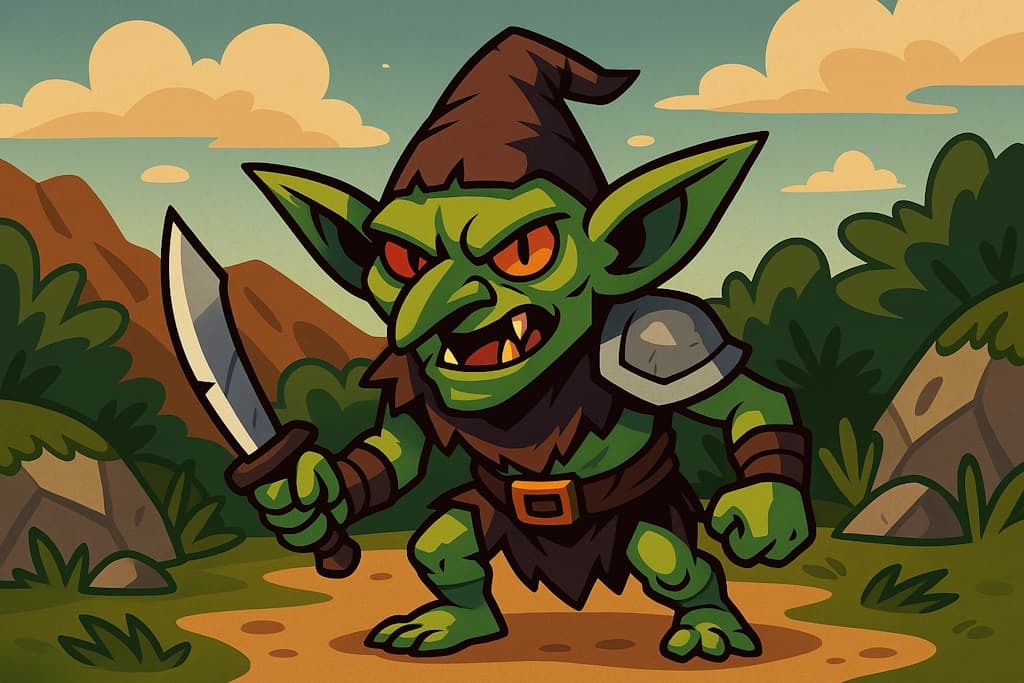
An extensive collection of 350+ authentic goblin names spanning classic mischievous rogues, savage warriors, cunning inventors, mystical shamans, and noble rulers—perfect for D&D campaigns, fantasy stories, and character creation.
Goblins are everywhere in fantasy, but somehow they're still weird. They show up in Tolkien's mines as faceless cannon fodder. World of Warcraft turns them into rocket-building capitalists. Pathfinder makes them fire-obsessed pickle lovers who inexplicably hate horses. What gives?
Use the matching Goblin Names without leaving the article. Pick a style, generate fresh names, and copy the good ones.
Style
This generator uses one broad style.
6 names ready to copy.
Starter names from the generator
The genius of goblins is that contradiction—they're jokes and genuine threats at the same time. Too small to fight fair, so they build elaborate traps. Too weak individually, so they attack in overwhelming swarms. A single goblin named "Grix Mudsnout" sounds ridiculous until fifty of his cousins pour out of the tunnels. That's when the harsh consonants and guttural sounds start making sense. "Krag" and "Grimlok" aren't just names—they're warnings that sound like rocks grinding together. Compare that to melodic elven names or intimidating dragon names, and you'll hear the difference immediately.
Here's something most people don't know: the word "goblin" probably comes from the Greek "kobalos," meaning rogue or knave. It surfaces in medieval Latin around 1195 as "gobelinus"—a demon haunting the French countryside. But then something interesting happens.
French storytellers softened them. By the 16th century, goblins became household brownies who'd sweep your floors if you left out milk—but dump ashes everywhere if you insulted them. The English went the opposite direction: malicious cave-dwellers who curdled milk and stole babies, sharing the underground domain with dark elves and drow. Meanwhile, German miners dealt with "kobolds"—mine spirits who guarded ore veins. When miners found a blue-gray ore that smelted poorly and released toxic arsenic fumes, they blamed the kobolds for cursing it. We still call that element cobalt today.
Tolkien changed everything in 1937. His goblins weren't mischievous spirits—they were corrupted creatures serving Morgoth, later retconned as orcs in his legendarium. That shift from folklore entity to fantasy race gave us naming conventions that stuck: harsh sounds, compound descriptors, tribal structures. No more "Puck" or "Robin Goodfellow." Now we get "Grishnákh" and "Golfimbul."
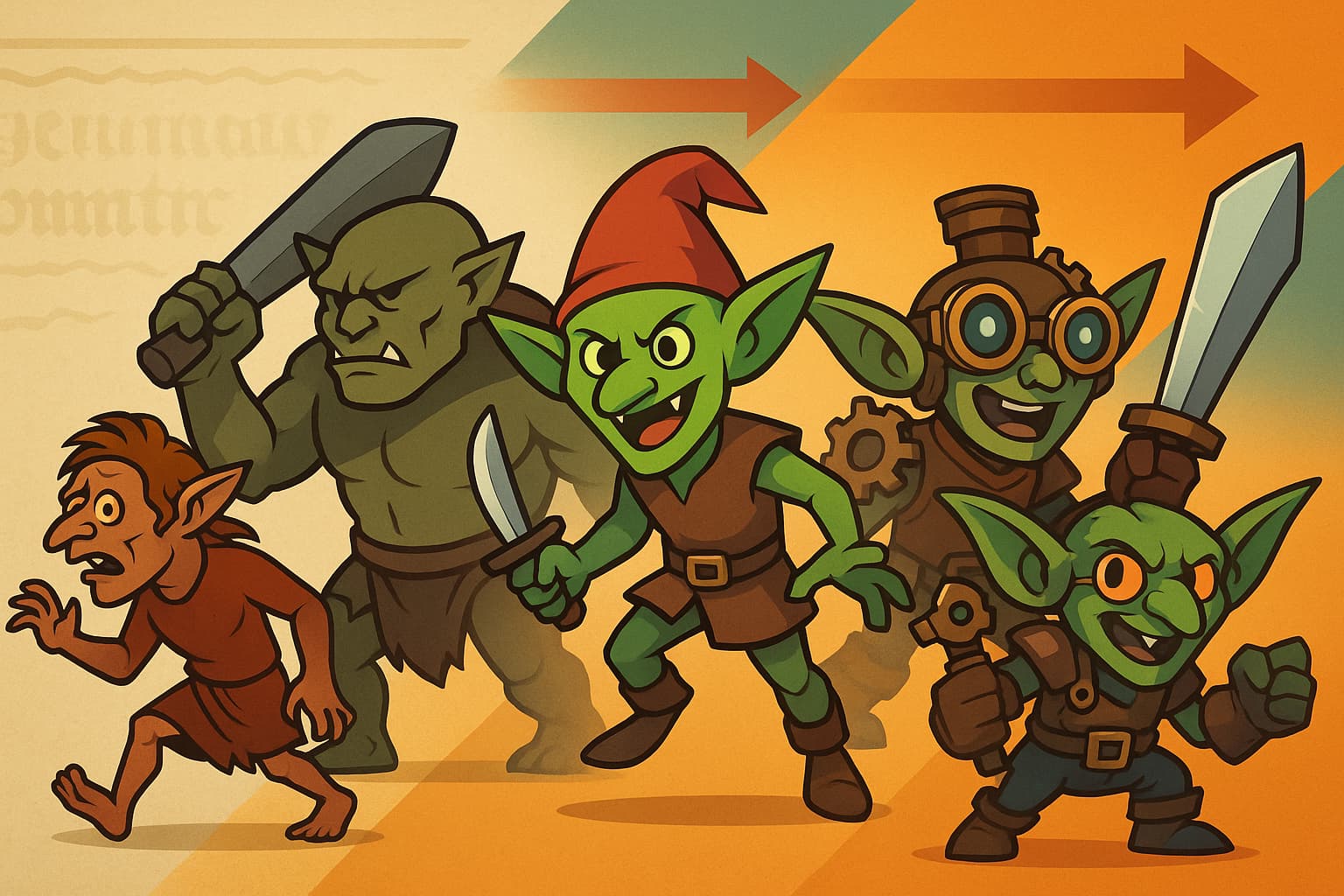
Physically? Goblins are the evolutionary equivalent of cockroaches—and I mean that as a compliment.
They stand three to four feet tall with oversized bat ears that pick up everything. Those pointed teeth aren't just for show—goblins are omnivores who'll eat carrion, raw fungus, or your adventuring rations with equal enthusiasm. Skin color varies wildly: muddy green is standard, but you'll find sickly yellow, rust orange, even reddish-brown depending on the setting. What really defines them though? Adaptability:
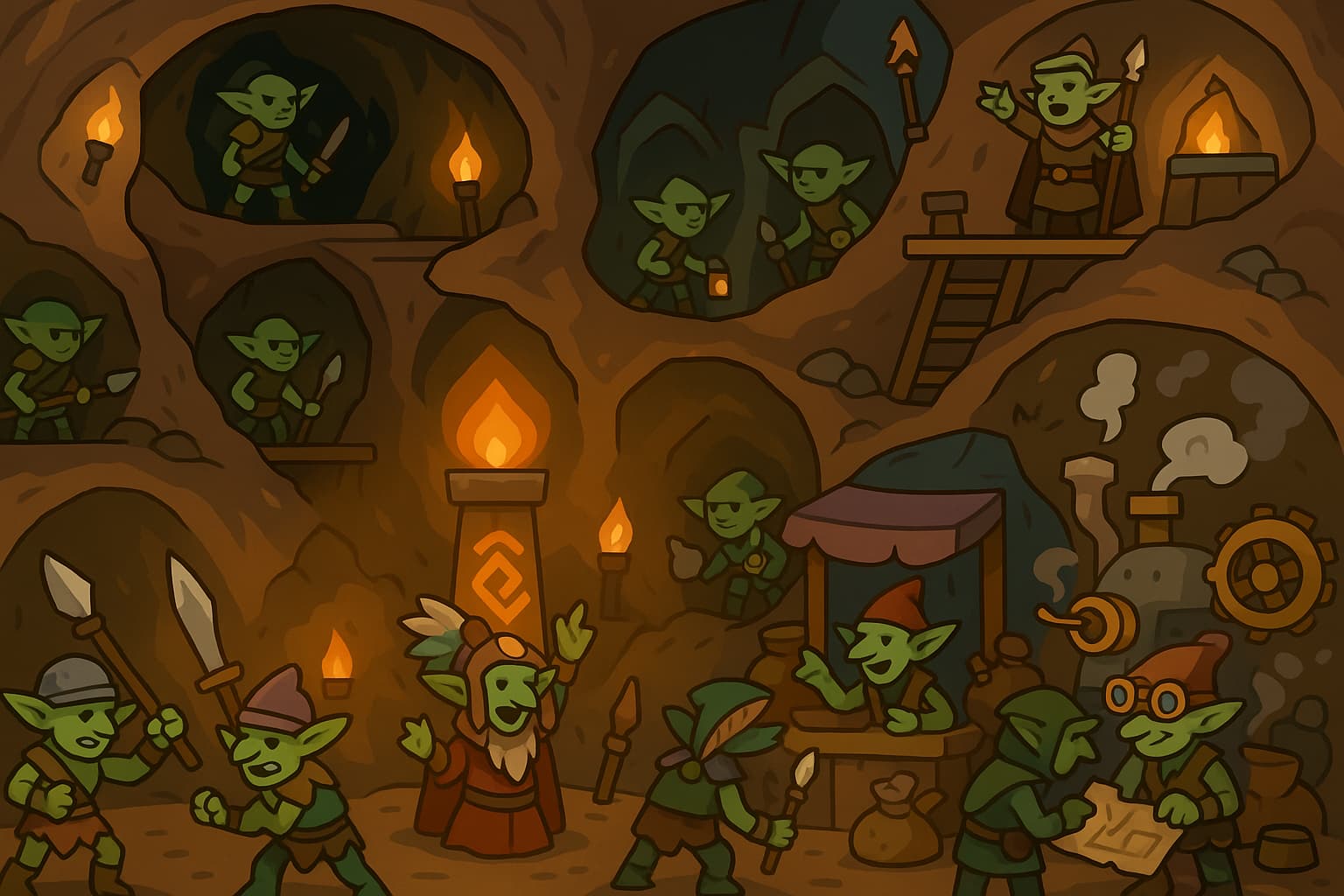
Goblin society looks chaotic until you realize it's actually specialized chaos.
Tribes coalesce around whoever's currently the scariest or most useful—warbosses who can win fights, shamans who can curse enemies, or tinkerers whose inventions haven't exploded recently. Power doesn't transfer peacefully. You maintain leadership through a mix of fear, spectacular demonstrations ("watch me ride this rocket!"), and occasionally feeding challengers to something with teeth.
Within tribes, goblins sort into roles: scouts who navigate without getting killed, sappers who dig connecting tunnels between warrens, wolf riders (yes, some goblins ride wolves—it's terrifying), and shamans who talk to spirits most races consider too dangerous to approach. They often clash with dwarven clans and troll tribes for territory in the Underdark. Each role needs its own naming convention. "Grubdigger" tells you someone works in the tunnels. "Ironbiter" suggests they've survived something that should've killed them. Both follow goblin phonetics, but they communicate completely different reputations.
Goblin names sound aggressive because they're built from aggressive phonemes.
Notice the pattern: K, G, R, Z, hard Ts. These are called plosives and fricatives—sounds that create harsh stops and friction in your mouth. "Krag" hits harder than "Marcus" even though both are two-syllable male names. "Grix" feels dangerous compared to "Alex." It's not just fantasy convention—it's linguistics. Harsh consonants communicate threat.
Compound names add the biographical element. "Snaggle" is just a sound, but "Snaggle Toestealer" tells a story—this goblin has stolen enough toes to earn a reputation. "Fizzle" might be a nickname, but "Fizzle Brightbang" suggests an alchemist whose experiments produce spectacular (if not always intended) results. These descriptors reference physical traits (Snaggletooth, Wartface), notorious deeds (Backstabber, Throatcutter), or specialized skills (Sparkfinger, Grubdigger).
Best part? Names change. A young goblin starts as "Nix" and earns "Shadowstep" after his first successful theft. Lose a fight badly? You might get stuck with "Nix Splitnose" forever. Try our goblin name generator to see how these patterns create authentic-sounding names.
Every fantasy setting reimagines goblins differently, which makes naming them interesting. For an overview of how each fantasy race handles nomenclature, see our guide to fantasy name types by race.
D&D (since 1974) treats them as the archetypal level 1 threat—weak individually but dangerous in swarms. Basic names like "Yeemik" or "Droop" communicate their low status. World of Warcraft flipped the script in 2004 by making them brilliant (if amoral) engineers and capitalists. Names like "Trade Prince Gallywix" or "Gazlowe" blend goblin phonetics with titles that suggest sophistication. They're not cave-dwelling savages—they're CEOs who happen to be three feet tall.
Pathfinder went weird with it. Their goblins are obsessed with fire ("fire is the best thing ever invented"), terrified of horses ("horses are awful writing monsters"), and inexplicably love pickles. This gives us names like "Mogmurch" and "Chuffy" that sound ridiculous but fit the chaotic-stupid energy perfectly. Meanwhile, Harry Potter's Gringotts goblins are sophisticated bankers with names like "Griphook" and "Bogrod"—maintaining the harsh consonants while suggesting ancient financial institutions.
Some goblins break the mold and become genuinely memorable characters.
Griphook from Harry Potter proved goblins could be complex. He's not comic relief—he's a principled revolutionary with legitimate grievances about wizard oppression. His name combines the harsh "Grip" with "hook," evoking both financial hooks and curved goblin fingers. Perfect for a banker with hidden depths.
World of Warcraft's Gazlowe runs Ratchet as a neutral port where Horde and Alliance can trade without killing each other. He's proof that goblin engineering can rival magic—his inventions include lumber harvesters and siege engines that function through pure mechanical ingenuity. Magic: The Gathering gave us Squee the Immortal, a goblin so resilient he literally cannot stay dead, and Krenko Mob Boss, whose name perfectly captures the organized crime aesthetic. These characters show that goblin names work best when they hint at personality: Squee sounds squeaky and harmless (he's not), while Krenko sounds like a Brooklyn mobster who happens to be two feet tall.
Creating an authentic goblin name requires understanding the linguistic patterns and cultural context that make these names distinctive. Consider these approaches:
Explore other fantasy creature names: Dragon Names, Wizard Names, and Villain Names
Goblins offer incredible versatility for character creation, from comical sidekicks to genuinely threatening antagonists. Consider these archetypes when developing your goblin:
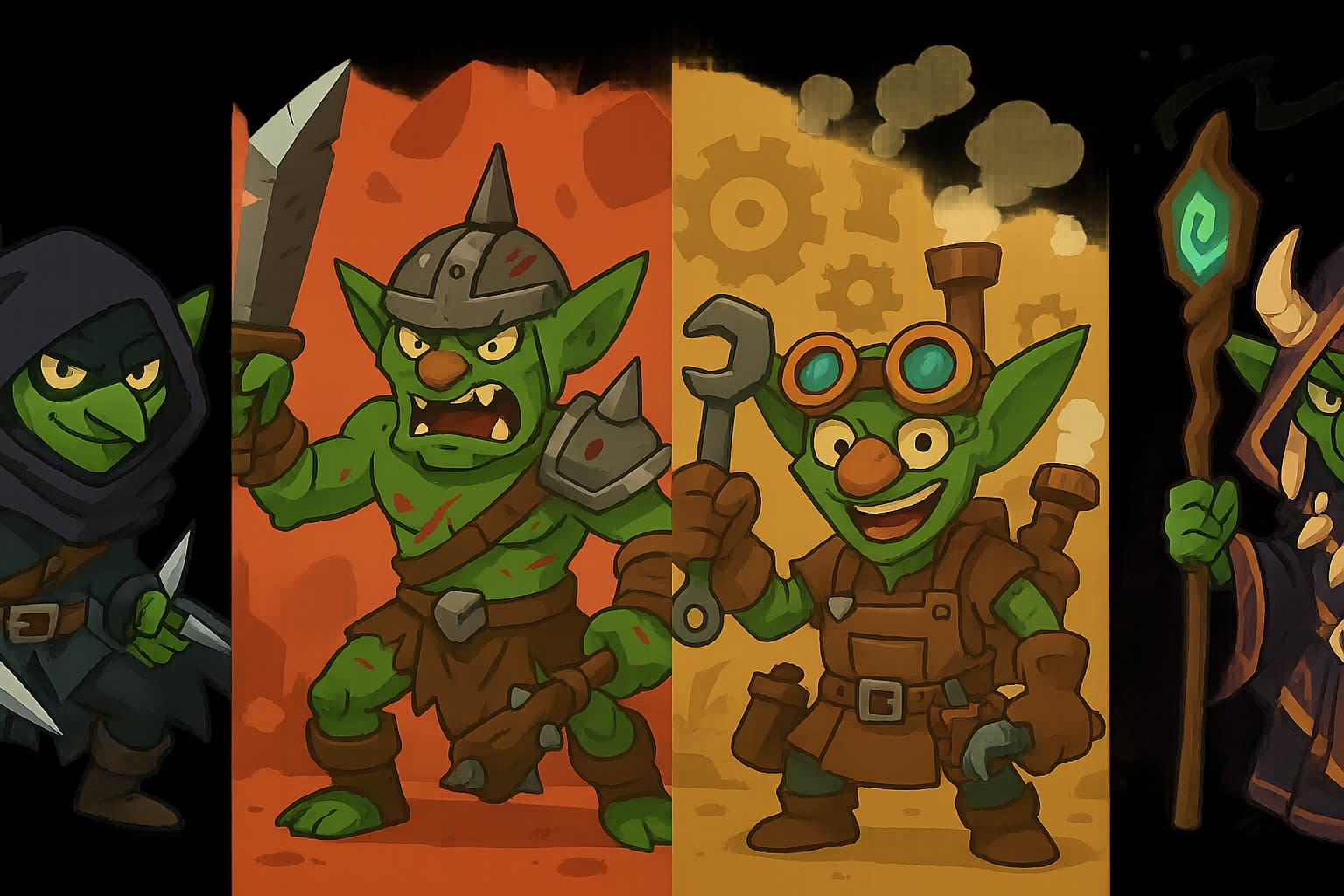
Emphasizes goblin cunning over brute force. These characters win through traps, deception, and exploiting enemy weaknesses. Perfect for rogues, scouts, and characters who prefer brains over brawn. Names like "Nix the Nimble" or "Sneaksby Shadowstep" capture this archetype.
Leans into goblin ferocity and pack tactics. Despite their small size, these goblins fight with reckless abandon and overwhelming numbers. Ideal for warbosses, berserkers, and front-line fighters. Names like "Bloodfang Ripclaw" or "Skullcrusher Grog" evoke primal danger.
Explores goblin mechanical genius and love of explosions. These characters create unstable but effective gadgets, weapons, and vehicles. Perfect for artificers, alchemists, and anyone who enjoys calculated chaos. Names like "Fizzle Brightbang" or "Gearspark Tinkerton" suggest explosive creativity.
Taps into goblin spiritual traditions and connection to primal forces. These characters wield shamanic magic, commune with spirits, and guide their tribes. Ideal for spellcasters with earthy, elemental themes. Names like "Grizznak Spiritcaller" or "Mokgra Earthwhisper" convey mystical authority.
These traditional goblin names embody everything that makes these creatures memorable—harsh consonants, visceral descriptors, and that perfect blend of threatening and slightly ridiculous. From Grix Mudsnout to Krog Slagtooth, these names work perfectly for standard D&D encounters, dungeon denizens, and goblin NPCs who fill traditional fantasy roles. Each name captures the essence of goblin culture: survival-focused, physically descriptive, and phonetically aggressive. These names are your go-to for creating authentic goblins that feel immediately familiar while maintaining individual character. Perfect for warbands, dungeon encounters, and any scenario where you need recognizably goblinesque characters who fit seamlessly into classic fantasy settings.
These names showcase goblin ingenuity and cunning, perfect for characters who rely on intelligence rather than brute force. From Nix the Nimble to Presto Prestidigitation, these goblins have earned reputations for their skills, cleverness, and specialized knowledge. Many incorporate their profession or particular talent directly into their names—Wicket Wireworks, Cipher Codebreaker, Tinker Thoughtcog—making them ideal for goblin rogues, artificers, scouts, and merchants. These names work beautifully for goblins who have risen above typical goblin society through their wits, whether as master thieves, brilliant inventors, or successful traders. Use these for goblin NPCs who surprise players with their sophistication or for player characters who want to emphasize brains over brawn.
When you need goblin names that communicate immediate threat and primal violence, look no further. These brutal appellations like Bloodfang Ripclaw, Gutripper Bonegnaw, and Deathscreech Howler belong to goblins who have embraced their savage nature completely. These are the warbosses, berserkers, and shock troops that make adventurers think twice before underestimating goblin threats. Each name tells a story of violence and survival, earned through countless battles and bloody victories. Perfect for antagonistic goblin leaders, fearsome champions, or any scenario where goblins serve as genuinely dangerous adversaries rather than comic relief. These names work excellently for high-level goblin encounters, boss fights, or recurring villains who need to command both fear and respect.
Goblin shamans occupy a unique position in tribal society, wielding spiritual power and serving as intermediaries between their people and the primal forces of nature. These names like Grizznak Spiritcaller, Mokgra Earthwhisper, and Vorgath Stormcaller reflect their mystical abilities and connection to elemental forces, ancestor spirits, and dark magic. Unlike typical goblins, shamans earn names that emphasize their supernatural powers rather than physical prowess or crafty deeds. They might practice bone divination, brew powerful potions, summon spirits, or wield elemental magic that other goblins can only watch in awe. These names are perfect for goblin spellcasters, tribal leaders with mystical authority, or any character who represents the spiritual side of goblin culture. Use them for wise advisors, dangerous witches, or shamans who guide their tribes through visions and prophecy.
These names celebrate goblin engineering genius and mechanical obsession, from Gearspark Tinkerton to Sprocket Steamwork. Perfect for steampunk settings, artificers, inventors, and any goblin whose life revolves around gadgets, gears, and explosions. These names incorporate mechanical terminology and suggest specialized knowledge—Cogsworth Boltbender knows his way around a workshop, while Dynamo Powercoil clearly works with electrical systems. Many reference specific tools, components, or processes, making them ideal for goblins in industrial or technologically advanced settings. Whether your goblin builds clockwork automatons, maintains steam engines, or creates explosive devices, these names communicate their profession immediately. Use them in settings where goblin technological prowess is emphasized, from World of Warcraft-style engineering to traditional steampunk to magitek fantasy worlds.
Who says goblins can't have aristocracy? These names combine traditional noble titles with goblin sensibilities, creating wonderfully incongruous identities like Baron Grizelrot, Lady Skarnivex, and Duke Morgrath the Wealthy. Perfect for goblins who have risen to power through conquest, accumulated wealth, or claimed territory and now demand respect and proper address. Many represent merchant princes, criminal bosses, or warlords who have adopted the trappings of civilization while maintaining their goblin nature. These names work beautifully for complex goblin NPCs who confound player expectations—refined in manner but ruthless in business, cultured but still fundamentally chaotic. Use them for goblin rulers of underground kingdoms, heads of merchant cartels, military commanders, or any goblin who wields significant political or economic power and insists on being taken seriously despite their diminutive stature.
These contemporary names blend goblin tradition with modern concepts, from Nyx Glitchblade to Crypto Blockchain. Perfect for urban fantasy, cyberpunk, or any setting that mixes magic with technology. These goblins have adapted to modern (or futuristic) society, working as hackers, street artists, content creators, or tech specialists while maintaining their goblinoid nature. Names like Viral Memeking and Livestream Follower reference social media and digital culture, while Glitch Bugfinder and Algorithm Decoder suggest technical expertise. Use these for goblins in contemporary fantasy worlds, shadowrun-style settings, or any scenario where goblins have embraced modern technology and culture. These names work particularly well for player characters in unconventional campaigns or NPCs who surprise players by being completely adapted to modern life while still embodying goblin characteristics like opportunism, adaptability, and creative chaos.
Creating an authentic goblin name requires understanding their mischievous nature, tribal culture, and cunning personality. Follow these steps to craft the perfect name for your goblin character:
Choose names that reflect goblin tribal structure and hierarchy. Names can indicate clan membership, status, or role within the tribe - whether they are warriors, shamans, or tricksters.
Incorporate guttural consonants and sharp sounds like "gr", "kr", "zk", "gn" that evoke the rough, mischievous nature of goblins and their crude language.
Include elements that reflect the goblin's character: cunning, greedy, sneaky, or surprisingly clever. Goblin names often hint at their defining characteristics.
Consider nicknames or elements referencing physical traits common to goblins - their small stature, pointed ears, or distinctive features.
Generate authentic goblin names using our goblin name generator that combines tribal elements, harsh phonetics, and mischievous characteristics for perfect goblin characters.
Ready to create your perfect goblin character? Try our goblin name generator to instantly generate authentic goblin names for your D&D campaigns, fantasy stories, or creative projects. Each name captures the mischievous, cunning, and chaotic spirit that makes goblins such memorable characters. Need more fantasy name inspiration? Check out our dragon names for powerful creatures, or wizard names for spellcasting characters. Also explore our troll names for larger goblinoid relatives, or orc names for fierce warriors.
Goblins first appeared in medieval European folklore, particularly in French and German traditions. They were depicted as small, mischievous creatures that lived underground and caused trouble for humans.
Goblins are typically small, cunning, and malicious creatures. Hobgoblins are larger, more organized, and militaristic—in D&D, hobgoblins are disciplined warriors, while goblins are chaotic and opportunistic.
D&D goblin names are usually short, guttural, and harsh-sounding, often one or two syllables. Common patterns include hard consonants like k, g, z, and x paired with short vowels.
Well-known goblins include the Great Goblin from Tolkien's The Hobbit, Griphook from Harry Potter, and Nott the Brave from Critical Role. Goblins also play major roles in the Pathfinder and Warhammer settings.